Algeria
 Egypt
 Libya
 Morocco
 Sudan
 Tunisia
 Benin
 Burkina Faso
 Cabo Verde
 Côte d'Ivoire
 Ghana
 Guinea
 Guinea-Bissau
 Liberia
 Mali
 Mauritania
 Niger
 Nigeria
 Senegal
 Sierra Leone
 The Gambia
 Togo
 Cameroon
 Central African Republic
 Chad
 DR Congo
 Equatorial Guinea
 Gabon
 Republic of the Congo
 São Tomé and Príncipe
 Burundi
 Comoros
 Djibouti
 Eritrea
 Ethiopia
 Kenya
 Madagascar
 Malawi
 Mauritius
 Mozambique
 Rwanda
 Seychelles
 Somalia
 South Sudan
 Tanzania
 Uganda
 Angola
 Botswana
 Eswatini
 Lesotho
 Namibia
 South Africa
 Zimbabwe
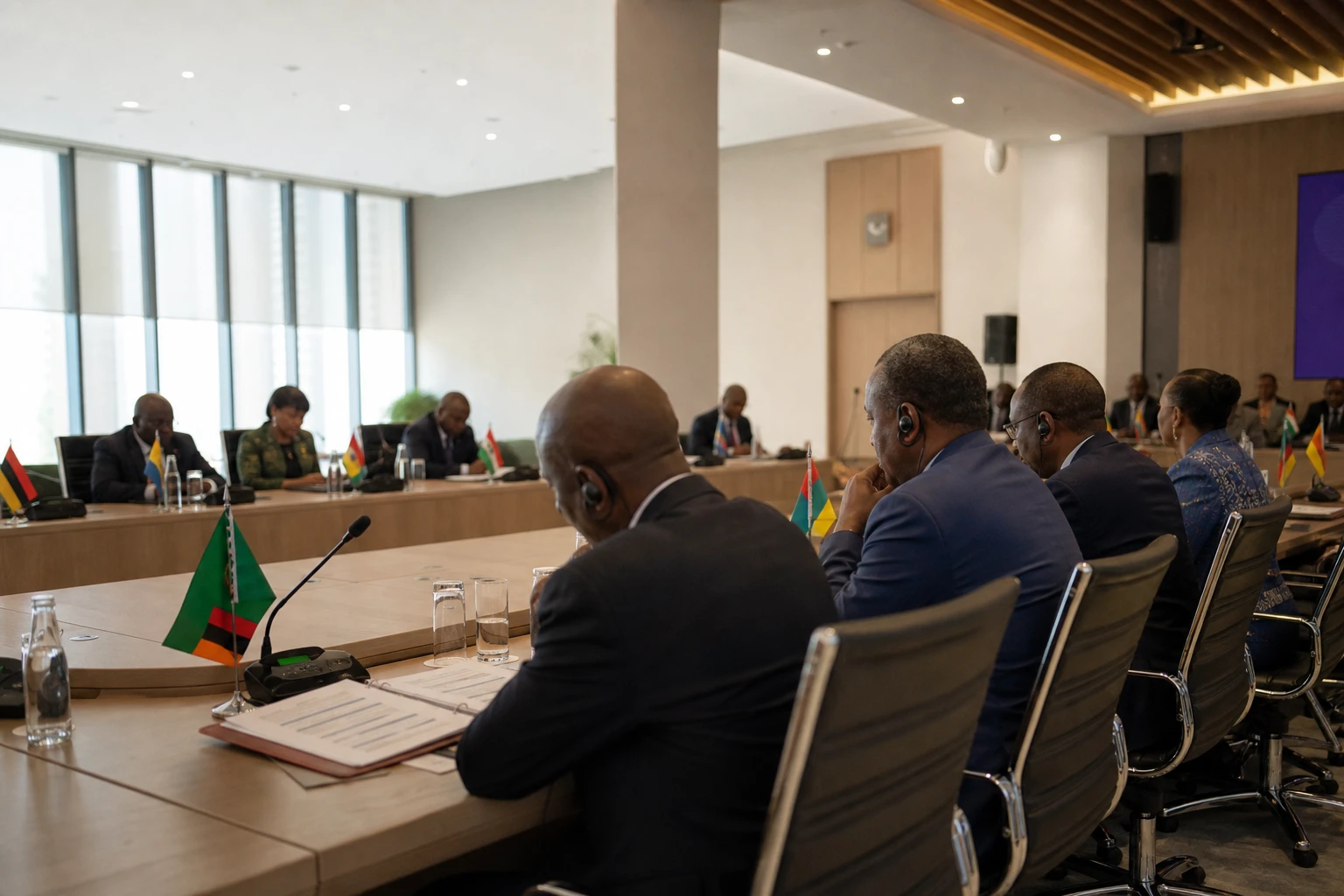
In Lusaka, the lower cost of money opens a new phase for the Zambian economy. But it does not, by itself, guarantee cheaper loans or an immediate improvement in purchasing power. Everything will depend on how this decision is passed on to banks, businesses and households.
Bank of Zambia eases monetary squeeze
The Monetary Policy Committee of the Bank of Zambia cut its policy rate by 250 basis points, or 2.5 percentage points. The rate will therefore fall from 13.25% to 10.75%, effective from 30 September 2026.
The decision was taken at a meeting held on 28 and 29 September in Lusaka. Zambia’s central bank says it aims to reduce the cost of financing and support economic activity. The policy rate serves as a benchmark for the terms on which commercial banks borrow and lend in the economy.
The cut comes after several months of slowing inflation. According to the Zambia Statistics Agency, annual price growth reached 6.1% in September 2026, down from 6.2% in August. It is therefore within the stability range targeted by the Bank of Zambia, of between 6% and 8%.
The September figure also marks a sharp fall from the start of the year. Inflation was still above 9% in January 2026. The easing continued thereafter, supported by movements in food prices and the kwacha’s strengthening against major currencies.
Maize and the kwacha at the heart of disinflation
Lower maize prices have played an important part in this trend. In Zambia, the grain is central to household diets and to the pricing of many basic goods. When its price stabilises, pressure on food spending also eases.
The national currency has also helped to cool imported inflation. A stronger kwacha reduces the cost of some goods bought abroad, including fuel, fertiliser, equipment and a range of manufactured products.
The Bank of Zambia estimates that average inflation will reach 6.7% in 2026, down from an earlier forecast of 6.8%. This projection nevertheless remains exposed to climate risks. An El Niño event or a fresh disruption to rainfall could reduce agricultural output and revive pressure on food prices.
The central bank will therefore have to maintain a delicate balance. Cutting rates too quickly could fuel demand and weaken the kwacha. Conversely, an excessively restrictive policy could keep credit at a level that is difficult for businesses and households to access.
Expected boost for businesses, but not automatic
On paper, the policy rate cut should make it easier to finance the economy. Zambian businesses can hope for a gradual reduction in borrowing costs, particularly in agriculture, industry, services and mining-related activities.
However, the effect will be neither immediate nor uniform. Banks take account of their own costs, the risk of default and financial market conditions. Small businesses, which often have less collateral than large companies, may therefore continue to pay high interest rates.
For households, the effect will depend mainly on mortgages, consumer loans and financing for small businesses. Lower rates can ease repayments. They can also encourage investment. But if banks remain cautious, it will take time for the central bank’s decision to make a difference to daily life.
The Bank of Zambia’s move comes as the economy gradually regains momentum after shocks linked to drought, power cuts and the debt crisis. According to the World Bank, growth is estimated to have reached 4.6% in 2025. It is then expected to stand at around 5.3% in 2026-2028, driven by agriculture, industry, mining and services.
Debt falls, but vulnerabilities remain
The public debt trajectory has also improved. Its ratio to gross domestic product is estimated to have fallen from 133.4% in 2023 to about 93.4% in 2025. This decline is linked to restructuring agreements reached with several creditors, covering nearly 94% of the country’s external debt.
This improvement does not mean the budgetary constraint has disappeared. Zambia still needs to protect its revenues, meet its restructured obligations and fund public services. Lower rates can support growth, but they are no substitute for disciplined spending or the sustainable mobilisation of domestic resources.
The country also remains dependent on copper and other mining activities. Higher prices and exports can boost foreign exchange reserves and support the kwacha. A downturn in the global market, however, could reduce public revenues and foreign currency inflows.
Electricity supply problems pose another risk. Hydropower generation remains vulnerable to drought. When electricity is in short supply, businesses cut activity or face higher costs. A lower policy rate cannot, on its own, offset this material constraint.
A signal being closely watched in Southern Africa
The decision in Lusaka has implications beyond the country. Zambia is a member of the Southern African Development Community, SADC, which brings together several economies facing the same challenges: imported inflation, currency volatility, debt costs and reliance on commodities.
Zambia’s trajectory will be watched by its neighbours, not least because it combines debt restructuring, falling inflation and a gradual recovery in growth. It illustrates the room for manoeuvre a central bank can regain when prices stabilise and pressure on the foreign exchange market eases.
The next step will be to see whether the 250-basis-point cut actually results in more affordable access to credit. Data on food inflation, the performance of the kwacha, agricultural production and electricity supply will be crucial. For Zambians, the success of this decision will be measured less by the rate announced by the central bank than by its effect on investment, employment and day-to-day spending.