Algeria
 Egypt
 Libya
 Morocco
 Sudan
 Tunisia
 Benin
 Burkina Faso
 Cabo Verde
 Côte d'Ivoire
 Ghana
 Guinea
 Guinea-Bissau
 Liberia
 Mali
 Mauritania
 Niger
 Nigeria
 Senegal
 Sierra Leone
 The Gambia
 Togo
 Cameroon
 Central African Republic
 Chad
 DR Congo
 Equatorial Guinea
 Gabon
 Republic of the Congo
 São Tomé and Príncipe
 Burundi
 Comoros
 Djibouti
 Eritrea
 Ethiopia
 Kenya
 Madagascar
 Malawi
 Mauritius
 Mozambique
 Rwanda
 Seychelles
 Somalia
 South Sudan
 Tanzania
 Uganda
 Angola
 Botswana
 Eswatini
 Lesotho
 Namibia
 South Africa
 Zimbabwe
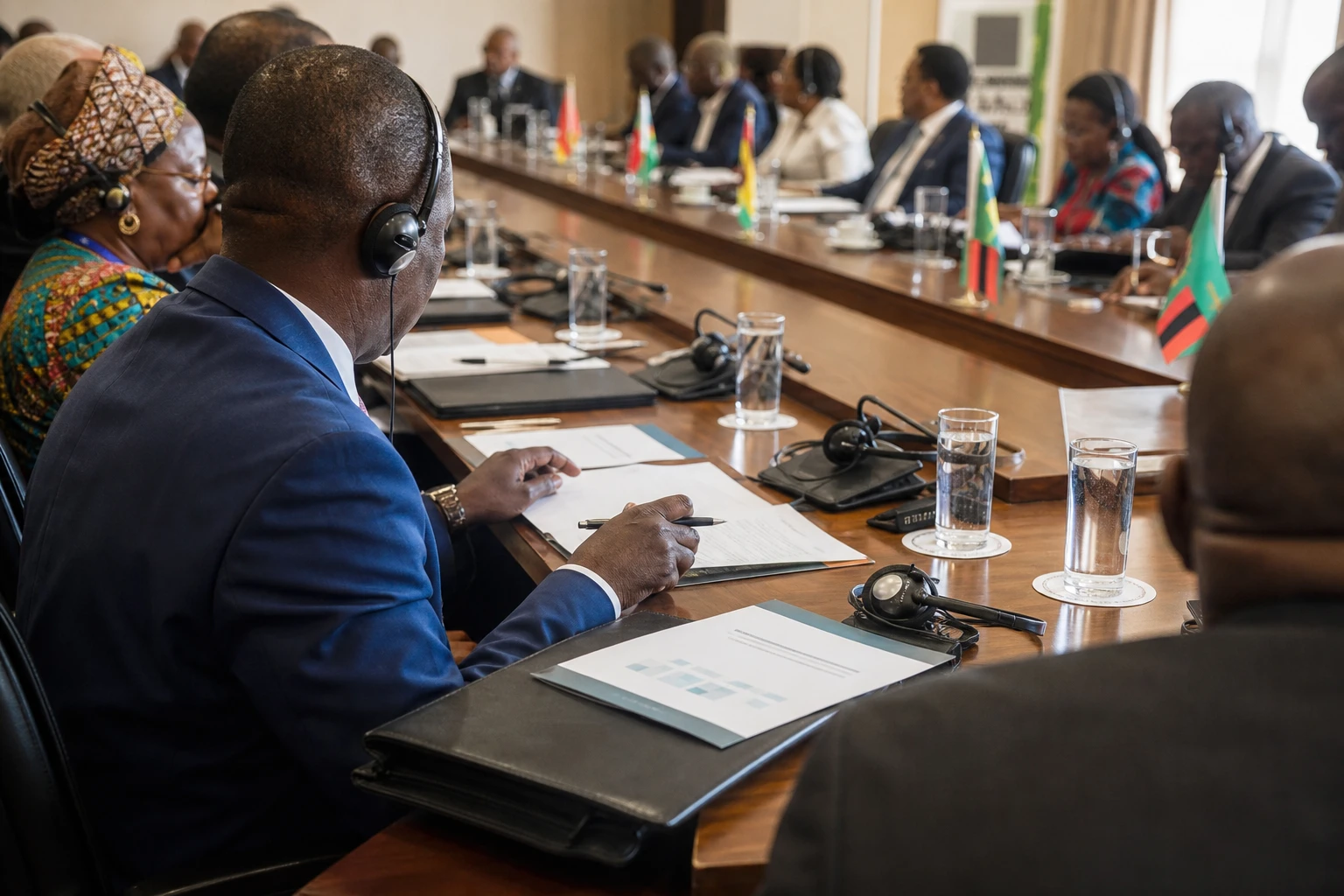
A solar project designed around local communities
In Zambia, the question is no longer simply how to generate more electricity. It is also how to bring it closer to citizens, markets and public services. That is where the new solar programme marks a shift in approach: rather than concentrating capacity at a handful of major sites, Lusaka is banking on generation spread across the country, constituency by constituency.
This is a significant signal for a country that has been hit hard by the fragility of a system dominated by hydropower. The 2024 drought reduced available generation and forced the country to rely on imports and power cuts. International financial institutions have since stressed the need to diversify the electricity mix, particularly with solar power and decentralised grids.
A national programme, but a landscape already redrawn
The programme is known as the Presidential Constituency Energy Initiative, or PCEI. It provides for a 2 MW solar plant in each of the 156 constituencies that formed the political map when it was conceived, for a total of 312 MW. The announced cost is 4.3 billion kwacha, about $236 million, according to information made public by the Zambian authorities.
The political timetable gives the project particular significance. The Electoral Commission of Zambia announced in April 2026 the creation of 70 new constituencies, bringing the total to 226, effective from 15 May 2026 following the dissolution of Parliament. In other words, the solar plan was built around the old boundaries, obliging the state to manage the alignment of energy infrastructure with the new electoral boundaries and future local priorities.
What the contracts signed in Lusaka say
The contracts were announced on 14 July 2026 by the ministry responsible for Local Government and Rural Development. Five consortia were selected to build the facilities, with 12 months to complete the work. ZESCO, the state-owned electricity company, is to oversee technical management and connection to the national grid.
The authorities have also highlighted the programme’s employment component. They cite 15,600 jobs, without specifying at this stage the type or duration of the contracts, or how jobs will be divided between construction, maintenance and related services. In a country where the informal economy accounts for a large share of the workforce, this detail will matter as much as the figure itself.
Another key element is that local authorities are to hold stakes in the power plants. The mechanism is presented as a way to turn part of constituency development funds into productive assets. The idea is simple. Some of the electricity revenue could then fund community projects, rather than being spent on one-off expenses.
Why the project matters to the real economy
For households, the issue is continuity of service. For small businesses, it is about keeping a workshop, mill, commercial refrigerator or pumping system running. For public services, reliable electricity is essential for schools, health centres and local administration. Decentralised solar power will not solve everything, but it could reduce dependence on a single source and cushion the impact of power cuts.
The project also comes as the Zambian government seeks to restore investor confidence in the energy sector. A World Bank report published in 2026 says the sector needs to be put on a sound footing to attract private investment, diversify generation and support growth. The same document notes that hydropower accounts for more than three-quarters of the country’s installed capacity and that the 2024 drought cut available capacity by about a third.
This vulnerability does not affect everyone in the same way. Large consumers with priority connections were better protected, including some mining operations. Households, small businesses and public services, by contrast, bore the brunt of load-shedding. It is precisely this divide that the solar programme spread across constituencies seeks to address, at least in part.
Zambia in the SADC region and beyond
The project goes beyond the national context. Zambia belongs to the Southern African Development Community, or SADC, where energy security has become central to competitiveness, industrialisation and climate resilience. As a landlocked country connected to regional trade through the Southern African Power Pool, Zambia has an interest in strengthening local capacity to limit shocks to its electricity imports and exports.
The move is also consistent with wider continental trends. Africa is accelerating the development of mini-grids, off-grid systems and solar solutions to expand access. The challenge remains immense: the World Bank noted again in 2026 that 655 million people worldwide lack access to electricity, while rural access remains low in southern Africa. In this landscape, Zambia wants to show that a country dependent on dams and rainfall can also build a rapid, locally based response.
What happens next will depend on a concrete timetable: contract delivery, connections by ZESCO, coordination with the new constituency boundaries and the selected companies’ ability to meet deadlines. If the programme delivers on its promises, it could become a defining feature of Zambia’s energy security strategy. If it is delayed, it will mainly serve as a reminder that in southern Africa, the electricity transition is won as much through local grids as through major national announcements.