Algeria
 Egypt
 Libya
 Morocco
 Sudan
 Tunisia
 Benin
 Burkina Faso
 Cabo Verde
 Côte d'Ivoire
 Ghana
 Guinea
 Guinea-Bissau
 Liberia
 Mali
 Mauritania
 Niger
 Nigeria
 Senegal
 Sierra Leone
 The Gambia
 Togo
 Cameroon
 Central African Republic
 Chad
 DR Congo
 Equatorial Guinea
 Gabon
 Republic of the Congo
 São Tomé and Príncipe
 Burundi
 Comoros
 Djibouti
 Eritrea
 Ethiopia
 Kenya
 Madagascar
 Malawi
 Mauritius
 Mozambique
 Rwanda
 Seychelles
 Somalia
 South Sudan
 Tanzania
 Uganda
 Angola
 Botswana
 Eswatini
 Lesotho
 Namibia
 Zambia
 Zimbabwe
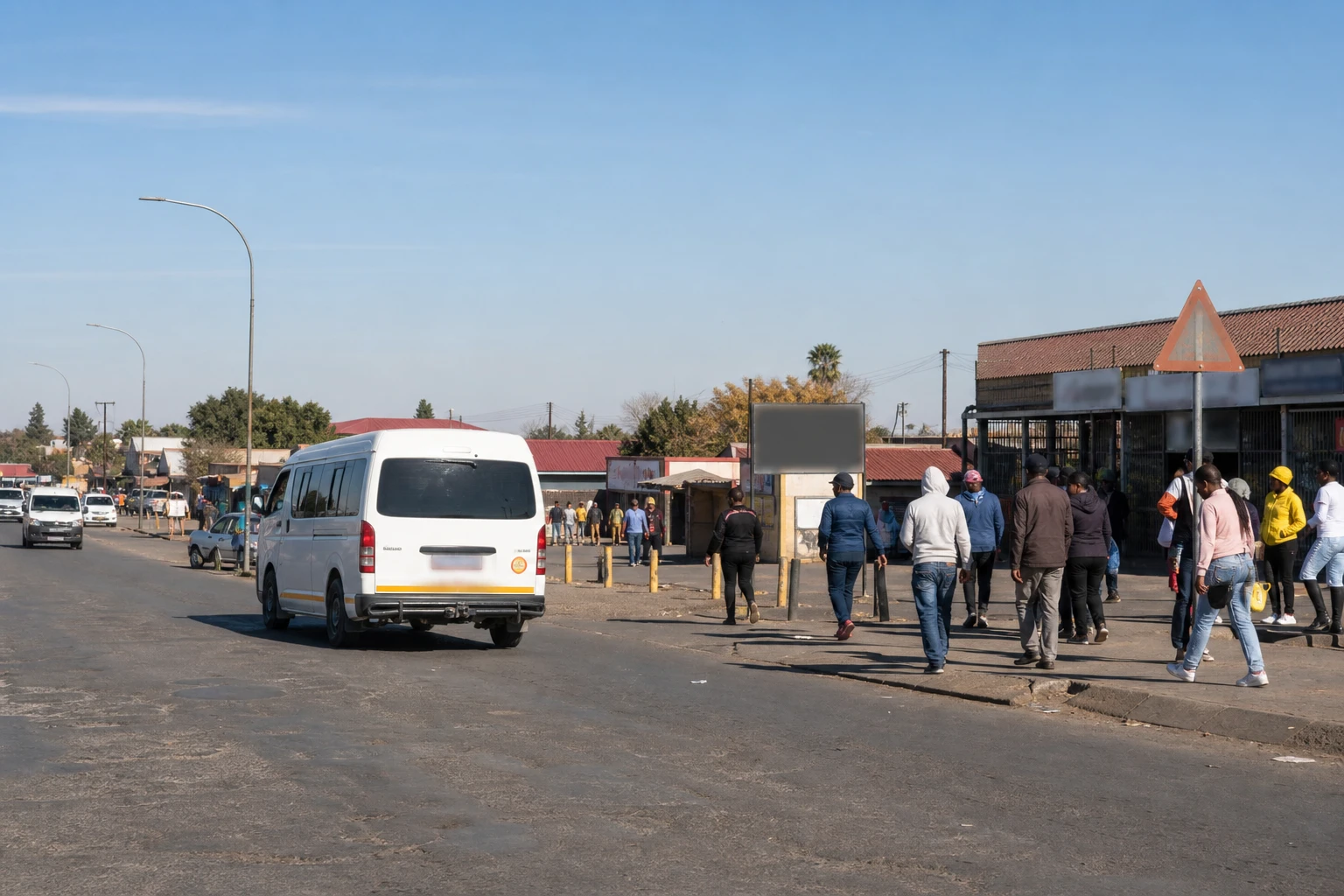
On the night of Saturday 26 to Sunday 27 September 2026, an ordinary outing turned tragic in the township of Wedela, near Carletonville, west of Johannesburg. Seventeen people were killed and 15 others injured in an attack on a drinking venue. The death toll is a reminder of the persistent vulnerability of some social gathering places in South Africa.
An attack carried out in two stages
The events took place in the West Rand district, in Gauteng province. According to initial information released by the South African police, eight armed men opened fire on customers outside the establishment. They are said to have then entered the premises and continued shooting.
The victims who died were 13 men and four women. Emergency medical services declared them dead at the scene. Fifteen other people, who had been shot, were taken to healthcare facilities. Their condition was not specified in the first public statements.
The attackers are also said to have searched some customers and taken their mobile phones. They reportedly left in two vehicles, which were later set on fire. These details are based on initial findings and will need to be confirmed by the investigation.
Police have opened 17 murder cases, 15 attempted murder cases and two cases of malicious damage to property. They are still searching for the suspects. No motive has been established and no arrests had been announced at the time of the first updates issued on Sunday 27 September.
An area marked by trafficking and armed violence
Wedela is in the local municipality of Merafong City, an area in western Gauteng known for its mining activity and deep economic inequalities. Carletonville lies at the heart of a former gold-mining basin where networks involved in illegal mining also fuel trafficking in weapons, metals and drugs.
However, it would be premature to link the attack to clandestine mining or a conflict between criminal groups. Police have not publicly adopted this theory. The theft of phones mentioned in initial accounts may have been opportunistic, part of a more organised criminal operation, or a scenario that has yet to be clearly established.
Taverns, shebeens and other drinking venues play an important role in the social life of South Africa’s townships. They are places for meeting, work and commerce. But some operate in neighbourhoods where lighting, police presence and emergency services remain inadequate.
This reality creates particular risks for residents. Owners must ensure the safety of their customers with limited resources. Informal-economy workers depend on these venues for their income. Meanwhile, victims’ families bear the human and financial consequences of violence, while neighbouring businesses may lose trade after an attack.
A new episode in a series of attacks
The Wedela shooting comes days after another deadly attack in KwaZulu-Natal province. On 22 September 2026, 11 people were killed and three others injured in KwaMakhutha, south of Durban. The circumstances and motives of that attack are also under investigation.
These incidents are not necessarily part of a coordinated series. They do, however, illustrate the frequency of mass shootings in private or semi-public spaces. For several years, attacks have targeted taverns, family gatherings, informal businesses and homes. Investigators generally consider several lines of inquiry: score-settling, rivalries between groups, extortion, armed robbery or local disputes.
The South African government has repeatedly named violent crime as a national priority. Police are conducting operations including checks and weapons seizures in areas considered high-risk. The effectiveness of these operations, however, depends on the ability to maintain a sustained presence, protect witnesses and bring cases to a successful conclusion in court.
The challenge is not limited to the number of officers deployed. It also concerns control of weapons in circulation, monitoring criminal networks, gathering local intelligence and building trust between residents and law enforcement. In several neighbourhoods, witnesses are reluctant to speak for fear of reprisals. This code of silence slows investigations and protects perpetrators and any potential masterminds.
An issue extending beyond Gauteng
The Wedela tragedy concerns, first and foremost, a specific community in western Gauteng. Nevertheless, it resonates across Southern Africa. South Africa occupies a central position in the Southern African Development Community, or SADC, which brings together 16 states and coordinates regional responses, including on security and cross-border crime.
Weapons used in attacks can move through networks that cross provincial and national borders. Trafficking in vehicles, ammunition, drugs and minerals sometimes relies on the same routes. A lasting response therefore requires cooperation between South African agencies, local authorities and neighbouring countries, in addition to measures taken in affected communities.
The next step will be to identify the perpetrators, trace the weapons and establish the precise role played by the theft of phones in the attack. Authorities will also need to determine whether the two burned vehicles can provide forensic evidence. For families, the immediate priorities remain identifying the victims, supporting the injured and ensuring access to transparent legal proceedings.
In Pretoria and across the provinces, the shooting raises a practical question: how can places where people live and gather be protected without undermining the social and economic activities that shape townships? The answer will require more than a one-off operation. It will call for coordinated action on weapons, intelligence, justice and day-to-day security.