Algeria
 Egypt
 Libya
 Morocco
 Sudan
 Tunisia
 Benin
 Burkina Faso
 Cabo Verde
 Côte d'Ivoire
 Ghana
 Guinea
 Guinea-Bissau
 Liberia
 Mali
 Mauritania
 Niger
 Nigeria
 Senegal
 Sierra Leone
 The Gambia
 Togo
 Cameroon
 Central African Republic
 Chad
 DR Congo
 Equatorial Guinea
 Gabon
 Republic of the Congo
 São Tomé and Príncipe
 Burundi
 Comoros
 Djibouti
 Eritrea
 Ethiopia
 Kenya
 Madagascar
 Malawi
 Mauritius
 Mozambique
 Rwanda
 Seychelles
 Somalia
 South Sudan
 Tanzania
 Uganda
 Angola
 Botswana
 Eswatini
 Lesotho
 Namibia
 Zambia
 Zimbabwe
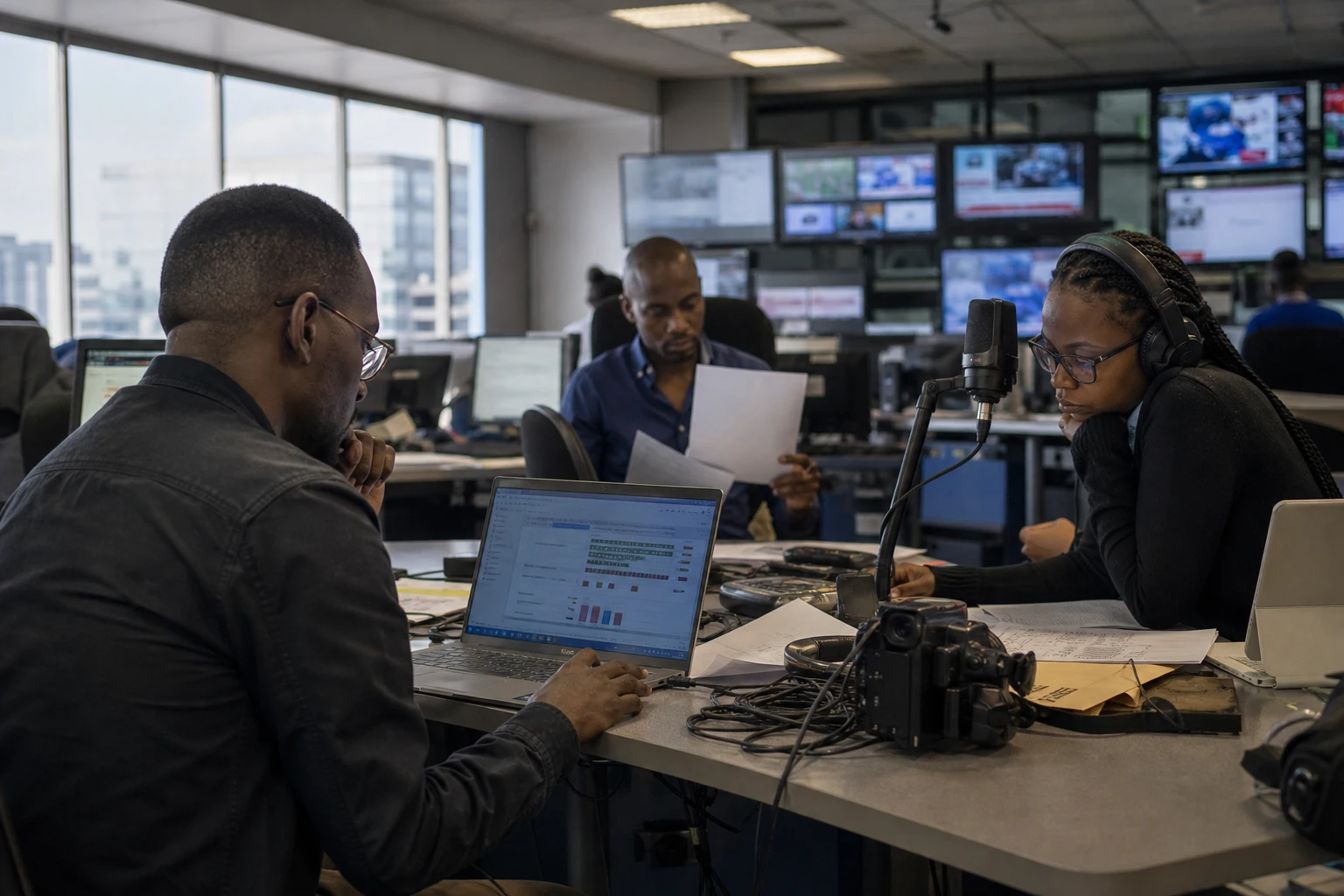
Reviving rail to ease pressure on South Africa’s economy
In South Africa, a shipment loses more than time when it waits for a train or a berth. It loses value, and sometimes an entire market. That is why upgrading rail freight and port infrastructure has become an issue of growth, competitiveness and economic sovereignty, far beyond a simple maintenance operation. South African authorities are seeking to address a well-known weakness in the continent’s largest industrial economy: bottlenecks that hold back mineral exports, manufacturing flows and the smooth movement of imports.
The debate is part of a broader regional trend. The Southern African Development Community has for several years been pushing for better connections between mines, ports and logistics corridors, while the AfCFTA, the African Continental Free Trade Area, is putting pressure on states to reduce domestic transport costs. In Pretoria, the South African government now presents rail as a tool for productive recovery, not merely as a struggling public service. This shift began to take shape with the creation of Transnet Rail Infrastructure Manager, the gradual opening of the network to private operators and a series of public financial support measures.
What Pretoria is seeking
The starting point is clear: Transnet is seeking 35 billion rand, or about $2.2bn, from the National Treasury through the Budget Facility for Infrastructure, a budgetary facility for major infrastructure projects. The request was made public by Transport Minister Barbara Creecy and comes on top of other support already granted to the state-owned company. In May 2025, the government approved a 51 billion rand guarantee for Transnet to secure its financing needs and debt. In 2026, Pretoria continued to support the state-owned company while linking assistance to operational reforms.
The funding is intended to pay for work through to 2030. The aim is not just to replace ageing equipment. It is also to handle new freight volumes and establish a more open system. The South African government has approved the entry of 11 private operators onto the freight rail network. The companies were selected for strategic corridors and are due to operate across several segments: coal, manganese, containers, fuel and general freight. According to Reuters, they are expected to provide an additional 24 million tonnes of capacity, with scope for this to increase over the years.
The Department of Transport and Transnet have presented this opening as a response to a structural problem: a network dominated by a single operator for too long, despite industrial and mining demand exceeding available capacity. The government wants to increase rail freight from about 180 million tonnes to 250 million tonnes a year by 2030. The first private operators have already signed network access agreements with Transnet Rail Infrastructure Manager, confirming that the reform has moved beyond the announcement stage.
Ports, rail network and the real economy
There is movement in the ports strategy, too. Minister Barbara Creecy has cited a floating dock to be run by the private sector in Cape Town to strengthen ship repair, as well as a port community system: a digital platform linking authorities, operators and logistics players to improve the coordination of flows. Behind these technical terms lies a very practical challenge: reducing waiting times, improving vessel turnaround and making terminals more predictable for exporters and importers alike.
This shift directly affects the sectors that keep South Africa’s economy moving. Coal and manganese mines, mineral exporters, container handlers, industrial producers and logistics companies all depend on rail and ports. When the supply chain is blocked, the cost is passed on to businesses, workers and public finances. The government’s message is therefore twofold: retain public ownership of infrastructure, but bring in additional operators to make the best use of the existing network. This is a way to address the limits of a model that has remained too centralised without relinquishing strategic control of essential routes.
The economic context explains the urgency. South African authorities and several leading media outlets have for years pointed out that logistical inefficiencies weigh heavily on growth and exports. In 2026, President Cyril Ramaphosa stressed the need to mobilise private capital while keeping railways and ports in the public domain. The idea is not new, but it is now taking a more operational form, with capacity agreements, funding windows and a clearer separation between infrastructure management and commercial operations.
A South African reform with implications beyond its borders
The reform’s reach extends beyond Pretoria. South Africa is a major logistics hub for southern Africa, and its ports also serve neighbouring economies that are landlocked or depend on its corridors. If South African rail becomes more reliable, regional supply chains will also run more smoothly. Conversely, if delays persist, the costs will spread across the SADC, regional exporters and competing ports. This regional dimension explains why South African authorities are now talking about continental competitiveness as well as restoring public assets.
The timetable will be decisive. Private operators must scale up gradually, while Transnet must show that its investments are delivering measurable results before 2030. The government has already said that some new capacity could come on stream on the coal and iron ore corridors, two vital routes for exports. The question now is no longer simply whether South Africa will fund its network. It is whether it can turn that network into a driver of regional growth, in a southern Africa where the logistics battle matters as much as the battle over commodity prices.