Algeria
 Egypt
 Libya
 Morocco
 Sudan
 Tunisia
 Benin
 Burkina Faso
 Cabo Verde
 Côte d'Ivoire
 Ghana
 Guinea
 Guinea-Bissau
 Liberia
 Mali
 Mauritania
 Niger
 Nigeria
 Senegal
 Sierra Leone
 The Gambia
 Cameroon
 Central African Republic
 Chad
 DR Congo
 Equatorial Guinea
 Gabon
 Republic of the Congo
 São Tomé and Príncipe
 Burundi
 Comoros
 Djibouti
 Eritrea
 Ethiopia
 Kenya
 Madagascar
 Malawi
 Mauritius
 Mozambique
 Rwanda
 Seychelles
 Somalia
 South Sudan
 Tanzania
 Uganda
 Angola
 Botswana
 Eswatini
 Lesotho
 Namibia
 South Africa
 Zambia
 Zimbabwe
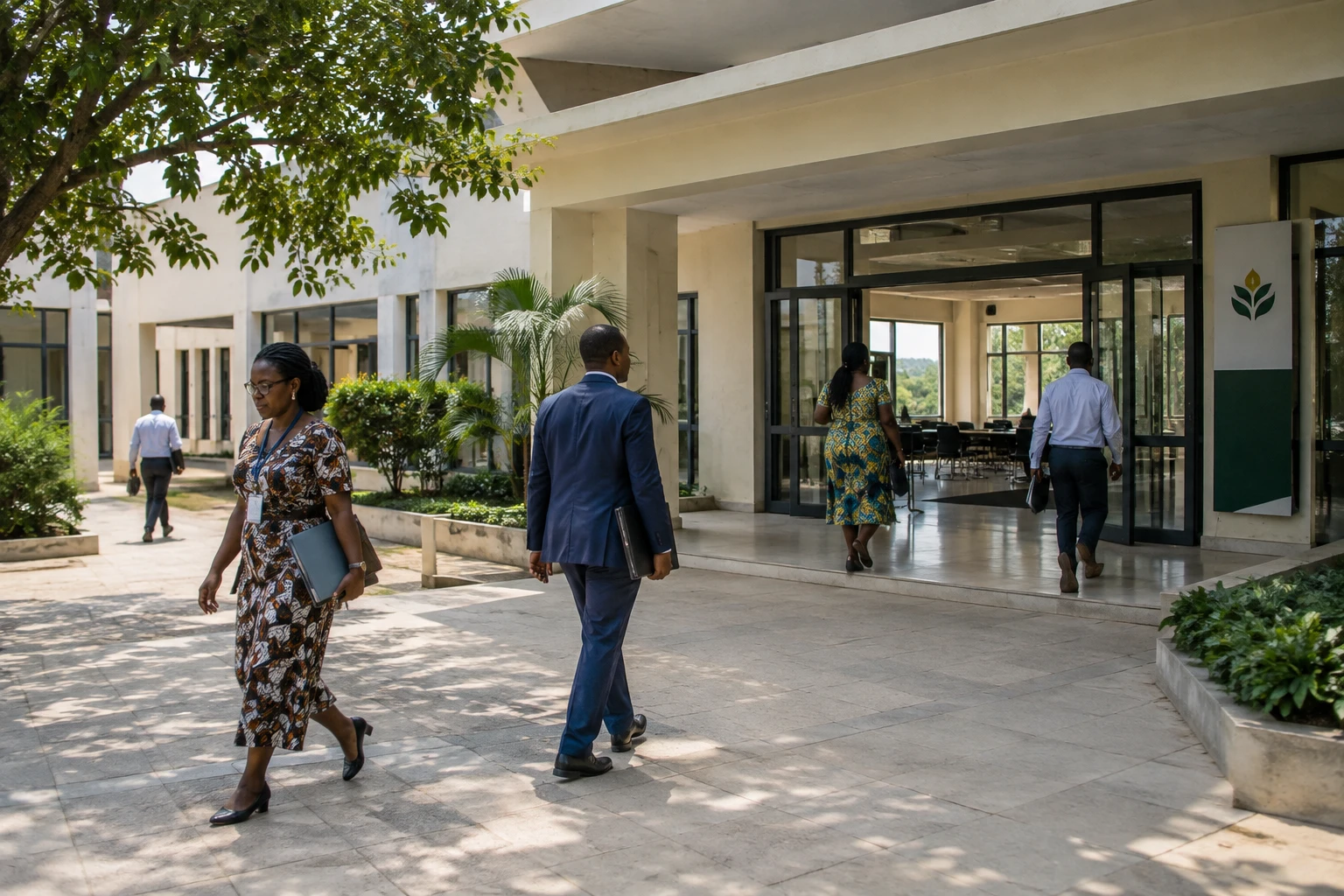
Access to the Chinese market could open up new opportunities for Togolese producers. But it guarantees neither additional sales nor better pay for farmers. The central question, following the signing of new agreements between Lomé and Beijing, is how they will translate into tangible results in fields, businesses and public revenues.
A partnership within an imbalanced trade relationship
Togo has maintained diplomatic relations with China since 1972. In recent years, Lomé and Beijing have signalled their intention to broaden their cooperation, particularly in trade, infrastructure and training. The rapprochement is also part of international competition for economic partnerships in West Africa.
Bilateral trade reached $5.43 billion in 2025, up 55% year on year, according to figures attributed to the Chinese ambassador to Togo and cited by several Togolese media outlets. This volume does not mean that Togolese exports to China reached that amount. China is a major supplier to the country, while Togolese sales to the Chinese market remain far more modest.
For the Togolese authorities, the challenge is therefore to turn a trade relationship into opportunities for local businesses. This objective aligns with the country’s economic transformation priorities. It also arises within a regional framework in which the free movement of goods and market integration remain important issues for the Economic Community of West African States (ECOWAS).
Thirteen agreements across a range of sectors
From 9 to 16 October 2026, President of the Council Faure Essozimna Gnassingbé paid an official visit to China. On 15 October, in Beijing, he met Chinese Premier Li Qiang. The two governments signed thirteen agreements and protocols covering finance, customs, agriculture, training, the media and security, among other areas, according to Togo’s official portal.
These commitments include a protocol on the partial cancellation of Togo’s public debt to China. Published information does not specify the amount involved or the terms of implementation. Without these details, it is impossible to assess the measure’s immediate effect on the budget or public spending.
Another agreement brings together the Togolese Revenue Office and China’s customs administration. It provides for cooperation on authorised economic operator status, a scheme that can simplify formalities for businesses meeting compliance and security criteria. Its effectiveness will depend, among other things, on implementation, the procedures adopted and Togolese businesses’ access to the scheme.
Soybeans: a new market and local processing
The phytosanitary agreement on soybeans sets out the health requirements for Togolese exports to China. It could remove a regulatory barrier to market access. However, it is neither a firm order nor a guarantee of export volumes: producers and exporters will have to meet the required inspections, quality standards and commercial conditions.
The potential is significant. The 2024-2025 agricultural season is reported to have produced more than 260,000 tonnes of soybeans in Togo, while trade data for 2023 showed around 293 tonnes exported to China. These figures, reported by Togolese media based on agricultural and trade data, highlight the gap between national production and sales to this market. On their own, they do not make it possible to forecast future export growth.
Another priority is part of the equation: processing at home. In January 2026, Togo introduced an export tax on soybean seeds to encourage local processing, according to information available on the measure. Opening up the Chinese market will therefore have to be aligned with this policy. Producers could benefit from an additional buyer, while processing plants seek to secure their supplies and create more value in the country.
This alignment is not automatic. If exports of raw soybeans become more lucrative, they could compete with local processors for supplies. Conversely, investment in processing, logistics and quality control could help the sector serve several markets. The precise terms of the protocol and support measures for local stakeholders will be decisive.
Measuring the impact beyond announcements
The agreements also refer to digital trade, supply chains and green development. Free training courses in robotics and 6G technology have been announced for Togolese students. Their reach will depend on the timetable, the number of beneficiaries, the institutions involved and whether the programmes continue. An announcement of training does not yet make it possible to measure the skills acquired or jobs created.
The effects will not be the same for everyone. Large companies capable of meeting customs and health requirements will be better placed to benefit from new schemes. Small businesses, cooperatives and producers far from infrastructure will need effective access to information, finance, equipment and inspection services. In Lomé, port-related and trading activities could benefit from increased flows; in production areas, the impact will depend more on transport, storage and the prices paid to farmers.
It will also be necessary to distinguish growth in total trade from value creation in Togo. Published statistics point to a sharp increase in trade, but do not provide a full breakdown between imports and exports here. Tracking Togolese sales, the extent of local processing and tax revenues will give a more precise measure of the results.
Implementation, the next test for Lomé and Beijing
For Togo, these agreements strengthen an already expanding bilateral partnership. Their regional significance, however, will depend on their ability to support domestic production and trade with neighbouring countries, rather than simply increasing imports. ECOWAS, which brings together West African economies, provides a relevant framework for monitoring the effects on supply chains and regional trade.
The next steps are concrete: publication of the terms of debt relief, implementation of customs procedures, application of phytosanitary rules and organisation of the announced training courses. Data on soybean export volumes, prices paid to producers and the share processed in the country will then make it possible to assess the benefits. For now, the thirteen agreements open up possibilities; their economic value will be measured by their verifiable impact on Togolese people and businesses based in Togo.
Sources consulted: official announcement of the Togo-China agreements, economic details on the agreements and the soybean sector, account of the meeting in Beijing, trade figures and context, analysis of Togo-China trade flows.