Algeria
 Egypt
 Libya
 Morocco
 Sudan
 Tunisia
 Benin
 Burkina Faso
 Cabo Verde
 Côte d'Ivoire
 Ghana
 Guinea
 Guinea-Bissau
 Liberia
 Mali
 Mauritania
 Niger
 Nigeria
 Senegal
 Sierra Leone
 The Gambia
 Cameroon
 Central African Republic
 Chad
 DR Congo
 Equatorial Guinea
 Gabon
 Republic of the Congo
 São Tomé and Príncipe
 Burundi
 Comoros
 Djibouti
 Eritrea
 Ethiopia
 Kenya
 Madagascar
 Malawi
 Mauritius
 Mozambique
 Rwanda
 Seychelles
 Somalia
 South Sudan
 Tanzania
 Uganda
 Angola
 Botswana
 Eswatini
 Lesotho
 Namibia
 South Africa
 Zambia
 Zimbabwe
When diagnosis becomes a frontline
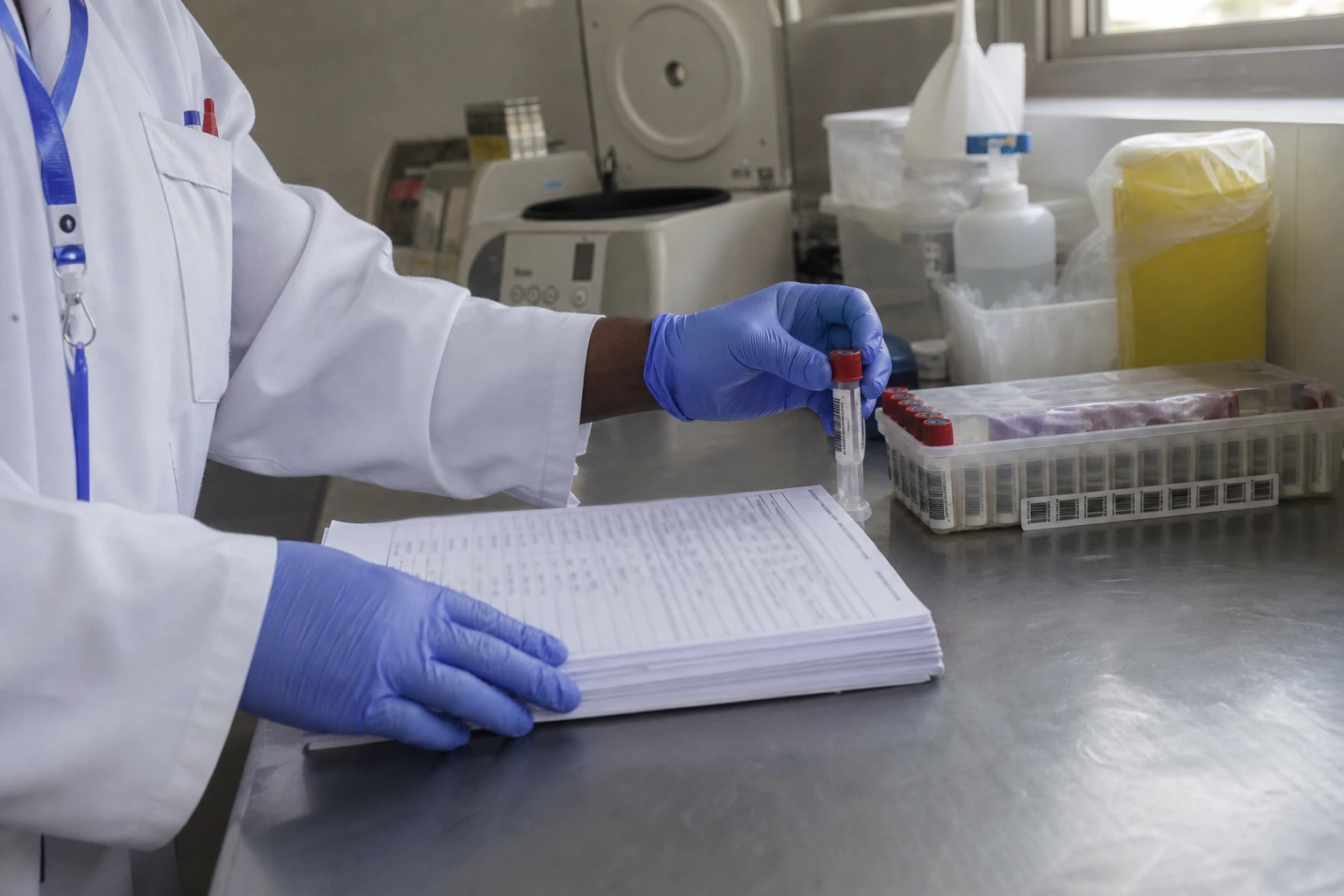
In Lomé, the debate is anything but abstract. Behind the white coats and microscopes, one question dominates: how can a local infectious outbreak be prevented from turning into a regional crisis once again? On a continent where health alerts spread fast, the ability to test for, identify and report a pathogen is often as decisive as the availability of hospital beds. The experts gathered in Togo made the point clearly: without strong laboratories, the health response comes too late.
The West African context explains this emphasis. ECOWAS, the regional economic community of West Africa, has faced repeated epidemic threats for several years, while Africa CDC and the WHO are urging states to strengthen surveillance, diagnostic and cross-border coordination systems. In 2026, this vigilance is not theoretical: an Ebola outbreak linked to the Bundibugyo virus prompted a joint continental plan by the WHO and Africa CDC, with an explicit focus on laboratory testing, surveillance and infection prevention.
A conference in Lomé to turn experience into doctrine
The meeting opened in Lomé is the first regional conference of the West African Federation of Medical Laboratory Sciences. It brings together medical biologists from several countries for three days under the theme: “Medical biologists and public health in West Africa: issues, challenges and prospects”. The choice of Togo is no coincidence. In recent years, Lomé has emerged as a gathering point for health and scientific discussions with a sub-regional reach, in a country that is gradually investing in its hospital services and technical capabilities.
The message delivered in Lomé is simple: epidemics are not managed only in care units, but upstream, in laboratories, sample transport chains, technician training and the quality of results. The WHO also stresses that strengthening public laboratories is part of the full cycle of preparedness, response and recovery after a crisis. Africa CDC, for its part, points out that a more decentralised diagnostic network can speed up detection and response, provided it is supported by common standards and integrated surveillance systems.
Ebola, Covid-19 and lessons still to be learned
The memory of Ebola remains central to the discussion. In West Africa, the 2014-2016 epidemic exposed weaknesses in health systems, including delays in diagnosis, underdeveloped laboratory networks and a shortage of qualified staff. In its reference documents for the African region, the WHO explicitly linked the lessons of Ebola to the need for laboratory reform. Covid-19 then confirmed the same lesson: rapid tests, the quality of procedures and the availability of equipment determine the speed of the public response.
In Lomé, Dr Arthur Garber, a representative of laboratory professionals from Sierra Leone, recalled the role of medical staff during the Ebola epidemic in his country in 2014. This reference says much about the West African experience: on the frontline, clinicians and biologists have often made up for systems that were too fragile through their commitment. But individual commitment cannot replace a sustainable public infrastructure. That is precisely what is at stake.
Togo’s case illustrates this tension. The country has strengthened some parts of its health system, with referral facilities, an infectious disease centre and molecular biology capabilities at the University of Lomé. During the pandemic, the WHO had already highlighted the role of reference laboratories and the need to obtain results within 24 to 48 hours to break chains of transmission. But the expansion of these tools does not eliminate a wider difficulty: in many African countries, laboratory services remain unevenly distributed between capitals and regions, with bottlenecks in sample transport and the availability of reagents.
Beyond the white coats, a question of health sovereignty
The debate in Lomé goes beyond the profession of medical biologists. It touches on health sovereignty, meaning states’ ability to detect a threat themselves, identify it without excessive external dependence and respond quickly. In a context where Africa CDC now speaks of a “coherent” and “interoperable” diagnostic ecosystem, the issue is also political: a country that conducts too few tests, or does so too slowly, remains vulnerable to rumours, mistrust and undetected chains of transmission.
This sovereignty comes at a cost. It requires recurring budgets, not just emergency funding. It also requires attractive career paths for medical biologists, quality standards, accreditation systems and the reliable flow of results between national laboratories and peripheral facilities. In practice, this changes everything for rural populations, often further from decision-making centres and technical facilities, as well as for capital-city hospitals, which are more exposed to surges in consultations during epidemic alerts.
What Lomé says about West Africa
The conference’s significance is regional before it is national. West Africa shares porous borders, busy cross-border markets and daily movements that can quickly turn any health alert into a collective concern. This is why the WHO and Africa CDC are now stressing shared surveillance, testing and coordination mechanisms. The continental plan launched in June 2026 in response to Ebola points in this direction: it links states, laboratories, communities and field teams in a common response effort.
For West African governments, the signal from Lomé is clear: health preparedness is not measured when an alert breaks, but in the months before it. The recommendations announced at the end of the conference will therefore have real political weight if they translate into budgets, equipment and diagnostic networks closer to communities. In a region already facing several emergencies at once, strong laboratories are not a technical luxury. They are a condition for public stability.