Algeria
 Egypt
 Libya
 Morocco
 Sudan
 Tunisia
 Benin
 Burkina Faso
 Cabo Verde
 Côte d'Ivoire
 Ghana
 Guinea
 Guinea-Bissau
 Liberia
 Mali
 Mauritania
 Niger
 Nigeria
 Senegal
 Sierra Leone
 The Gambia
 Cameroon
 Central African Republic
 Chad
 DR Congo
 Equatorial Guinea
 Gabon
 Republic of the Congo
 São Tomé and Príncipe
 Burundi
 Comoros
 Djibouti
 Eritrea
 Ethiopia
 Kenya
 Madagascar
 Malawi
 Mauritius
 Mozambique
 Rwanda
 Seychelles
 Somalia
 South Sudan
 Tanzania
 Uganda
 Angola
 Botswana
 Eswatini
 Lesotho
 Namibia
 South Africa
 Zambia
 Zimbabwe
In Vogan, protests seek a second wind
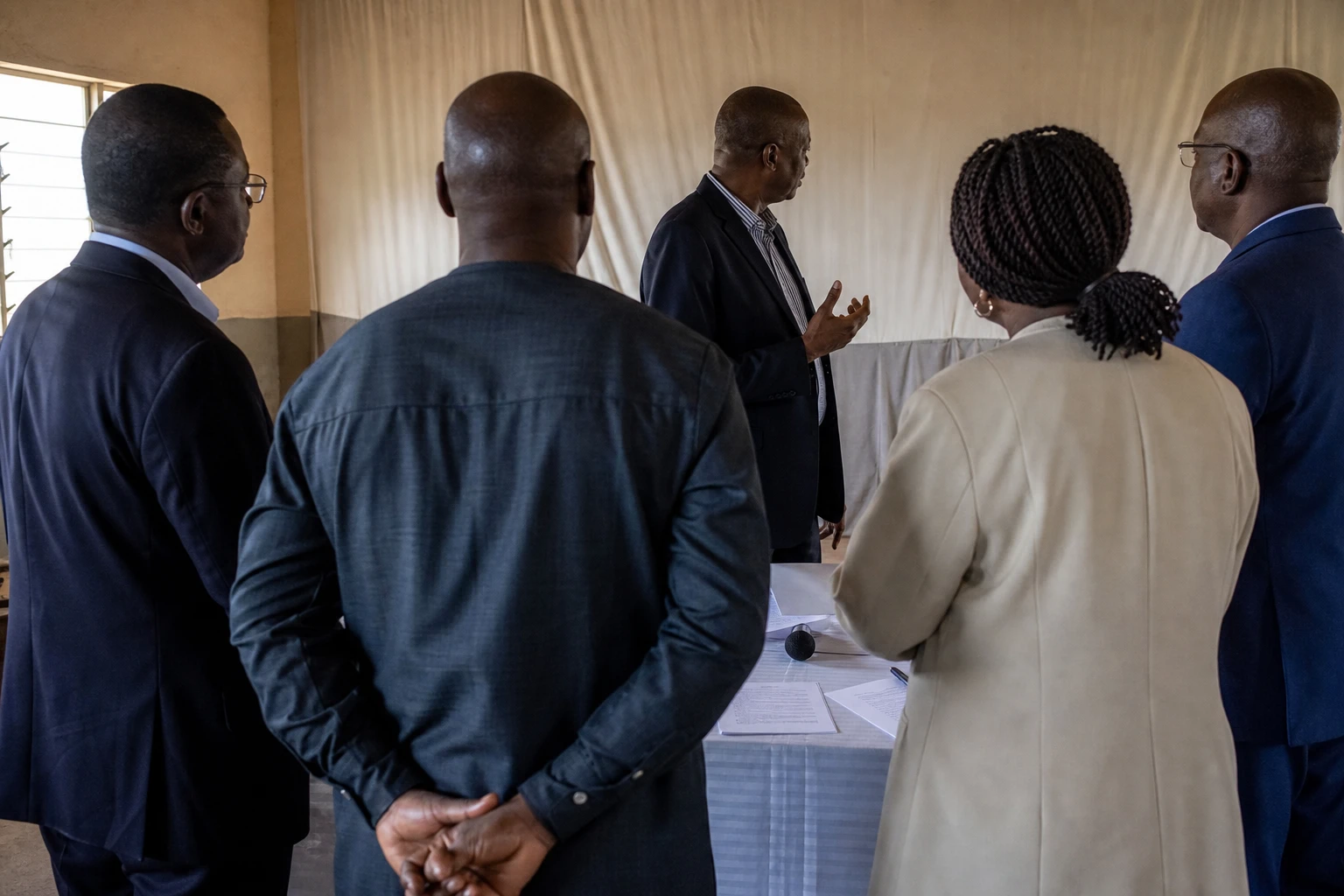
In southern Togo, a crowd gathered far from Lomé to show that institutional reform does not end with its promulgation. When the machinery of power changes, the battle often moves to the streets, the courts and political memory. That is what is still unfolding in Vogan, about 60 kilometres from the Togolese capital, where the opposition and civic organisations have put the 2024 Constitution back at the centre of public debate.
The gathering came in a country where large opposition demonstrations have been rare for several years. They are closely monitored, sometimes banned, and take place in a political climate marked by the concentration of power, tensions over civil liberties and persistent mistrust between those in government and their opponents. Togo is a member of ECOWAS, the Economic Community of West African States, whose Court of Justice has become one of the arenas for the dispute over the Togolese reform.
A reform adopted in 2024 remains at the heart of the standoff
According to information corroborated by multiple sources, several hundred people attended Sunday’s mobilisation on 26 July. It opened with a traditional libation, after which the officials present sang the Togolese national anthem before placards appeared denouncing a “constitutional change of government” and a “constitutional coup”. The rally ended without incident, in a peaceful atmosphere, with traditional songs and dances.
The organisers wanted to make the gathering a clear political signal. David Dosseh, spokesman for the Front citoyen Togo debout, denounced a revision he considers illegal. Me Dodji Apévon, president of the Force démocratique pour la République, called on citizens to wake up. A demonstrator, meanwhile, said he wanted a return to the old Constitution. These statements express the central dividing line: for the opposition, the reform is not a simple institutional adjustment, but a way of extending an already longstanding political order.
The contested text was promulgated on 6 May 2024 by Faure Gnassingbé. The Togolese presidency presents the revision as a step towards “strengthening democracy”, adopted after consultations with what it calls the country’s vital forces. Opponents see the opposite. The new structure abolishes the direct universal suffrage election of the head of state and shifts to a parliamentary system. The highest office becomes that of president of the Council of Ministers, held by Faure Gnassingbé.
What the new structure of power changes
The debate is not just about one constitutional article. It concerns how executive power is appointed, the role of parliament and the possibility of a genuine change of government. The presidential camp defends a reform intended to improve representativeness. The opposition, however, believes the change further restricts access to the highest office by removing voters’ ability to choose the president directly. In a country where Faure Gnassingbé has been in power since 2005, political suspicion runs deep.
The controversy is also regional. In West Africa, the question of political alternation and time in power remains sensitive, as several countries have experienced institutional ruptures in recent years. Togo is therefore being watched beyond its borders, not as an isolated case but as another test of the region’s democratic standards. ECOWAS, already politically weakened, now has one of its member states directly challenging the legal interpretation of a reform adopted in Lomé.
The concrete effects can also be seen in the streets. For the authorities, the priority is to maintain public order and secure acceptance of the new institutions. For opponents and some of the urban youth, the issue is broader: whether political participation remains credible, whether demonstrations can take place, and whether public debate can still influence key decisions. In the provinces as in Lomé, this tension strengthens the sense that politics is decided at the top, while citizens bear the consequences.
The legal front and the precedent of the 2025 protests
The battle is now as much legal as political. On 26 June, the ECOWAS Court of Justice ruled that the constitutional amendment adopted on 25 March 2024 constituted an unconstitutional change of government, contrary to Article 23 of the African Charter on Democracy, Elections and Governance. The Court also recalled the limits of its jurisdiction over certain complaints based on the Community’s democracy protocol. This qualification does not strip the ruling of its symbolic significance: it gives the opposition arguments, while leaving the government room to challenge its interpretation.
The Togolese authorities rejected this analysis, saying the regional court had exceeded its powers. This response follows a consistent line: defending the country’s constitutional sovereignty and avoiding any perception that a regional body is the ultimate arbiter of domestic politics. In practice, the standoff is not over. It is simply shifting from one level to another, from parliament to the courts, and then from courtrooms to public squares.
The current protests also extend the cycle of demonstrations in 2025. At the time, civil society reported seven deaths during protests against the government, while the authorities said five bodies had been recovered and that the deaths were caused by drowning. The discrepancy between the tolls has left a deep mark on public debate. It helps explain why each new gathering is viewed through the lens of repression, an unfinished investigation and the need for clarity about responsibility.
What to watch next
What happens next will depend on three variables. First, the opposition’s ability to turn occasional gatherings into sustained pressure. Second, the state’s response, between limited tolerance and a security crackdown. Finally, the possible use of the regional framework, since the ECOWAS ruling gives the protest movement an additional basis for questioning democratic legitimacy. In a Togo where the streets are rarely allowed to influence institutions, even the slightest opening, or increase in tensions, can have a rapid political effect.
Beyond Togo, the episode is a reminder of a broader reality across the continent: in several countries, constitutional reform has become the arena where the balance between institutional stability and political alternation is contested. In Lomé, as elsewhere, the question is not only who governs. It is also under what rules, with what checks and balances, and with what role for ordinary citizens.