Algeria
 Egypt
 Libya
 Morocco
 Sudan
 Tunisia
 Benin
 Burkina Faso
 Cabo Verde
 Côte d'Ivoire
 Ghana
 Guinea
 Guinea-Bissau
 Liberia
 Mali
 Mauritania
 Niger
 Nigeria
 Senegal
 Sierra Leone
 The Gambia
 Togo
 Cameroon
 Central African Republic
 Chad
 DR Congo
 Equatorial Guinea
 Gabon
 Republic of the Congo
 São Tomé and Príncipe
 Burundi
 Comoros
 Djibouti
 Eritrea
 Kenya
 Madagascar
 Malawi
 Mauritius
 Mozambique
 Rwanda
 Seychelles
 Somalia
 South Sudan
 Tanzania
 Uganda
 Angola
 Botswana
 Eswatini
 Lesotho
 Namibia
 South Africa
 Zambia
 Zimbabwe
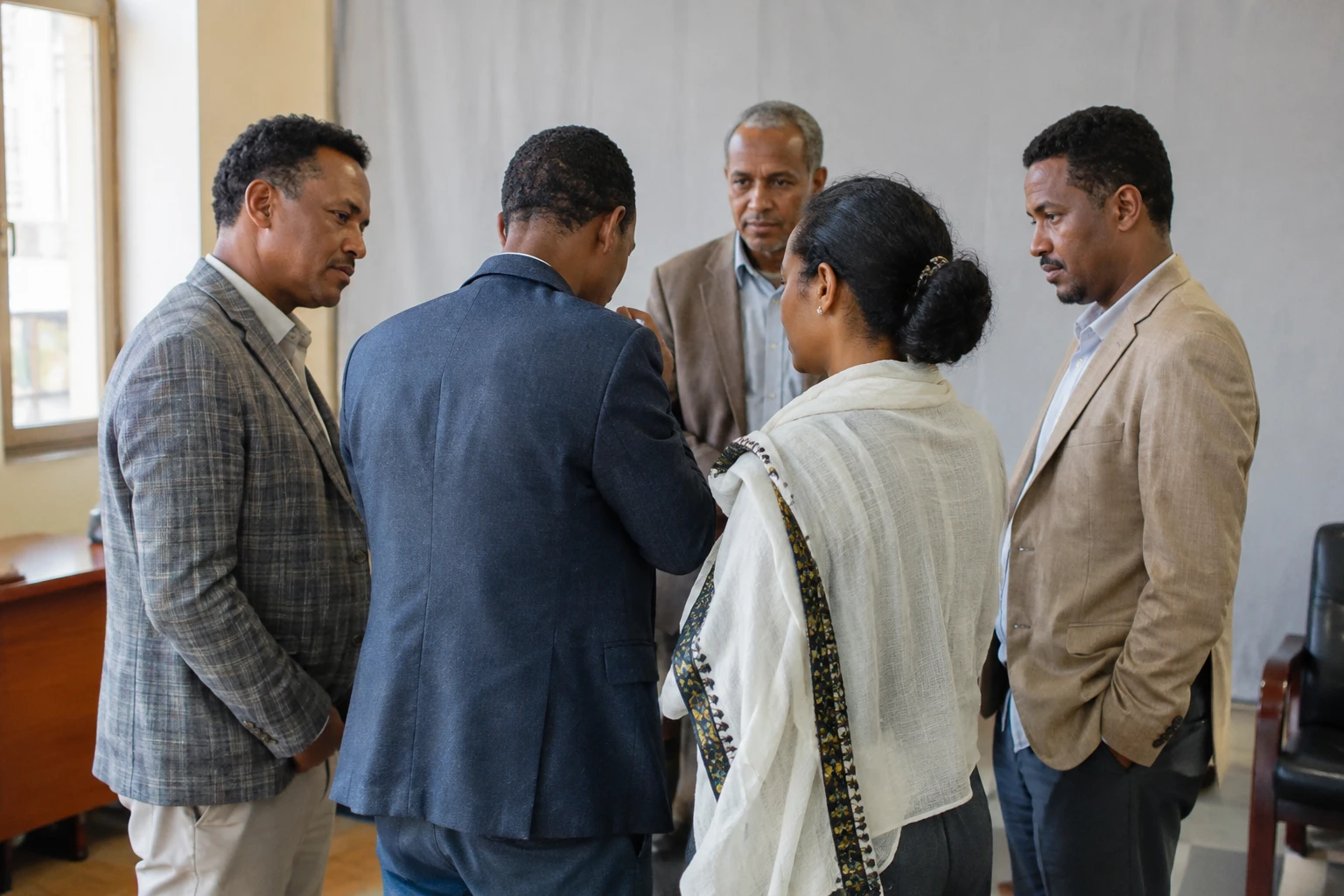
In Mekelle, reopening public services will not be enough to restore trust. After several weeks of fighting, the central question is now political: who can govern Tigray, and under what conditions will residents choose their representatives?
A takeover after fighting resumes
On 16 October 2026, Ethiopia’s federal government announced a six-month interim administration for Tigray. The decision came after the Tigray People’s Liberation Front (TPLF) withdrew from Mekelle, the regional capital, on 3 October, followed by the entry of forces allied with the federal government. The Ethiopian News Agency and the Associated Press have both reported the creation of the administration and its temporary mandate.
Five officials have been appointed. They are to oversee administration and public services, reconstruction and the economy, security, political affairs, and the municipality of Mekelle. According to the government, their priorities are to restore institutions, repair damaged infrastructure, facilitate the return of displaced people and prepare free regional elections within six months.
Addis Ababa presents the arrangement as a transitional measure, limited to day-to-day management and preparations for the vote. Long-term strategic decisions are expected to be made by an elected regional administration. But the structure remains under the direction and supervision of the federal government: this oversight will be at the heart of debates about its legitimacy.
Federal authorities say they want to restore security and get essential services running again. In Mekelle, registration of former combatants ahead of their return to civilian life has also resumed, according to information corroborated by the Associated Press. This part of the process falls under the disarmament, demobilisation and reintegration programme set out in the 2022 peace agreement. Its implementation will nevertheless depend on security and the former combatants’ trust.
Electoral promise faces the challenge of representation
The announced timetable is tight. Credible elections require more than a date: residents must be able to participate, parties must know the rules and campaign conditions, and political disagreements must be allowed to be voiced without threat. The composition of the interim authorities and access for the various Tigrayan political forces to the vote will therefore matter as much as the practical organisation of the ballot.
Distrust is already evident. An official from the Tigrayan Salsaye Woyané party, quoted in available reports, believes that local consultations held in some towns and neighbourhoods were too rushed and did not include the majority of residents. This criticism could not be independently verified. It nevertheless highlights a concrete issue: assemblies and temporary votes can help fill an administrative vacuum, but their significance depends on genuine participation and the safety of those taking part.
The precedent makes this question particularly sensitive. After the Pretoria agreement of November 2022, an interim administration was already established in Tigray. Yet tensions between the federal government and the TPLF did not disappear. Provisions on disarmament, the return of displaced people and regional governance remained points of friction. The new administration therefore takes office in a fragile peace framework, not after a lasting political settlement.
The consequences will not be the same for everyone. In Mekelle and other urban centres, the immediate priority is the functioning of services and local institutions. For displaced people, return will also depend on security and the possibility of finding housing and a livelihood. In rural areas, access to services and the presence of local authorities will be decisive. Informal workers, who often depend on markets and daily travel, remain particularly exposed to interruptions in their activities.
An issue for Ethiopia and the Horn of Africa
The Tigray crisis is part of Ethiopia’s federal balance: regions have their own institutions, while the central government exercises powers across the country. The return of an administration appointed by Addis Ababa thus raises a question that goes beyond the make-up of its team: how can regional autonomy be guaranteed while federal authority is restored after fighting?
The regional dimension is just as important. Ethiopia is home to the African Union headquarters in Addis Ababa and is a member of IGAD, the regional organisation for the Horn of Africa. On 23 September, as military tensions were rising again, the African Union called for restraint and a return to direct dialogue. It recalled that the Pretoria agreement, concluded under its auspices on 2 November 2022, remains the framework for lasting peace.
The resumption of fighting is also affecting relations between Ethiopia and Eritrea, neighbouring countries whose tensions are fuelling concerns about an expansion of the conflict. At this stage, the interim administration resolves neither the disagreements between Addis Ababa and the TPLF nor regional disputes. Instead, it establishes a new chain of political responsibility for six months.
What happens next will be measured against specific facts: the restoration of services, the conditions for displaced people to return, the participation of political actors and whether a vote is actually held. An electoral timetable alone does not guarantee a way out of the crisis. For Tigray and Ethiopia as a whole, the challenge will be to turn the restoration of administrative control into an accepted political process, as the peace agreement comes under renewed pressure.