Algeria
 Egypt
 Libya
 Morocco
 Sudan
 Tunisia
 Benin
 Burkina Faso
 Cabo Verde
 Côte d'Ivoire
 Ghana
 Guinea
 Guinea-Bissau
 Liberia
 Mali
 Mauritania
 Niger
 Nigeria
 Senegal
 Sierra Leone
 The Gambia
 Togo
 Cameroon
 Central African Republic
 Chad
 DR Congo
 Equatorial Guinea
 Gabon
 Republic of the Congo
 São Tomé and Príncipe
 Burundi
 Comoros
 Djibouti
 Eritrea
 Kenya
 Madagascar
 Malawi
 Mauritius
 Mozambique
 Rwanda
 Seychelles
 Somalia
 South Sudan
 Tanzania
 Uganda
 Angola
 Botswana
 Eswatini
 Lesotho
 Namibia
 South Africa
 Zambia
 Zimbabwe
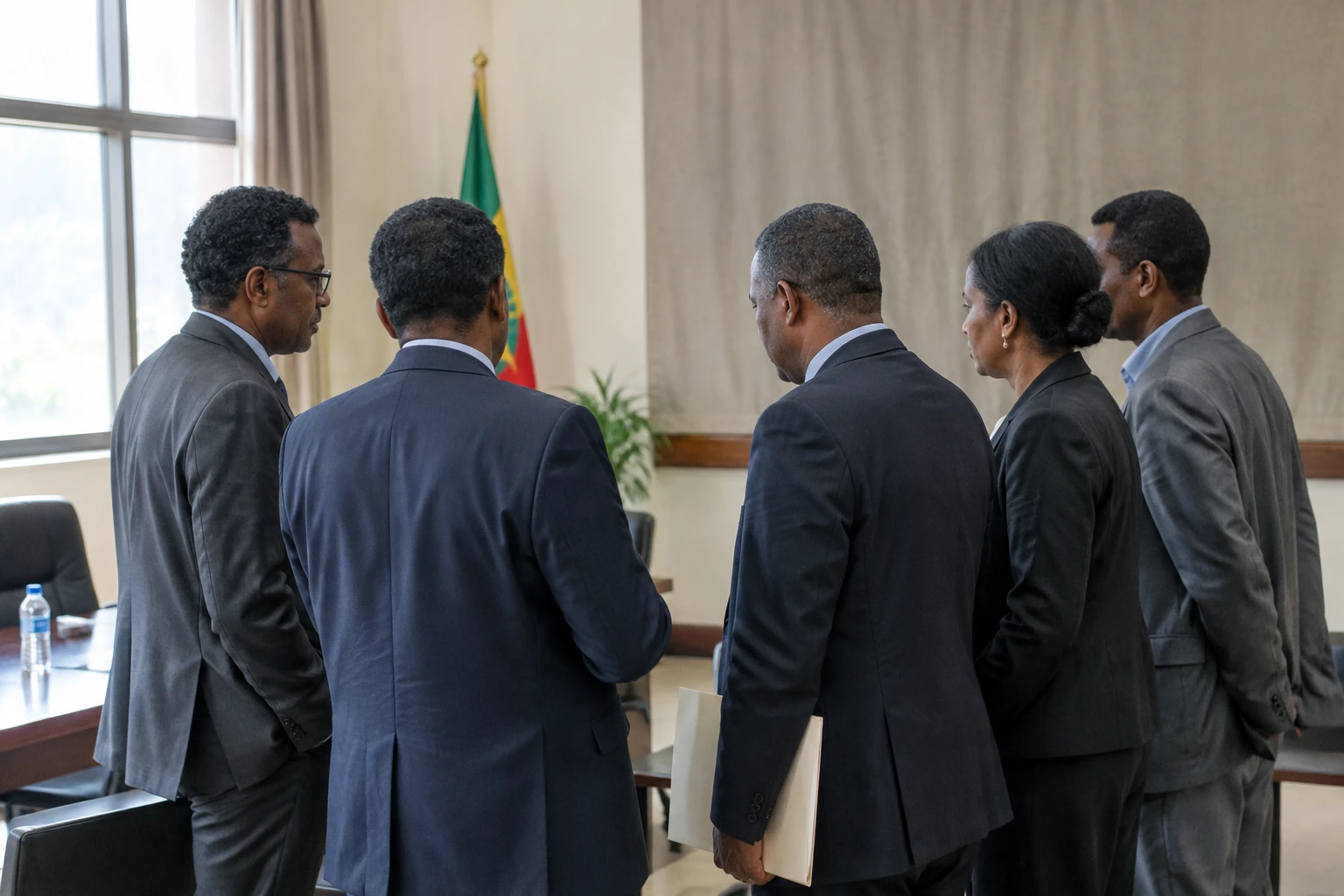
In Mekelle, the immediate question is not just who governs Tigray. For residents, the priority is to regain public services, return home and be able to vote, as renewed fighting has once again shifted the balance of power.
A transition under federal supervision
On 16 October 2026, the Ethiopian government announced the creation of a six-month interim administration in Tigray, a region in northern Ethiopia. It is to restore public services, help displaced people return and prepare regional elections. The office of Prime Minister Abiy Ahmed said the administration would act under federal supervision and be limited to day-to-day management until an elected government is installed. The Ethiopian News Agency sets out its mandate.
The decision came after the Tigray People’s Liberation Front (TPLF) withdrew from Mekelle and forces allied to the federal government entered the regional capital on 4 October. Five officials have been appointed, including a mayor for Mekelle. The TPLF had not responded to the announcement by the time of the first reports. The transfer of regional authority to a team overseen by Addis Ababa nevertheless raises a central political question: how can a credible election be organised when control of the territory has just changed amid fighting?
The arrangement also provides for the reconstruction of damaged infrastructure, social reconciliation and preparations for elections that the government has described as free and inclusive. These commitments have yet to be put into practice. The six-month period sets a tight timetable, but guarantees neither the security needed for a vote nor the participation of all political forces.
The Pretoria agreement faces a new rupture
Tigray is emerging from two years of war, which ended with the 2 November 2022 Pretoria agreement between the federal government and the TPLF. The agreement established a framework for ending hostilities and set out steps for disarmament and reintegration. The resumption of clashes now threatens those commitments. On 23 September, the Intergovernmental Authority on Development (IGAD), an East African regional organisation, called on the parties to end hostilities and resume dialogue. It reiterated that the Pretoria agreement remains the agreed framework for resolving disputes. IGAD’s call for de-escalation also highlights the risks to neighbouring countries.
Accounts of responsibility differ. The prime minister’s office accuses TPLF leaders of obstructing the agreement and reigniting the war. The TPLF disputes the legitimacy of the federal offensive, while fighting has changed control of several towns. These claims must remain attributed to the parties: by themselves, they do not amount to independent verification of events or responsibility.
Regional tensions have risen in parallel. Addis Ababa accuses Eritrean forces of occupying parts of its territory; Eritrea rejects Ethiopia’s accusations and has denounced what it called a declaration of war. IGAD is urging neighbouring countries to support de-escalation. An escalation between the two states could widen a crisis that already has serious consequences for the Horn of Africa.
Disarmament and a return to civilian life
In Mekelle, former combatants have registered for a disarmament, demobilisation and reintegration programme, or DDR. The programme aims to enable combatants to lay down their weapons and return to civilian life. The Ethiopian News Agency says the National Rehabilitation Commission had opened registration centres in several towns in Tigray before registrations resumed. The Associated Press reported that registrations had resumed this week and that the authorities had not disclosed how many people had registered.
For former combatants, reintegration depends on concrete guarantees: security, support and means of making a living. For displaced families, returning home depends on roads, essential services and security conditions allowing it. The government has included returns in the new administration’s mandate, but no detailed timetable or updated figures have been published in the announcements reviewed.
The participation of some former combatants does not mean demobilisation is complete. The AP reports that people interviewed said they had feared being forced back into their units, while other young people at the sites declined to speak for fear of reprisals. These individual accounts do not establish the scale of the problem, but they are a reminder that registration for the programme is taking place amid insecurity and distrust.
Key deadlines to watch
The first test will be whether the administration can restore daily life without turning the transitional period into lasting tutelage. Its mandate has been set by the federal government, while the promised vote is intended to give regional institutions new legitimacy. Transparency in preparations, residents’ participation and the ability of political actors to compete will be decisive.
Another indicator will be the implementation of DDR and the actual return of displaced people. These two efforts directly link political peace to the lives of communities. They cannot make lasting progress if hostilities resume or the Pretoria commitments remain unfulfilled.
For IGAD and the African Union, the situation is testing African mediation and peace-agreement monitoring mechanisms. The six-month timetable could open a path to regional elections, but its credibility will depend on dialogue, security and genuine representation of Tigrayans. In this strategically important region of East Africa, stability will not be measured solely by control of Mekelle: it will also depend on respect for political commitments and on whether civilians can resume normal lives.