Algeria
 Egypt
 Libya
 Morocco
 Sudan
 Tunisia
 Benin
 Burkina Faso
 Cabo Verde
 Côte d'Ivoire
 Ghana
 Guinea
 Guinea-Bissau
 Liberia
 Mali
 Mauritania
 Niger
 Nigeria
 Senegal
 Sierra Leone
 The Gambia
 Togo
 Cameroon
 Central African Republic
 Chad
 DR Congo
 Equatorial Guinea
 Gabon
 Republic of the Congo
 São Tomé and Príncipe
 Burundi
 Comoros
 Djibouti
 Eritrea
 Ethiopia
 Kenya
 Madagascar
 Malawi
 Mauritius
 Mozambique
 Rwanda
 Seychelles
 Somalia
 South Sudan
 Uganda
 Angola
 Botswana
 Eswatini
 Lesotho
 Namibia
 South Africa
 Zambia
 Zimbabwe
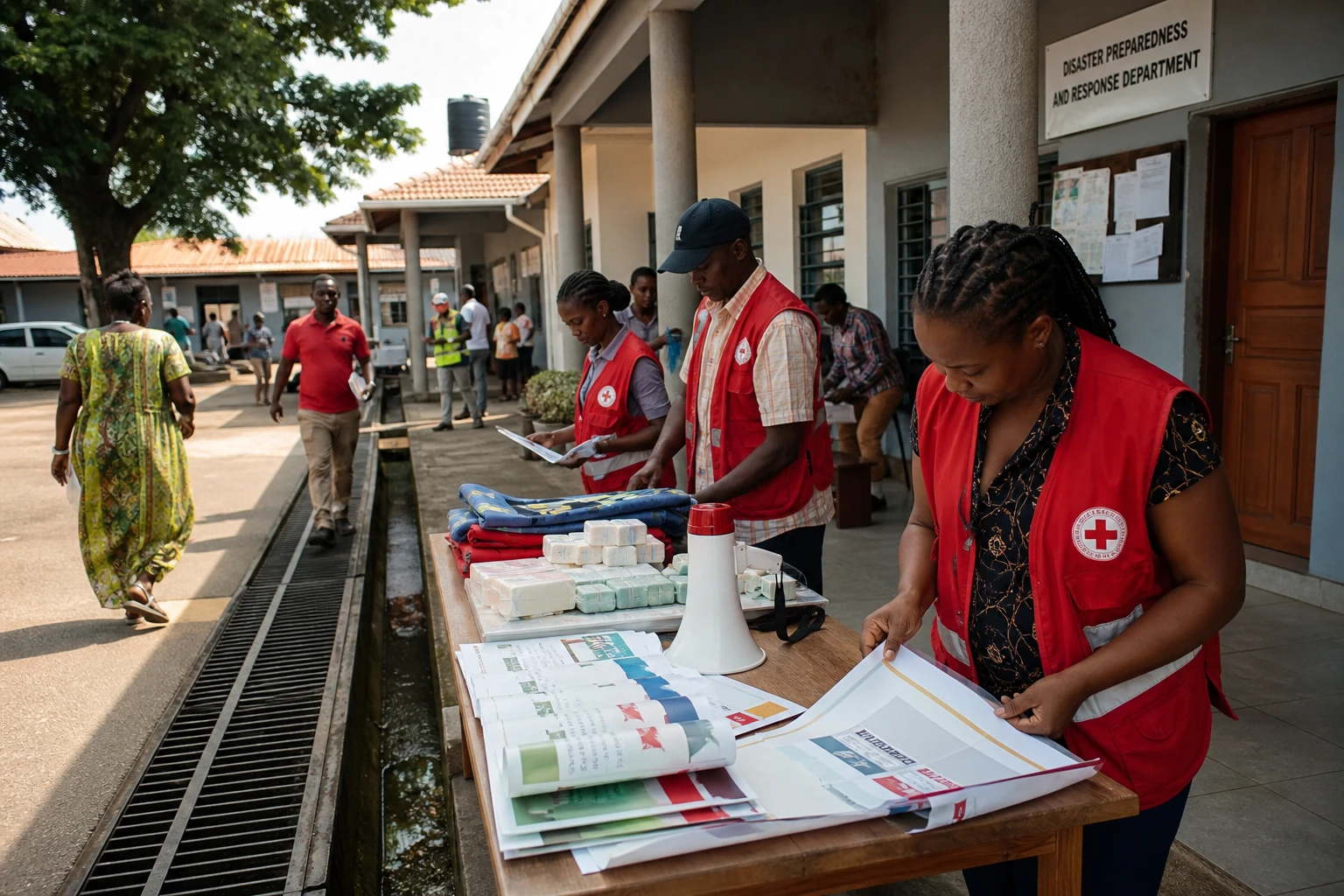
In Morogoro, prevention begins at the market, among fruit stalls, sacks of rice and dirt paths. Before the water rises, Tanzanian volunteers are reminding people of the steps that can protect families, businesses and exposed neighbourhoods.
The campaign took place during a period of extreme weather that marked Tanzania from late 2023 through the first half of 2024. El Niño, combined with a positive Indian Ocean Dipole, brought exceptionally heavy rain to several parts of East Africa.
In Morogoro, warnings reach people where they live and work
In the city of Morogoro, teams from the Tanzania Red Cross Society organised outreach campaigns. Volunteers went to Mawenzi market with posters, megaphones and cleaning equipment.
Their message was practical. They urged people to follow weather bulletins, clear drainage channels and identify safer areas in case water levels rose. The posters also explained the importance of having reliable information, particularly on the radio.
In urban neighbourhoods, a few simple actions can reduce risks. Cleaning the area around a stall, preventing rubbish from building up and keeping drains clear can help prevent blockages when rainfall becomes intense.
The campaign focused particularly on traders. Markets bring together people, perishable goods and businesses that continue to operate despite bad weather. Flooding can therefore cause rapid economic losses, while also making access to drinking water and healthcare more difficult.
Volunteers also emphasised handwashing and keeping selling areas clean. After heavy rain, stagnant water and contamination of water sources can encourage the spread of waterborne diseases, including cholera.
A rainy season becomes a national risk
Tanzania has several rainfall patterns, depending on the region. The north and coastal areas, for example, have a rainy season known as “vuli”, generally concentrated between October and December. Other regions receive their main rainfall later in the year.
In autumn 2023, the Tanzania Meteorological Authority warned of a risk of above-average rainfall in several areas. The forecast linked the situation to El Niño, an oceanic and atmospheric phenomenon that alters air circulation and rainfall patterns around the world.
In East Africa, the effect was amplified by a positive Indian Ocean Dipole. This mechanism involves an unusual difference in temperature between the western and eastern parts of the ocean. Under certain conditions, it increases the moisture available over the region.
The warnings were therefore not limited to Morogoro. Dar es Salaam, Pwani, Kilimanjaro, Arusha, Katavi, Kigoma and Mara also experienced episodes of heavy rain, flooding or landslides.
The toll reported to the Tanzanian Parliament on 25 April 2024 revealed the scale of the crisis. Prime Minister Kassim Majaliwa said that more than 200,000 people and about 51,000 households had been affected since the start of the year. He also reported 155 deaths, 236 injuries and more than 10,000 homes damaged.
These figures were subsequently cited in reports by the International Federation of Red Cross and Red Crescent Societies and in documents from Tanzanian public bodies. They cover the whole country and do not describe Morogoro alone.
Different impacts across different areas
In urban areas, flooding disrupts transport, markets and access to essential services. Neighbourhoods in low-lying areas are the most exposed. In Dar es Salaam, rain affected roads, homes and drainage infrastructure.
In Morogoro, the impact also extends to farms. According to an audit report by Tanzania’s Controller and Auditor General, more than 17,600 hectares were damaged in the region during the 2023 and 2024 episodes.
For small-scale producers, losing a plot means more than a fall in income. It can reduce food reserves, interrupt loan repayments or undermine supplies to local markets.
Workers in the informal economy are also vulnerable. A trader whose stall is destroyed may not have insurance or an alternative income. Likewise, displaced families may lose their work tools while facing additional transport and healthcare costs.
The health risk compounds the material damage. Floodwater can mix sewage and rubbish with water supplies intended for consumption. Tanzania also reported cholera transmission in several regions during this period, prompting more hygiene campaigns.
Local preparedness complements public action
Red Cross campaigns do not replace public infrastructure. They complement weather warnings, evacuation plans and action by local authorities.
The challenge is to turn a national forecast into instructions that people can understand at neighbourhood level. A useful warning should specify where to go, which belongings to protect, which roads to avoid and how to check information.
This approach also gives residents a central role. Volunteers know the markets, routes and areas where water collects. Their presence helps relay messages in the languages and forms of communication that are most accessible.
It is also a reminder that reducing risk is not limited to the hours before a disaster. Maintaining drains, planning neighbourhoods, protecting wetlands and ensuring the quality of weather data are just as important.
A challenge for East Africa
Tanzania’s experience is part of a closely connected regional environment. The country belongs to the East African Community, or EAC, an organisation that facilitates cooperation among several countries in the region. Extreme rainfall does not stop at national borders. It also affects Kenya, Burundi, Uganda and other parts of the Indian Ocean basin.
The 2024 floods demonstrated the importance of quickly sharing forecasts, hydrological data and information on blocked roads. They also underscored the need to strengthen early-warning systems, as local authorities contend with events that are becoming more irregular and sometimes more intense.
In Morogoro, the megaphone and broom may seem modest in the face of a global climate phenomenon. Yet they reflect an essential reality: prevention becomes effective when it reaches the places where Tanzanians work, trade and live. For Tanzania and its East African neighbours, the next challenge will be to turn these local initiatives into lasting policies to protect people.