Algeria
 Egypt
 Libya
 Morocco
 Sudan
 Tunisia
 Benin
 Burkina Faso
 Cabo Verde
 Côte d'Ivoire
 Ghana
 Guinea
 Guinea-Bissau
 Liberia
 Mali
 Mauritania
 Niger
 Nigeria
 Senegal
 Sierra Leone
 The Gambia
 Togo
 Cameroon
 Central African Republic
 Chad
 DR Congo
 Equatorial Guinea
 Gabon
 Republic of the Congo
 São Tomé and Príncipe
 Burundi
 Comoros
 Djibouti
 Eritrea
 Ethiopia
 Kenya
 Madagascar
 Malawi
 Mauritius
 Mozambique
 Rwanda
 Seychelles
 Somalia
 South Sudan
 Uganda
 Angola
 Botswana
 Eswatini
 Lesotho
 Namibia
 South Africa
 Zambia
 Zimbabwe
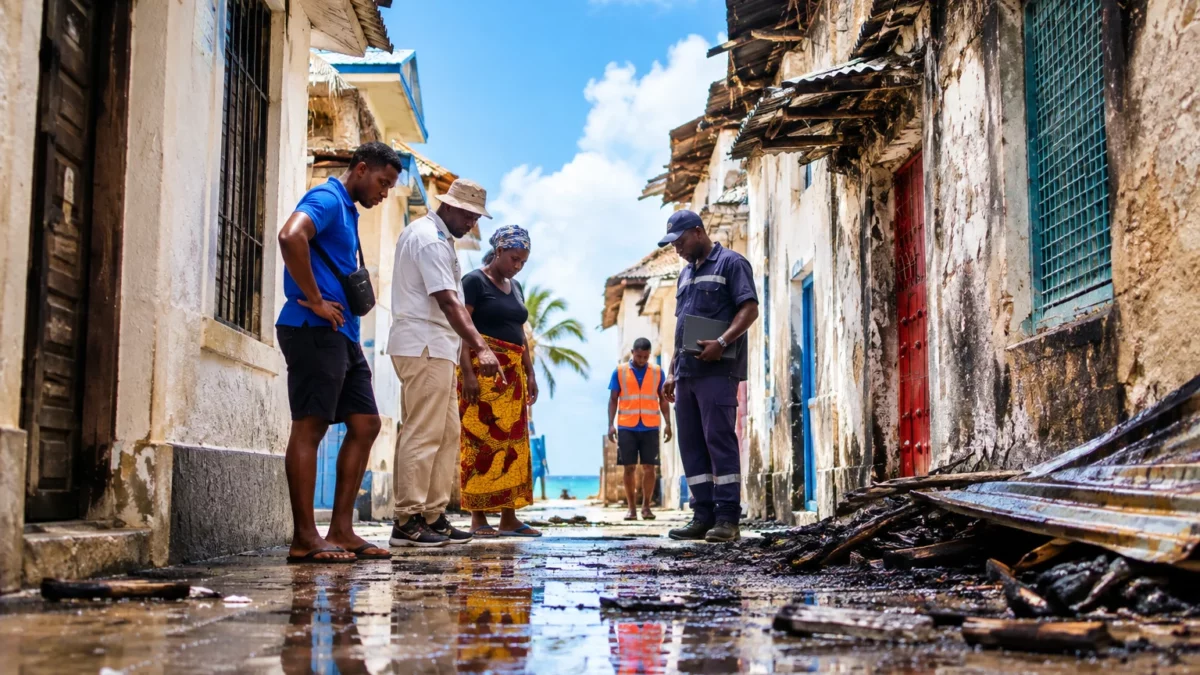
In Nungwi, on the Tanzanian island of Unguja, a fire affected far more than hotels. It also hit restaurants and shops along a coastline where tourism sustains local businesses and workers. The immediate priority was to evacuate visitors; the investigation must now establish how the fire spread so quickly.
A fire that goes beyond the hotel sector
Nungwi lies at the northern tip of Unguja, the main island of the semi-autonomous Zanzibar archipelago. Zanzibar is part of Tanzania, whose capital is Dodoma. The archipelago nonetheless has its own institutions for several domestic affairs, including tourism. This arrangement gives the authorities in Zanzibar a direct role in managing the incident and assessing the damage.
The fire broke out on the afternoon of Saturday 21 November 2026, at the Makofi Hotel on Nungwi beach. The flames spread to neighbouring properties in an area where buildings stand close together. Wind and thatched roofs helped the fire spread, according to initial reports.
The material damage reported by the Tanzanian daily The Citizen includes six hotels, four restaurants and around 40 shops. Local media outlet The Chanzo also reports that six hotels, four restaurants and around 40 shops were affected. These figures indicate the extent of the area hit, but a precise assessment of the damage remains to be made.
Firefighters battled the blaze for nearly three hours before bringing it under control. The authorities said 183 tourists had been evacuated and then relocated to other establishments. The Associated Press report puts the figure at around 180, a rounded number. Employees were injured, according to initial reports, but available sources give no detailed toll and do not agree on the severity of the injuries. No deaths were reported in the accounts reviewed.
The cause remains unconfirmed
Initial reports point to an oven used to bake bread at the Makofi Hotel. Zanzibar’s Minister of Tourism and Antiquities, Nasra Nassor Omar, urged people not to draw conclusions before the investigation is complete. She said the government would carry out a rapid assessment and determine the cause of the fire before deciding what measures to take.
The distinction matters: an initial hypothesis is not an investigative finding. The authorities will need to clarify the fire’s point of origin, the circumstances in which it spread and the resources available to respond. At this stage, public information does not make it possible to reconstruct every stage of the fire with certainty.
The evacuation involved more than the emergency services alone. According to The Citizen, more than 20 hotels offered temporary accommodation to displaced visitors. This solidarity helped meet an immediate need quickly. It does not, however, yet reveal the situation facing employees, traders or businesses whose premises were damaged.
Preventing the spread and protecting local businesses
The fire highlights a practical concern: safety in tourist districts where hotels, restaurants and small shops are close together. Flammable roofs, wind and dense development can make it harder to fight a fire. This is not enough to explain how the fire started, but it makes an investigation into the conditions that allowed it to spread and the prevention equipment available essential.
Initial accounts reported by The Citizen highlight the value of equipment available on site, including hoses and fire hydrants. The newspaper also reports that the authorities are considering reviewing infrastructure and safety needs before supporting any potential rebuilding. The measures under discussion will need to be specified after the damage assessment; they do not yet amount to a settled plan.
The economic effects are not evenly distributed. Business owners will need to have their losses assessed and arrange repairs. For employees and small traders, the closure of a workplace or the loss of goods can immediately cut off a source of income. The evacuated visitors have been given accommodation, but that response does not address the consequences for people who live and work in Nungwi.
Tourism is an important activity for Zanzibar and connects the archipelago’s economy to international markets. A local incident alone cannot measure its effect on bookings or income as a whole. In the short term, the priority is to document the damage, support those affected and restore services without playing down the risks exposed by the fire.
An issue for Zanzibar and East Africa
The response is primarily the responsibility of the authorities in Zanzibar and Tanzania. But the event also concerns the East African Community (EAC), a regional organisation bringing neighbouring countries together through economic and political cooperation. Tourism, travel and investment cross national borders, so confidence in the safety of destinations is a shared concern, without making this fire a regional crisis.
What happens next depends on facts still awaited: the investigation’s findings, a damage inventory and the prevention measures adopted. The authorities will also need to clarify the injury toll and the needs of affected businesses. These details will show whether the event leads to concrete changes in fire preparedness, beyond the temporary relocation of tourists.
For now, corroborated information establishes the extent of the material damage and the evacuation of visitors, but the cause remains unconfirmed. The challenge is twofold: to enable businesses to resume operations and draw precise lessons about safety in tourist areas, without conflating hypotheses, announcements and verified findings.