Algeria
 Egypt
 Libya
 Morocco
 Tunisia
 Benin
 Burkina Faso
 Cabo Verde
 Côte d'Ivoire
 Ghana
 Guinea
 Guinea-Bissau
 Liberia
 Mali
 Mauritania
 Niger
 Nigeria
 Senegal
 Sierra Leone
 The Gambia
 Togo
 Cameroon
 Central African Republic
 Chad
 DR Congo
 Equatorial Guinea
 Gabon
 Republic of the Congo
 São Tomé and Príncipe
 Burundi
 Comoros
 Djibouti
 Eritrea
 Ethiopia
 Kenya
 Madagascar
 Malawi
 Mauritius
 Mozambique
 Rwanda
 Seychelles
 Somalia
 South Sudan
 Tanzania
 Uganda
 Angola
 Botswana
 Eswatini
 Lesotho
 Namibia
 South Africa
 Zambia
 Zimbabwe
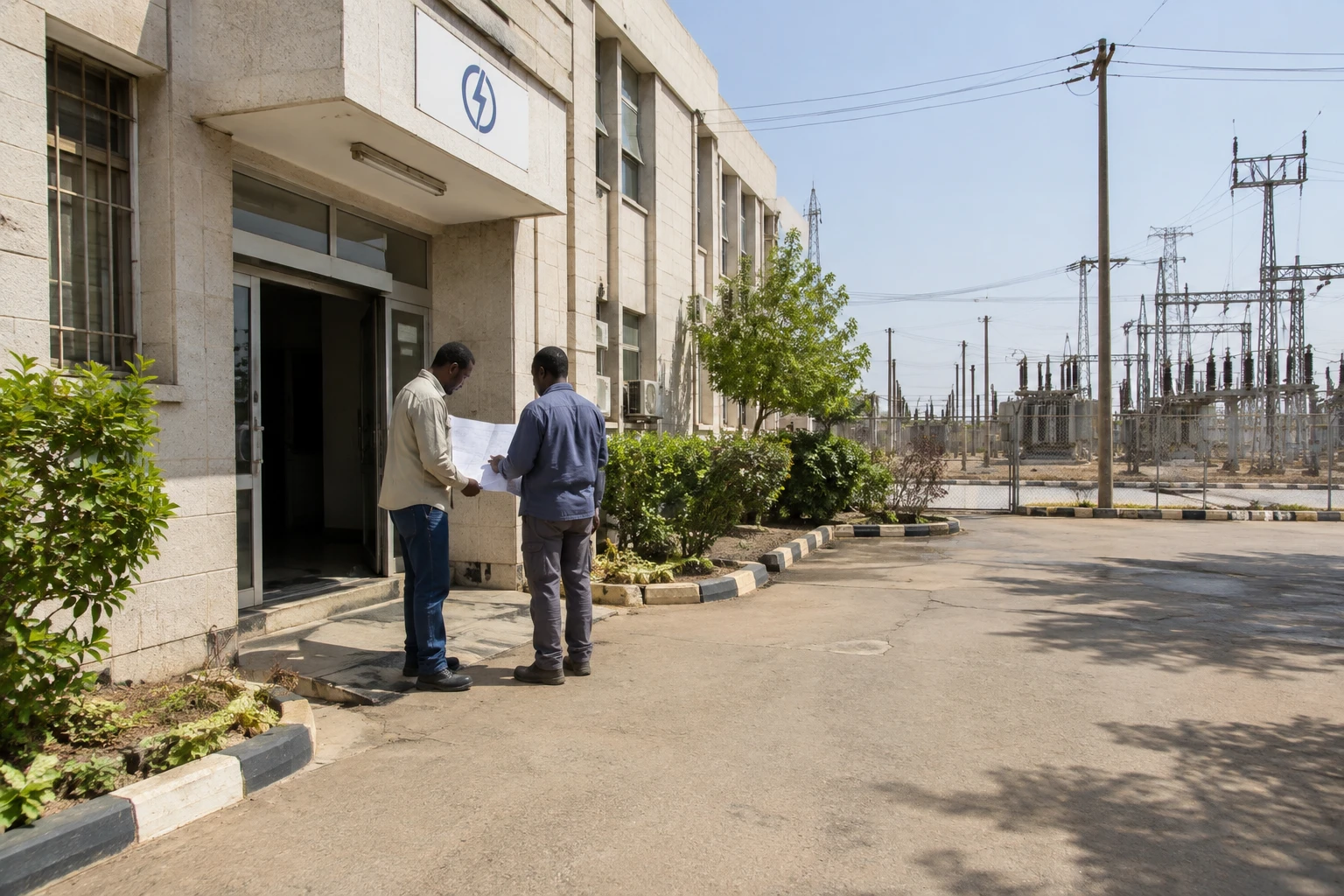
When an electricity substation fails in Sudan, the consequences extend far beyond the neighbourhood plunged into darkness. Water, healthcare and economic activity also depend on a network that is now under pressure from the war in several regions.
A network weakened on several fronts
On 26 October 2026, drone strikes damaged five substations in the centre and south-east of the country, according to state-owned Sudan Electricity Holding Company. The affected facilities are in Sinja, Al-Hawata, Al-Fao, Mashkour and Al-Junaid. The following day, a new attack targeted a station in Omdurman, near Khartoum, and caused power cuts in the capital, Sudanese media outlet Sudan Tribune reports.
The initial attacks disrupted supply in the states of Sennar, Gedaref, White Nile and Al Jazirah. The operator says the damage also threatens the stability of the national grid. Technical teams have been sent to assess the damage and restore power. No repair timetable has been announced in the information available.
The company has attributed the strikes to the Rapid Support Forces (RSF), the paramilitary group that has been at war with the Sudanese army since April 2023. This attribution comes from the state-owned company. The information reviewed does not mention a public claim of responsibility by the RSF. Reuters and Sudanese media outlet Sudan Tribune have also reported the damage and affected areas, but the circumstances of the strikes have yet to be independently established.
On 27 October, the outage also affected parts of Khartoum and Omdurman. This latest episode shows that the damage is not confined to rural areas or front lines. Power cuts can affect both residents and urban services, which are already grappling with deteriorating infrastructure.
Consequences beyond the electricity supply
A substation transforms and distributes electricity to local power lines. When it is out of service, the impact can spread far beyond its location. Water pumping and treatment stations, hospitals, bakeries and businesses need a reliable electricity supply or generators and fuel. A prolonged outage can therefore disrupt several services at once.
The practical impact depends on the resources available. Households with a generator can sometimes keep some appliances running, provided they can find fuel. Families without a backup option, patients reliant on medical equipment or refrigerated medicines, and small businesses are more directly exposed. In agricultural areas, water pumping and the storage of produce may also be disrupted.
The electricity situation was already precarious before these strikes. According to World Bank data, 66% of the population had access to electricity in 2024. This national average does not, however, show either the continuity of service or the differences between urban and rural areas. It indicates how many people may be affected by a deteriorating grid, without directly measuring the impact of the latest attacks.
Electricity and oil: two linked infrastructures
The war has already disrupted the supply of oil and fuel. The Al-Jaili refinery, near Khartoum, ceased operating after the conflict began. Its nameplate capacity was 100,000 barrels per day, but this figure refers to its processing capacity, not its current output. The facility was damaged during the fighting, and its condition is complicating the resumption of operations.
The oil network also links landlocked South Sudan to export terminals at Port Sudan on the Red Sea. Disruptions and risks to Sudanese infrastructure have consequences beyond the border. In November 2025, South Sudanese exports resumed after an interruption caused by attacks on processing facilities in Sudan, according to official statements reported by the Associated Press.
Oil and electricity are not separate issues. Energy facilities need power, fuel, spare parts and staff to operate. When several links in the chain are hit or inaccessible, repairs become more difficult and transport costs rise. The state, businesses and residents then compete for scarce resources, while revenues linked to hydrocarbons and transit are put at risk.
A regional and civilian concern
Sudan resumed full participation in the Intergovernmental Authority on Development (IGAD) on 9 February 2026, after a period of withdrawal. The regional organisation includes Sudan and South Sudan, among others. Securing energy infrastructure therefore also concerns their economic cooperation and the flow of oil across Sudanese territory. Sudan’s return to participation was confirmed by IGAD.
For residents, the immediate concern is how long the outages will last and whether teams can restore the equipment to service. For authorities and businesses, the challenge is to keep a fragmented grid running in a context where civilian facilities are exposed to military operations. The incidents in Sinja, Al Jazirah and Omdurman also make any reconstruction planning more complex.
The next developments to watch are the restoration of power in the four affected states, the condition of the damaged substations and whether attacks on infrastructure continue. Regionally, the continuity of oil flows between South Sudan and Port Sudan remains a tangible indicator of the war’s economic repercussions. Electricity is already measuring the ability of essential services to hold up despite the deterioration of the grid.