Algeria
 Egypt
 Libya
 Morocco
 Sudan
 Tunisia
 Benin
 Burkina Faso
 Cabo Verde
 Côte d'Ivoire
 Ghana
 Guinea
 Guinea-Bissau
 Liberia
 Mali
 Mauritania
 Niger
 Nigeria
 Senegal
 Sierra Leone
 The Gambia
 Togo
 Cameroon
 Central African Republic
 Chad
 DR Congo
 Equatorial Guinea
 Gabon
 Republic of the Congo
 São Tomé and Príncipe
 Burundi
 Comoros
 Djibouti
 Eritrea
 Kenya
 Madagascar
 Malawi
 Mauritius
 Mozambique
 Rwanda
 Seychelles
 Somalia
 South Sudan
 Tanzania
 Uganda
 Angola
 Botswana
 Eswatini
 Lesotho
 Namibia
 South Africa
 Zambia
 Zimbabwe
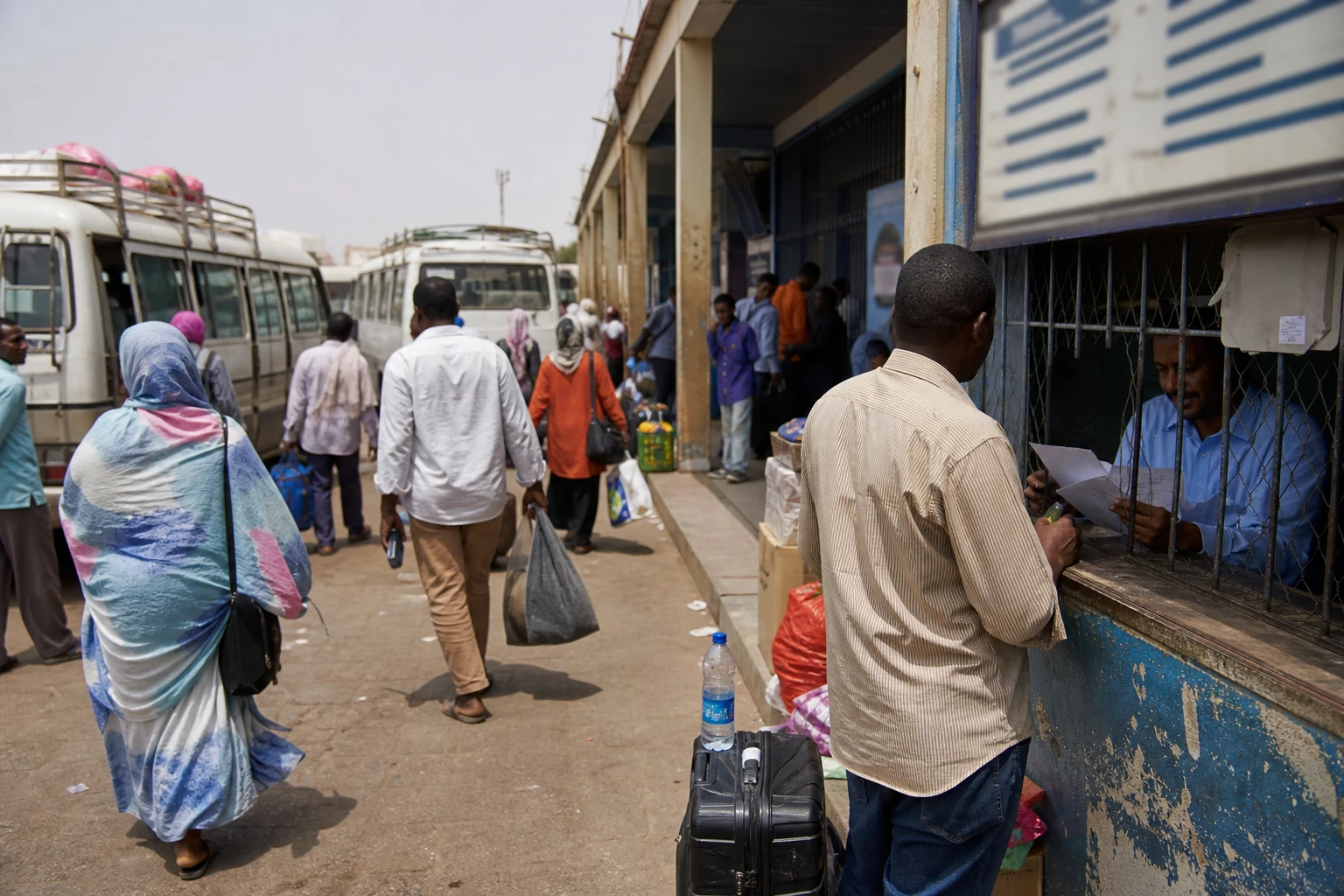
In the Horn of Africa, the boundary between internal crisis and regional confrontation is becoming more fragile by the day. Sudan and Ethiopia are now trading accusations of backing armed groups, as fresh fighting rocks Tigray, an Ethiopian region bordering Sudan.
The risk extends beyond military command centres. In border areas, tensions can disrupt trade, complicate movement for local populations and further destabilise a region already marked by war in Sudan since April 2023.
A Sudanese crisis spilling over towards the Ethiopian border
Sudan is locked in a conflict between the Sudanese Armed Forces, led by General Abdel Fattah Al-Burhan, and the Rapid Support Forces, a paramilitary formation commanded by General Mohammed Hamdan Daglo, known as “Hemetti”. The fighting has profoundly shifted the centres of power. Khartoum remains the official capital, but Port Sudan has for several months hosted much of the administrative apparatus controlled by the army.
In this context, Sudanese authorities regularly accuse foreign actors of fuelling the conflict. Khartoum has in particular accused Ethiopia of facilitating the establishment, training or resupply of the Rapid Support Forces in its western region of Benishangul-Gumuz. Addis Ababa rejects the allegations.
However, satellite imagery analysis and investigations published in 2026 have drawn attention to increased activity around a base near Assosa, not far from the Sudanese border. These findings are not, on their own, enough to establish the full chain of military support. They nevertheless explain why the issue has become central to exchanges between the two countries.
Addis Ababa accuses Khartoum in turn
On 28 September 2026, Ethiopia’s chief of staff, Field Marshal Birhanu Jula, accused Sudan, Egypt and Eritrea of supporting groups opposed to the Ethiopian federal government. He described these forces as a coalition seeking to destabilise Ethiopia with the backing of external powers.
The statements came after fighting resumed in Tigray between the federal army and forces linked to the Tigray People’s Liberation Front. The organisation governed the region for several years before the 2020-2022 war, then signed the Pretoria agreement with the federal government in November 2022.
The resumption of fighting has raised fears of further damage to the agreement. Clashes had already been reported in several parts of Tigray in 2026, including near the Sudanese border. Communications have also been disrupted in some areas, making it difficult to independently verify casualty figures and troop movements.
In a statement carried by Sudanese media, the Sudanese army rejected the Ethiopian accusations as “unfounded”. It says it respects international law and the principles of good neighbourliness. Khartoum, for its part, maintains that elements of the Rapid Support Forces receive support from Ethiopian territory, particularly for logistics and the use of drones. Addis Ababa also denies these allegations.
Two competing accounts, one strategic border
The cross-accusations should be seen in the context of a relationship already weakened by several disputes. The oldest concerns Al-Fashaga, an agricultural area contested by Sudan and Ethiopia. The two countries lay claim to some cultivated land and accuse each other of incursions by armed forces or allied militias.
The war in Sudan adds to this. The Rapid Support Forces’ advance in several regions of the country has turned borders into military and trade corridors. The roads linking Sudan to Ethiopia are used for trade, but they can also be used to move fighters, weapons or equipment. Without an independent investigation, it is therefore difficult to distinguish between trafficking, military resupply and political support.
The situation in Ethiopia is itself complex. The federal government faces persistent tensions in Tigray, as well as an armed insurgency in Amhara. Any allegation of external support can thus be used to strengthen national mobilisation, justify security operations or put pressure on neighbours.
For local populations, the consequences are tangible. People in border areas depend on markets, pastures and transit routes. A border closure or an increase in checks can reduce the incomes of traders and transport workers. Families displaced by the fighting may also face greater obstacles in reaching safe areas.
The regional dimension of the escalation
The crisis directly affects the Horn of Africa, a region where national rivalries are intertwined with internal conflicts. The Intergovernmental Authority on Development (IGAD), which brings together several countries in the region, remains one of the most relevant diplomatic frameworks for preventing the Sudanese conflict from spreading. Its influence is nevertheless limited by disagreements among member states.
Egypt is also following the issue closely. Cairo is engaged in a major dispute with Addis Ababa over the Grand Ethiopian Renaissance Dam, built on the Blue Nile. The Ethiopian accusation against Egypt therefore adds another dimension to an already tense relationship. Cairo and Asmara have not publicly confirmed the accusations made by Ethiopia’s army chief.
The main concern now is the possibility of increased movement of weapons and fighters between Sudan, Ethiopia and Eritrea. Such a dynamic could complicate mediation efforts and make it more difficult to protect civilians, particularly in rural regions far from the capitals.
The next signs to watch will be whether fighting continues in Tigray, developments in the military presence around the border, and decisions by Khartoum, Addis Ababa and IGAD. Until the accusations are substantiated by independent investigations, they should continue to be presented as allegations. But their repetition already points to a political reality: the war in Sudan and Ethiopia’s fractures are no longer separate crises.