Algeria
 Egypt
 Libya
 Morocco
 Sudan
 Tunisia
 Benin
 Burkina Faso
 Cabo Verde
 Côte d'Ivoire
 Ghana
 Guinea
 Guinea-Bissau
 Liberia
 Mali
 Mauritania
 Niger
 Nigeria
 Senegal
 Sierra Leone
 The Gambia
 Togo
 Cameroon
 Central African Republic
 Chad
 DR Congo
 Equatorial Guinea
 Gabon
 Republic of the Congo
 São Tomé and Príncipe
 Burundi
 Comoros
 Djibouti
 Eritrea
 Ethiopia
 Kenya
 Madagascar
 Malawi
 Mauritius
 Mozambique
 Rwanda
 Seychelles
 Somalia
 South Sudan
 Tanzania
 Uganda
 Angola
 Botswana
 Eswatini
 Lesotho
 Namibia
 Zambia
 Zimbabwe
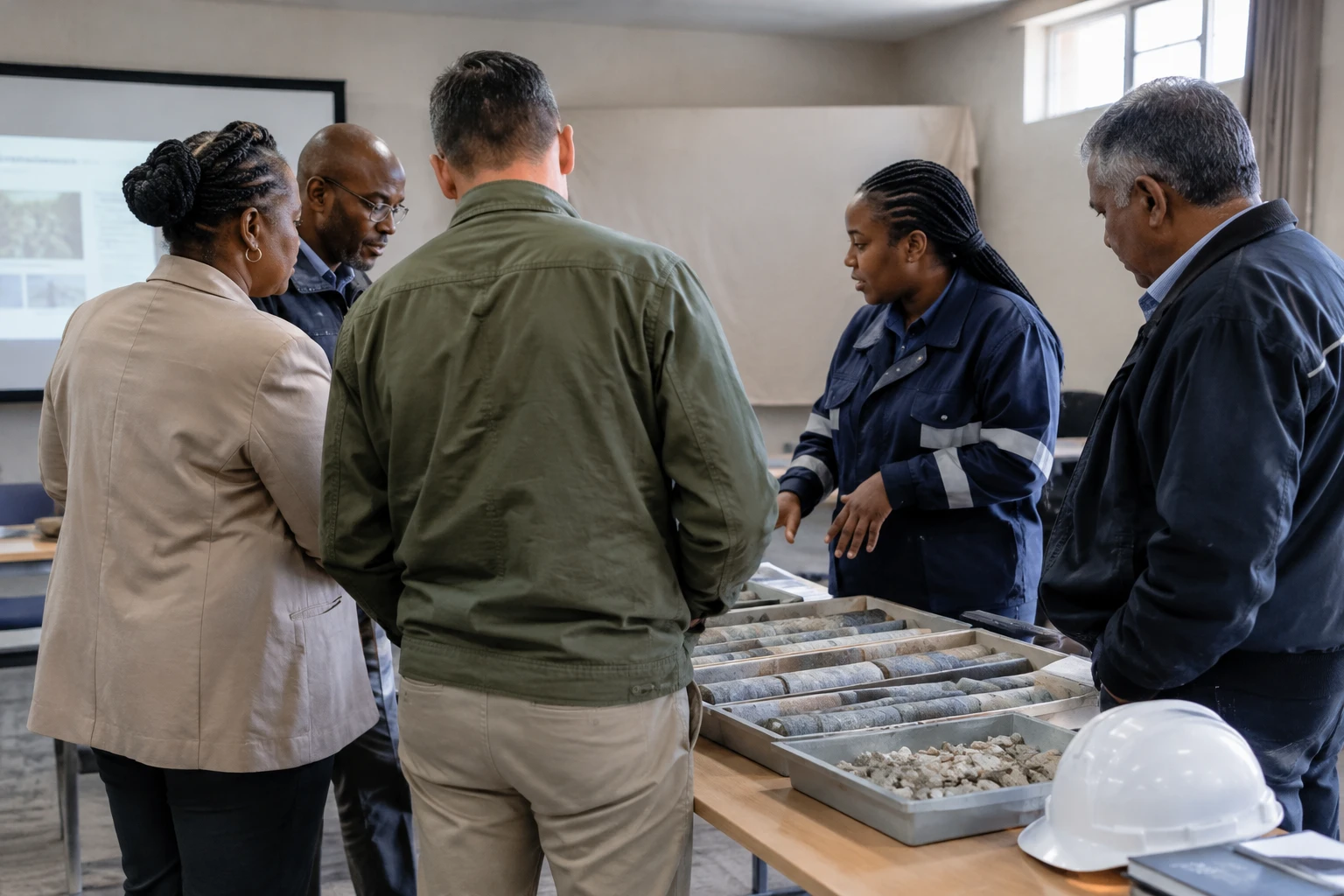
Can lithium become more than a mineral exported from southern Africa? A financing proposal for a South African project has brought this question to the fore, as Zimbabwe already weighs on the regional market and governments seek to retain more value locally.
A regional race to process minerals
Zimbabwe is currently Africa’s largest lithium producer. According to US Geological Survey (USGS) data, it ranked fourth globally in 2024, excluding the United States, with 9% of world production. Mining contributes significantly to its economy, but much of its lithium ore was shipped to China. Harare has recently tightened export rules to encourage local processing.
Across the border, South Africa has a more developed mining industry and processing infrastructure, but its lithium production remains modest. Pretoria wants to draw on these capabilities to become a regional hub for processing and manufacturing battery components. Its critical minerals strategy, approved in 2025, explicitly cites lithium and plans to develop the stages between extraction and the battery.
This debate forms part of the priorities of the Southern African Development Community (SADC), the regional organisation of southern African countries. Its industrial strategy aims to strengthen regional value chains, particularly in mineral processing. The goal is to distribute activities more effectively among countries, rather than limiting their role to exporting raw materials.
Two proposals, no final agreement
On 20 October 2026, Lithium Africa announced that it had received two non-binding offers for its Springbok project, located in South Africa’s Northern Cape province. “Non-binding” means they do not yet constitute final agreements. The identities of the potential partners have not been made public.
The first proposal provides for an advance payment linked to the purchase of all the spodumene concentrate produced by the project during its first three years. Spodumene is a mineral containing lithium; its concentrate remains an intermediate product that still needs to be processed before it can be used to make battery materials.
The second offer involves an investment of $60 million for a 55% stake in a company that would hold Lithium Africa’s interest in the project. According to information released by the company, the funds would finance exploration and a larger processing facility, among other things. Lithium Africa says it is in discussions with more than twenty potential partners on various financing and marketing options.
These announcements guarantee neither financing, construction nor production. The company is targeting a financing decision in the first half of 2027 and initial concentrate production in the second half of the same year. It also plans to publish an initial estimate of the project’s resources in the first half of 2027.
From ore to concentrate: a first step
Springbok includes the former Norrabees I mine, where work had already been carried out. Lithium Africa plans to process previously extracted material and newly mined ore at a dense media separation facility. This method separates certain minerals according to their density. The company says, however, that no mineral resource has yet been officially established for the project and that a preliminary economic assessment remains to be completed.
This distinction matters. The planned output is spodumene concentrate, not battery-grade lithium or cells. Even if Springbok meets its targets, it will therefore not, on its own, fulfil South Africa’s ambition to build a complete battery chain. Closing the gap between extraction and higher-value products will depend on subsequent investment, access to energy, skills, infrastructure and commercial outlets.
The two offers address different needs. A prepayment against some or all of future production can provide cash at the start, but ties sales to a buyer. An equity investment can fund exploration and equipment while giving the investor influence over the project. If negotiations lead to final terms, these will determine who bears the risks and what share of the value remains in South Africa.
Implications for local communities and the region
For communities in the Northern Cape, opening a mine and processing plant could create jobs and support local businesses. But the benefits are not automatic. They will depend on the local content of contracts, water and energy requirements, environmental approvals and the ability of small businesses to access project opportunities. Direct mining jobs alone are not enough to guarantee sustainable industrial activity.
For Zimbabwe, the advance of South African projects does not necessarily mean losing ground. Rather, it highlights a question shared by both countries: how can they negotiate with investors so that extraction also supports local processing, training and manufacturing? Zimbabwe’s weight in regional supply and South Africa’s infrastructure could, in theory, complement one another. That would, however, require concrete agreements, a coherent industrial policy and rules for sharing the benefits.
SADC is specifically advocating the development of value chains among its member states. In practice, the region still exports largely unprocessed mining products. Springbok will not change this model on its own. The next milestones will be the release of the project’s geological and economic data, followed by the possible conclusion of a financing agreement. These steps will make it possible to assess whether the announced interest translates into a viable operation, and whether it can contribute to industrial transformation extending beyond extraction alone.