Algeria
 Egypt
 Libya
 Morocco
 Sudan
 Tunisia
 Benin
 Burkina Faso
 Cabo Verde
 Côte d'Ivoire
 Ghana
 Guinea
 Guinea-Bissau
 Liberia
 Mali
 Mauritania
 Niger
 Nigeria
 Senegal
 Sierra Leone
 The Gambia
 Togo
 Cameroon
 Central African Republic
 Chad
 DR Congo
 Equatorial Guinea
 Gabon
 Republic of the Congo
 São Tomé and Príncipe
 Burundi
 Comoros
 Djibouti
 Eritrea
 Ethiopia
 Kenya
 Madagascar
 Malawi
 Mauritius
 Mozambique
 Rwanda
 Seychelles
 Somalia
 Tanzania
 Uganda
 Angola
 Botswana
 Eswatini
 Lesotho
 Namibia
 South Africa
 Zambia
 Zimbabwe
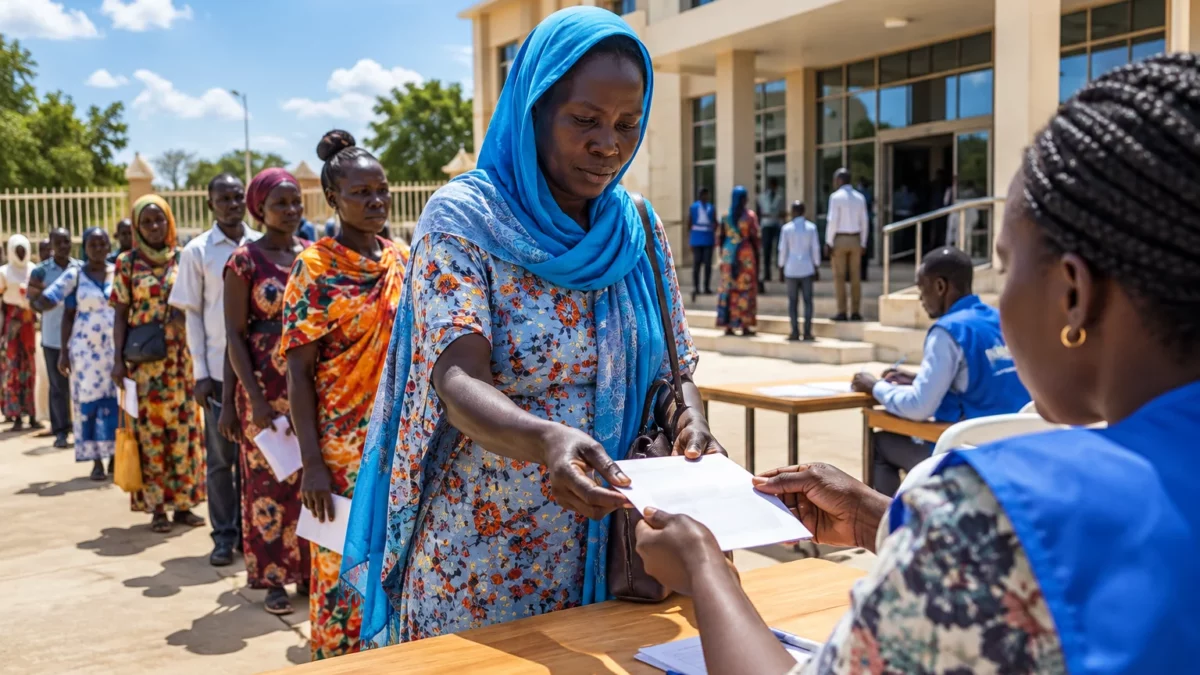
For millions of South Sudanese, voting for the first time starts with a very practical question: being able to prove who they are and where they live. The electoral register intended to answer that question is being built in a country where the administration has an uneven presence and the political transition remains fragile.
A postponed election and a compressed timetable
South Sudan gained independence in 2011. Since then, national elections have been postponed several times amid delays in implementing the 2018 peace agreement, logistical difficulties and insecurity. The country is a member of IGAD, the East African regional organisation, which is among the actors involved in monitoring its transition.
The National Electoral Commission’s latest timetable has set the general election for 11 February 2027, instead of 22 December 2026. The new postponement extends an already prolonged transition. The Commission has not publicly set out the reasons for the change to the timetable, while concerns about election preparations remain strong.
The African Union and the regional guarantors of the peace agreement have called for credible, inclusive elections to be held without any further extension of the transition. In a report published in November, the United Nations secretary-general voiced concern in particular about the state of institutional preparedness, funding, security and the political climate. The African Union also stressed the need for political consensus and the participation of women, young people and displaced people.
A register to be established across the country
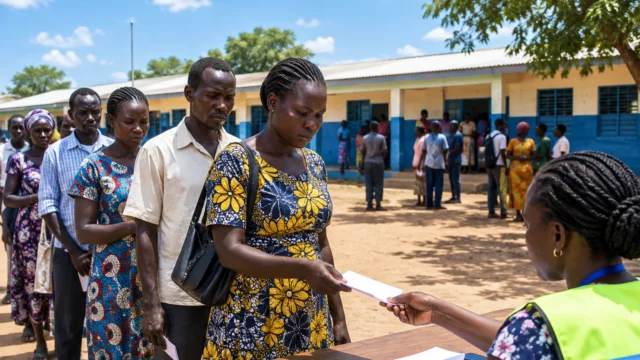
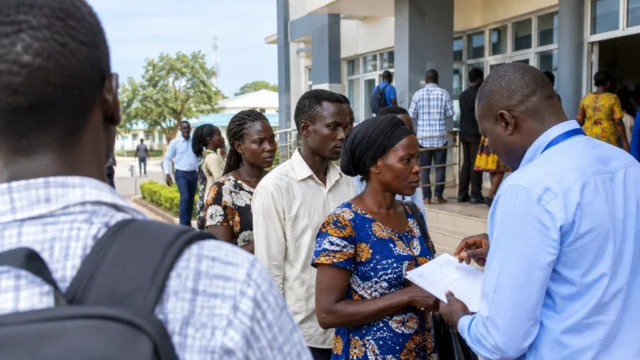
Voter registration began on 14 November and was due to end on 28 November 2026. The Commission announced 3,161 centres across the country’s ten states and three administrative areas. The register will determine who can vote and in which constituency.
The lack of official documents is a practical obstacle. Electoral law provides ways to verify age and identity, but many residents do not have the documents usually required. Commission guidance allows, in certain circumstances, for a certificate from a local authority or a recommendation from community leaders to be used. These procedures make registration easier, but must be applied consistently from one centre to another.
The Commission announced that more than one million people had registered as the deadline approached. This figure is attributed to the electoral authorities and could not be independently confirmed by a second source in the information available. Its significance will also depend on the publication of the provisional register and whether voters can correct an error or challenge an entry.
Doubts about territorial coverage are already apparent. Human rights advocate Bak Malong said registration had not begun in some areas and asked how the Commission had arrived at its figures. This challenge does not establish that the figures are wrong. It nevertheless highlights a central issue: a national total does not show whether people in remote areas, displaced people or those living in hard-to-reach areas were able to register.
Credibility will be tested after registration
An electoral register alone is not enough to guarantee an election recognised by the different sides. There must also be rules that are understood, accessible avenues of appeal and conditions that allow parties to campaign. Tensions between leaders, security uncertainties and institutional delays are weighing on the entire process.
The situation of Riek Machar, Salva Kiir’s main political rival, who has been under house arrest since March 2025 according to reports, is fuelling these questions. Any mention of legal accusations must be precisely attributed. The opposition’s effective participation and its ability to challenge decisions will be among the tests of political competition.
The difficulties are not evenly distributed. In Juba, registration centres and national authorities are more accessible than in rural areas or regions affected by insecurity. Displaced people, too, risk facing obstacles in establishing their residence or reaching the relevant centre. For vendors, day labourers and other participants in the informal economy, time spent registering can represent an immediate cost.
The Commission has scheduled the provisional register to be displayed after registration closes, a step that will allow the lists to be checked before voting. Observing this phase and publishing detailed regional data will help assess whether the announced registrations reflect genuine coverage, rather than just a single national total. The revised timetable also sets out subsequent stages for preparations and candidacies.
An issue watched beyond the country
For IGAD and the African Union, South Sudan’s election deadline tests their ability to support a transition whose repeated extensions are undermining trust. For South Sudanese people, the issue is more immediate: being able to take part without being excluded from the process by insecurity, distance or a lack of documents.
11 February 2027 remains the announced date, not a guarantee that all the conditions will be in place. Until then, the publication and verification of the register, parties’ access to campaigning and decisions on security will be concrete indicators. The election’s credibility will be built through these steps, well before polling stations open.