Algeria
 Egypt
 Libya
 Morocco
 Sudan
 Tunisia
 Benin
 Burkina Faso
 Cabo Verde
 Côte d'Ivoire
 Ghana
 Guinea
 Guinea-Bissau
 Liberia
 Mali
 Mauritania
 Niger
 Nigeria
 Senegal
 Sierra Leone
 The Gambia
 Togo
 Cameroon
 Central African Republic
 Chad
 DR Congo
 Equatorial Guinea
 Gabon
 Republic of the Congo
 São Tomé and Príncipe
 Burundi
 Comoros
 Djibouti
 Eritrea
 Ethiopia
 Kenya
 Madagascar
 Malawi
 Mauritius
 Mozambique
 Rwanda
 Seychelles
 Somalia
 South Sudan
 Tanzania
 Uganda
 Angola
 Botswana
 Eswatini
 Lesotho
 Namibia
 Zambia
 Zimbabwe
When a product made in South Africa reaches a shop, its price also depends on the route it took. Yet transport and storage costs are rising, while rail still struggles to meet the needs of many freight customers. The bill weighs on businesses, but any impact on households depends on markets and margins.
Logistics costs estimated at 14.6% of GDP
The « State of Logistics 2026 » report, produced by GAIN Group with support from Absa Business Banking and the Western Cape government’s Department of Mobility, estimates South African logistics costs at 1,156 billion rand in 2026. That would amount to 14.6% of gross domestic product (GDP), the highest share in the series examined by the report. This is an estimate for the year, not a final assessment.
The figure gives a sense of spending on transport, warehousing and goods management. It exceeds the 10% to 12% of GDP range recorded between 2009 and 2018, according to the report. However, this comparison calls for some caution: logistics costs as a share of GDP also depend on changes in economic activity and the volume of goods transported.
Transport would account for 59% of the bill, or about 683 billion rand. Meanwhile, financial costs associated with inventories are estimated at 191.4 billion. This latter figure does not mean that the prices of food or other products will rise by that amount. It measures the cost of resources tied up in stored goods.
Rail, a link reforms are seeking to revive
Poor rail performance has pushed some freight onto roads, including along routes where rail could be an option. According to figures from the report cited in the information available, road freight rates rose by 112% between 2014 and 2026, compared with 60% for rail freight. These increases are not explained by the state of the network alone: fuel, vehicle financing, depreciation and insurance also weigh on carriers.
The imbalance has consequences beyond South Africa’s borders. The country is a major transport hub in southern Africa: its corridors link mining, agricultural and industrial areas with ports and markets across the region. Delays or additional costs can therefore affect regional supply chains, although their scale varies by goods and route.
In Pretoria, the authorities have launched a reform aimed at opening the freight rail network further to third-party operators, while keeping strategic infrastructure in public hands. The government presents this change as a way to attract investment and improve use of the network. In September 2025, the Cabinet notably welcomed the allocation of routes to new rail operators, with the aim of increasing competition and freight volumes. The South African Cabinet statement on new operators’ access to rail places this measure within the national freight roadmap.
This opening will not, on its own, solve problems of capacity, maintenance, security and reliability. It must also be accompanied by clear access rules and investment. South Africa’s Department of Transport has said that strategic rail and port assets will remain public, while private players may take part in certain operations and contribute capital or expertise. Government guidelines on private-sector participation in freight set out this division of roles.
Different effects for businesses and households
For businesses, uncertain deliveries make production and distribution planning more difficult. Retailers may build up precautionary stocks to avoid shortages. But holding more stock ties up cash and incurs costs. Small businesses, which often have less room to absorb such expenses or negotiate rates, may be more exposed than large groups.
The report says that domestic transport of finished manufactured goods, from factories to shops and consumers, accounts for 31% of domestic transport costs. Rising costs can therefore put pressure on retail prices. However, the pass-through to consumers is neither automatic nor uniform: it depends on the product, competition, transport contracts and businesses’ ability to reduce their margins or find alternative routes.
Fuel accounted for 43.4% of carriers’ operating costs in 2025, according to the data presented in the material available. This share is a reminder that logistics costs depend on both infrastructure and day-to-day expenses. Improvements to rail could reduce reliance on trucks along some corridors, without replacing road transport, which is essential for serving remote sites and providing the final mile to shops.
An issue for SADC corridors
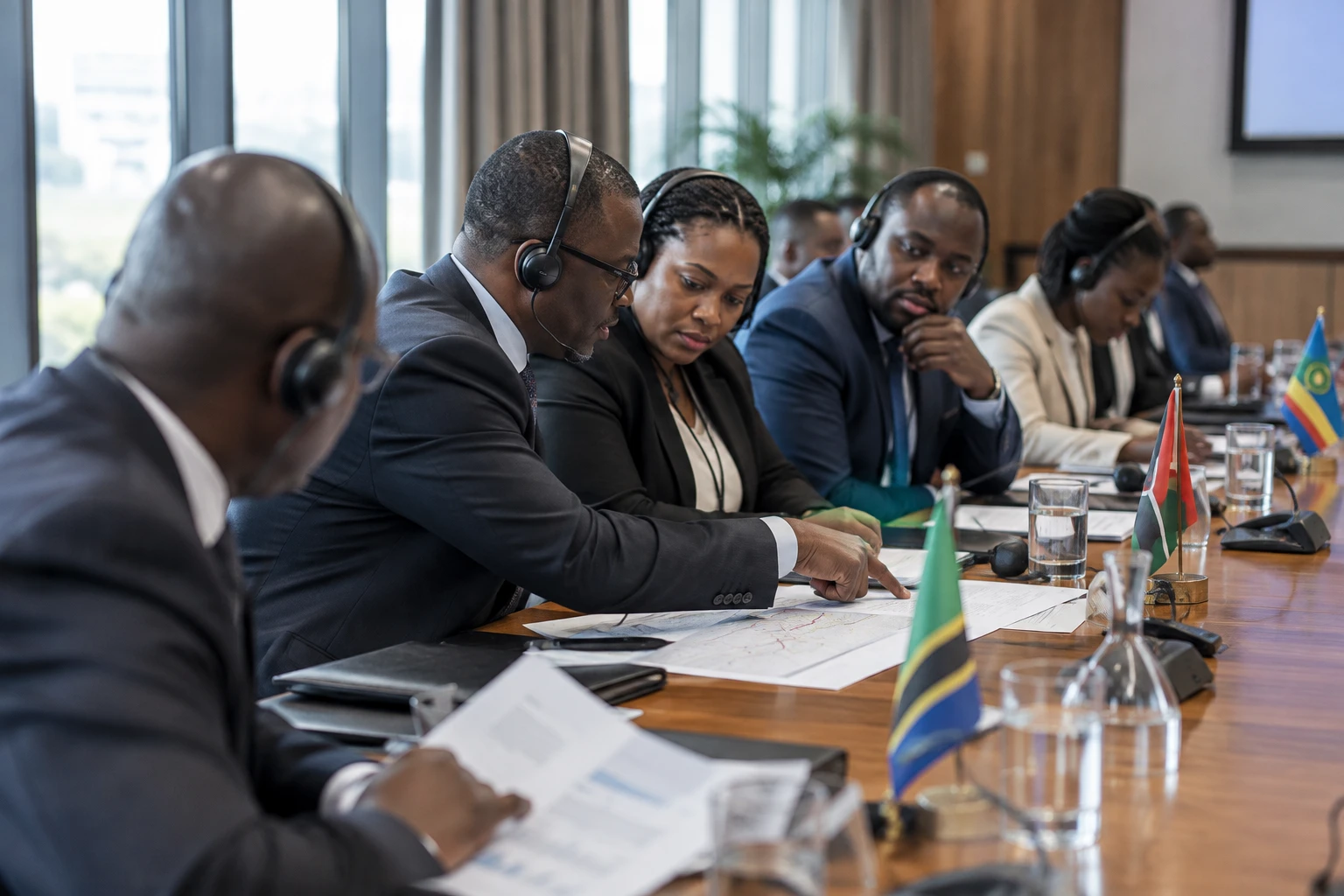
The response also involves the Southern African Development Community (SADC), the regional organisation that coordinates, among other things, transport integration projects. The reliability of South African connections matters for trade between neighbouring countries, ports and production centres. But the benefits of reform will depend on its implementation in practice: available capacity, adherence to schedules, access costs and coordination between rail, road and ports.
The South African government presents its rail programme as complementary to SADC’s regional railway plan. The real measure of progress will therefore not be only the number of new operators, but the network’s ability to carry more goods regularly, including for businesses unable to negotiate large volumes. SAnews, the public news agency, on rail reforms recalls this regional dimension.
In 2026, the announced figure should be read as a warning signal and a projection, not as proof that households will automatically pay more for their shopping. What follows will depend on rail’s operational results, the smooth running of corridors and the ability of public authorities and operators to reduce avoidable costs. For South Africa, the challenge is both national — supporting competitiveness and limiting price pressures — and regional, since its networks connect a significant share of southern African trade.