Algeria
 Egypt
 Libya
 Morocco
 Sudan
 Tunisia
 Benin
 Burkina Faso
 Cabo Verde
 Côte d'Ivoire
 Ghana
 Guinea
 Guinea-Bissau
 Liberia
 Mali
 Mauritania
 Niger
 Nigeria
 Senegal
 Sierra Leone
 The Gambia
 Togo
 Cameroon
 Central African Republic
 Chad
 DR Congo
 Equatorial Guinea
 Gabon
 Republic of the Congo
 São Tomé and Príncipe
 Burundi
 Comoros
 Djibouti
 Eritrea
 Ethiopia
 Kenya
 Madagascar
 Malawi
 Mauritius
 Mozambique
 Rwanda
 Seychelles
 Somalia
 South Sudan
 Tanzania
 Uganda
 Angola
 Botswana
 Eswatini
 Lesotho
 Namibia
 Zambia
 Zimbabwe
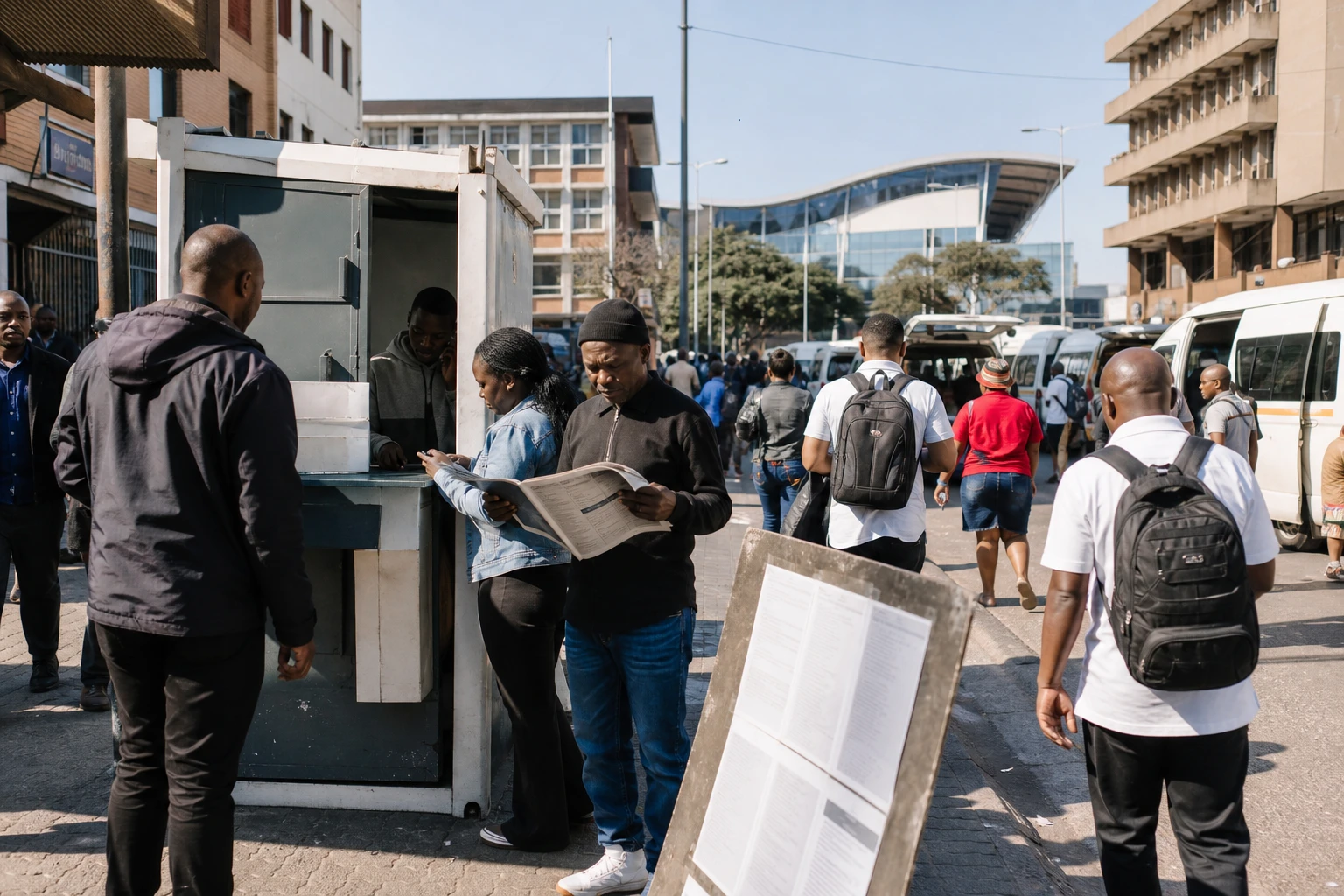
In Durban, migration moved beyond the streets
In Durban, the debate was not only about industry, roads or critical minerals. It also brought a more sensitive question to the fore: the place of migrants in the South African economy and how to respond to tensions without undermining social cohesion. In the economic capital of KwaZulu-Natal, the discussion took on a regional dimension, as South Africa speaks here on behalf of a southern Africa where borders are porous, exchanges intense and movement widespread.
The 46th ordinary summit of the Southern African Development Community was held on 17 August 2026 at the Durban International Convention Centre. Pretoria hosted and chaired the proceedings, led by President Cyril Ramaphosa, in a format in which security, economic integration and human mobility were to be addressed together. SADC has 16 member states, from South Africa to Tanzania, including Mozambique, Namibia, Zambia and Zimbabwe.
A regional summit under pressure from domestic debate
Migration was not merely a technical issue. For several weeks, South Africa has been swept by an anti-migrant campaign that has fuelled marches, temporary shop closures and the hurried departure of foreign nationals. South African authorities themselves have acknowledged incidents of violence, while condemning rumours, manipulated videos and calls for hatred. They say they are acting within a constitutional framework, with checks, specialist immigration courts and a coordinated response involving government departments, police and intelligence services.
The issue did not originate in Durban, but it found a political platform there. The South African government said migration management had to be “orderly” and “legal”, while reaffirming that the country would remain bound by African and international human rights frameworks. At the same time, the South African Human Rights Commission warned in the spring of rising tensions linked to migration and early signs of wider unrest.
This context matters because South Africa is not only a host country. It is also SADC’s leading industrial power and one of the southern continent’s main hubs for employment, trade and services. When anti-migrant protests intensify there, the repercussions extend beyond its borders. Neighbouring states then view Pretoria both as an economic partner and as a destination for departures, transit or return.
What leaders had to weigh
The summit was organised around a theme focused on “resilient, sustainable and inclusive” industrialisation through infrastructure, agriculture and critical minerals. Behind that formula lies a very practical challenge: moving goods, capital and energy more quickly around a region that remains fragmented. Pretoria also highlighted the expansion of the regional real-time gross settlement system, SADC-RTGS, which is intended to reduce transaction costs between member states.
But heads of state could not ignore the political crisis created by tensions over migration. According to South African authorities, more than 80,000 people were deported or assisted to return to their countries of origin amid the protests and crackdown on irregular stays. Other estimates reported in early August pointed to an even larger movement, with more than 178,000 departures or forced returns over a few months. The figures do not describe the same administrative reality, but they show the scale of the social shock.
Regional responses are understandable. Malawi, Mozambique and Zimbabwe have had to organise the return of their nationals. Other governments are closely monitoring the diplomatic consequences, because rising tensions in South Africa can quickly put pressure on embassies, families back home and the remittances that support thousands of households.
A South African issue, but also a regional one
The controversy exposes a familiar paradox across southern Africa. The region’s economies need mobility. Workers move around, cross-border traders sustain markets, and states rely on the movement of goods as much as on that of people. Yet when unemployment rises, public services deteriorate or insecurity increases, migrants become convenient scapegoats. In South Africa, authorities and several human rights organisations have specifically pointed to this mix of social frustration, disinformation and political exploitation.
The debate also extends beyond SADC. At continental level, it touches on freedom of movement, African economic integration and the ability of states to manage migration together without criminalising foreigners. The African Union is watching these tensions closely because they test the credibility of regional commitments to rights, solidarity and free movement. Pretoria faces a twofold challenge: restoring public order without fuelling hostility, and turning a domestic crisis into a matter for regional cooperation.
The next steps will play out on several fronts. First, in the practical implementation of measures announced by the South African government to control irregular stays. Next, in how SADC turns the Durban discussions into decisions on borders, work, security and consular coordination. Finally, in South Africa’s ability to preserve its image as a regional pillar even as social pressure over migration remains intense in several of its major cities.