Algeria
 Egypt
 Libya
 Morocco
 Sudan
 Tunisia
 Benin
 Burkina Faso
 Cabo Verde
 Côte d'Ivoire
 Ghana
 Guinea
 Guinea-Bissau
 Liberia
 Mali
 Mauritania
 Niger
 Nigeria
 Senegal
 Sierra Leone
 The Gambia
 Togo
 Cameroon
 Central African Republic
 Chad
 DR Congo
 Equatorial Guinea
 Gabon
 Republic of the Congo
 São Tomé and Príncipe
 Burundi
 Comoros
 Djibouti
 Eritrea
 Ethiopia
 Kenya
 Madagascar
 Malawi
 Mauritius
 Mozambique
 Rwanda
 Seychelles
 Somalia
 South Sudan
 Tanzania
 Uganda
 Angola
 Botswana
 Eswatini
 Lesotho
 Namibia
 Zambia
 Zimbabwe
When the bills no longer keep the pipes flowing
In South Africa’s major cities, the issue is no longer just about networks. It now concerns the very continuity of basic services: water, electricity, sanitation and waste collection. In Pretoria, the government is seeking to close a gap that has become all too visible between residents’ needs and municipal finances.
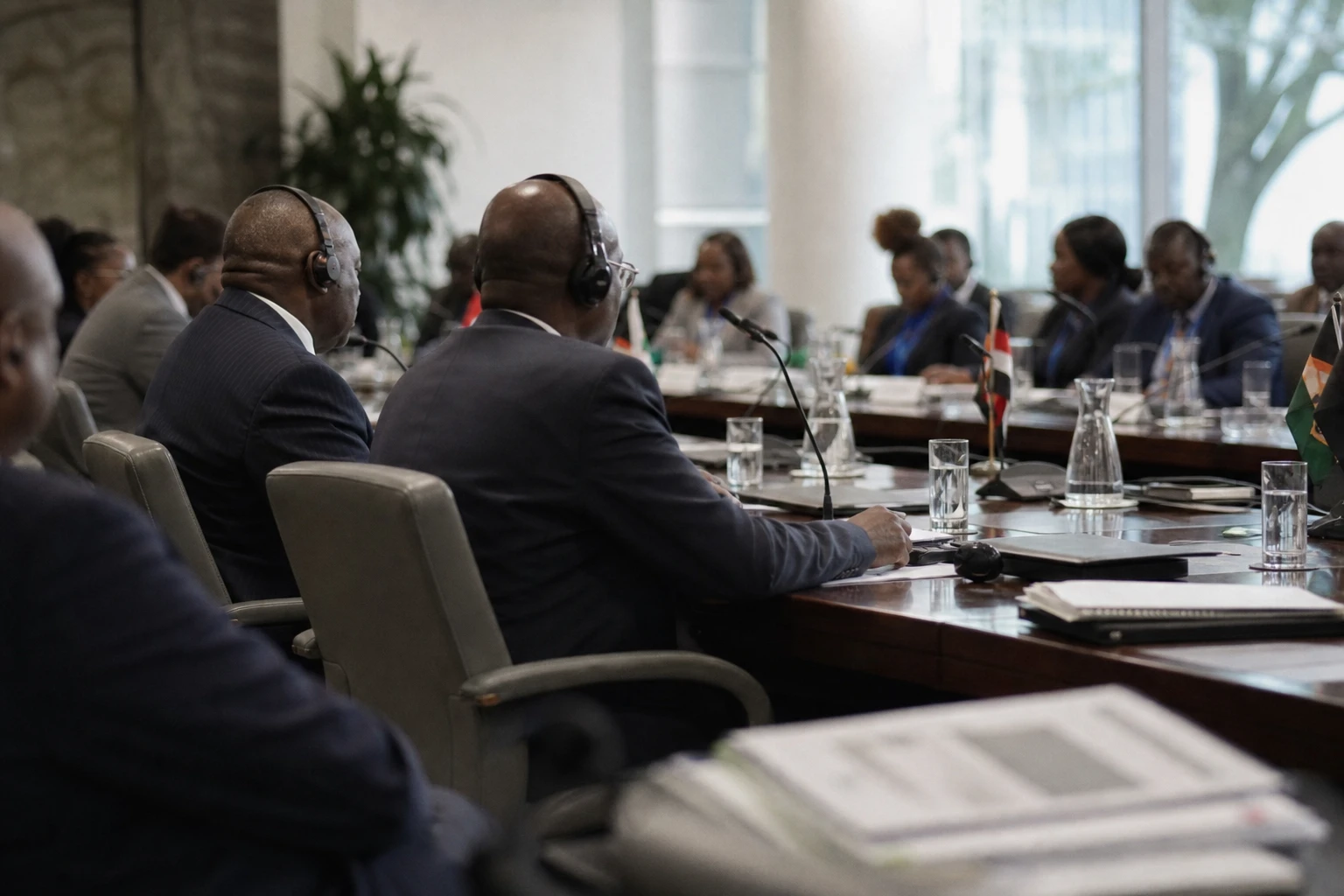
Against this backdrop, a new €300 million concessional financing package has been announced to support the reform of metropolitan commercial services. The aim is tangible: to ensure that revenue from these services is managed more effectively, reinvested in infrastructure and used to reduce outages, maintenance backlogs and network deterioration.
The announcement matters because South Africa’s eight metropolitan municipalities collectively serve more than 22 million people. They form the country’s urban core and account for a large share of national economic activity. When these cities falter, investment, mobility and households’ daily lives are all affected at once.
A reform born of a lasting municipal crisis
The financing is part of a broader effort to support South Africa’s cities. The programme targets the metros’ so-called commercial services, which are in principle meant to be funded by bills paid by users. In practice, this model is undermined by technical losses, inadequate maintenance, low collection rates and budgetary trade-offs that eat into long-term investment.
The South African government has for several months been repeating that the local crisis has become structural. In his 2026 budget, the finance minister said that 63% of municipalities were in financial distress. He also reiterated the government’s intention to strengthen long-term financial plans to improve project selection, cash management and the sustainability of services.
This figure does not stand alone. In May 2026, the Cabinet confirmed that several municipalities remained under national intervention, with recovery plans making slow progress in some cases. The authorities have even raised the prospect of more stringent mechanisms to secure electricity distribution and revenue collection in the most fragile local authorities.
In other words, the new loan is not arriving in an administrative vacuum. It supports an effort to restore a discreet but central pillar of the South African state: the municipality as the primary provider of services. Pretoria, the country’s administrative capital, is among them, but the issue extends far beyond the city. It also concerns Johannesburg, Cape Town, eThekwini, Tshwane, Ekurhuleni, Buffalo City, Mangaung and Nelson Mandela Bay.
What the announced funding will actually finance
The loan is split between €200 million through KfW, the German public development bank, and €100 million through the French Development Agency. The South African government describes the package as support for its metropolitan commercial services reform programme, launched to improve the governance and financial viability of electricity, water, sanitation and waste services.
The aim is not simply to inject funds. It is also to change how metros plan and protect their revenues. The principle is straightforward: money collected for a service should first be used for that service. That is precisely where the system has often gone astray. In his budget, the finance minister cited Johannesburg as an example, where water revenues far exceed the amounts allocated to investment by Johannesburg Water, contributing to a substantial repair backlog.
The financing is also linked to a just energy transition, meaning the transformation of the electricity system without worsening social inequalities. The South African government considers better municipal performance a basic condition for advancing this effort, particularly because local networks carry electricity to homes and businesses. Without robust municipal distributors, new investments in solar, wind or smart grids quickly run into bottlenecks.
The loan adds to other recent financing. In August 2026, Pretoria had already secured a $500 million loan from the Asian Infrastructure Investment Bank to strengthen climate-resilient urban services. This confirms a strategy of diversifying funding sources to modernise cities while seeking to rebuild confidence in municipal finances.
An urban, social and economic challenge
For residents, the stakes are immediate. Water outages, delays in waste collection, local power failures and deteriorating sanitation weigh most heavily on poorer neighbourhoods, where private alternatives are more expensive. Businesses, meanwhile, face operational uncertainty, higher logistics costs and production stoppages. The metros, which carry considerable weight in the South African economy, must therefore restore their capacity to deliver services, without which growth will remain fragile.
The difference between cities and rural areas also matters. Metros have a broader tax base, but they also have more ageing infrastructure and greater investment needs. Smaller municipalities, meanwhile, often lack technical capacity. The government is therefore pursuing a differentiated approach: increased financial support for major cities, assistance with long-term planning and closer oversight of struggling local authorities.
This reform agenda reflects a broader shift in South African governance. From Pretoria, the National Treasury is pressing municipalities to make their services more transparent and financially self-reliant. In the background is also the need to protect the country’s major economic hubs, as South Africa seeks to consolidate its recovery, improve infrastructure and reduce the losses accumulated over years of underinvestment.
An issue extending beyond South Africa
Across the continent, this case says something important about African cities. Metros are no longer merely centres of population growth. They have become places where the credibility of the state, the quality of networks and the ability to finance the energy transition are at stake. With its eight metros and reform mechanisms, South Africa serves as a public policy testing ground for other countries facing the same tangle of local debt, ageing infrastructure and social pressure.
The next test will be translating the financing into visible projects, more secure revenues and more reliable services. That is where the real impact of this partnership will be measured. In southern Africa, where SADC has long supported regional economic and energy stability, the success or failure of South Africa’s metros matters well beyond the country’s borders.