Algeria
 Egypt
 Libya
 Morocco
 Sudan
 Tunisia
 Benin
 Burkina Faso
 Cabo Verde
 Côte d'Ivoire
 Ghana
 Guinea
 Guinea-Bissau
 Liberia
 Mali
 Mauritania
 Niger
 Nigeria
 Senegal
 Sierra Leone
 The Gambia
 Togo
 Cameroon
 Central African Republic
 Chad
 DR Congo
 Equatorial Guinea
 Gabon
 Republic of the Congo
 São Tomé and Príncipe
 Burundi
 Comoros
 Djibouti
 Eritrea
 Ethiopia
 Kenya
 Madagascar
 Malawi
 Mauritius
 Mozambique
 Rwanda
 Seychelles
 Somalia
 South Sudan
 Tanzania
 Uganda
 Angola
 Botswana
 Eswatini
 Lesotho
 Namibia
 Zambia
 Zimbabwe
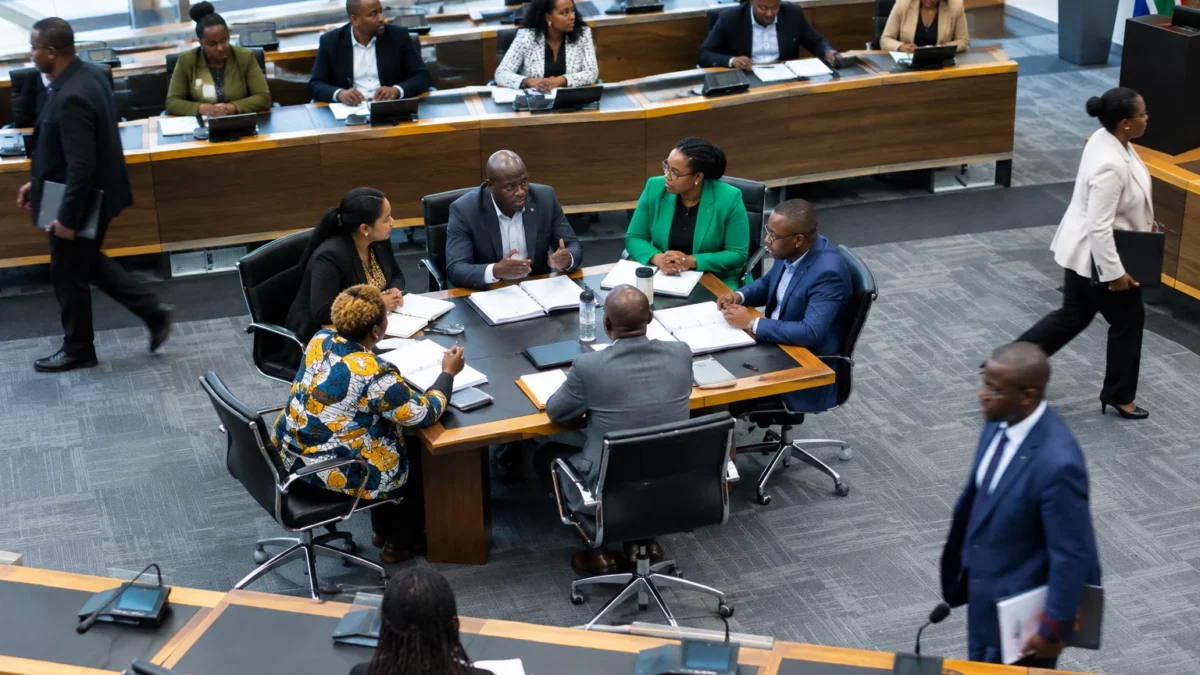
In South Africa’s municipal elections, coming first does not guarantee control of a city. The 4 November vote confirmed a fragmented political landscape: in several major metros, the leading party must now look to smaller parties to govern — or accept a place in opposition.
Hung councils, mayoralties to negotiate
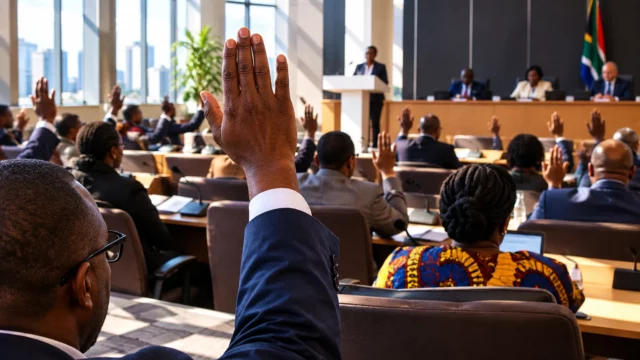
South African voters do not elect their mayors directly. They elect municipal councils, which then appoint the leaders of local government. When no party holds a majority of seats, parties negotiate alliances to elect the mayor and allocate positions on the council.
This mechanism took on particular importance after the 4 November vote. According to a joint circular from national government departments and the municipal association, about 138 councils, or nearly 65% of municipalities, gave no party an absolute majority. Talks therefore focused as much on the make-up of coalitions as on policies and the distribution of positions.
The Electoral Commission announced turnout of 52%, up from 45.9% in 2021. This increase did not, however, produce a clear majority in the major cities. The vote follows a trajectory that was already apparent: in 2024, the ANC, in power since the end of apartheid, lost its majority in the national parliament for the first time and joined a government of national unity with the Democratic Alliance (DA) and other parties.
DA wins votes, but not control of every administration
In the main metros, the DA won the most seats in Johannesburg, Tshwane and Ekurhuleni. It did not, however, secure an absolute majority on any of these councils. In Johannesburg, the council eventually elected ActionSA’s Herman Mashaba as mayor after prolonged negotiations. In Tshwane, a deal between ActionSA, the ANC, the EFF and the MK party returned Nasiphi Moya to the city’s top job.
In Ekurhuleni, the council chose the ANC’s Mziyanda Mketsu, despite the DA coming first there. The centre-right party, by contrast, retained the mayoralty of Cape Town, led by Geordin Hill-Lewis, and won that of Nelson Mandela Bay with Retief Odendaal. In eThekwini, in KwaZulu-Natal province, the MK party’s Mxolisi Phakathi was elected mayor on 27 November. These results, reported by the South African press, illustrate the gap between electoral rankings and the ability to assemble a majority of councillors.
The ANC thus retained or won several mayoral positions through deals struck within councils. But these alliances do not signal a return to its former political dominance. Rather, they reflect local negotiations in which smaller parties can carry considerable weight when they hold the votes needed for a majority.
Alliances under pressure to deliver municipal services
For residents, the issue is not simply which party occupies the mayor’s office. Municipalities manage water, sanitation, rubbish collection, local roads and part of the electricity supply, among other services. The council’s stability and its ability to pass a budget can therefore directly affect services, in central neighbourhoods as well as outlying areas.
Parties will also have to turn their agreements into administrations capable of functioning. Sharing positions can avert an immediate deadlock, but it does not guarantee lasting agreement on spending, appointments or investment priorities. The most fragile coalitions risk turning budget votes into tests of strength. Residents, meanwhile, can hardly separate these political tensions from service delays or neglected infrastructure.
Johannesburg is a particularly telling case: the DA came first there without winning the mayoralty, while ActionSA brought partners together to elect Herman Mashaba. In Tshwane, the new deal united parties with differing positions behind the same municipal majority. For voters, the question now is whether these compromises make it possible to govern, rather than simply win a vote in council.
A test bed for South African alliances
This municipal realignment is taking place as the ANC and the DA serve together in the government of national unity formed after the 2024 general election. Their co-operation in Pretoria is not automatically replicated in cities: local interests, the balance of seats and available partners vary from one council to another. National and municipal alliances can therefore coexist without being identical.
At regional level, South Africa remains a major political and economic player as a member of the Southern African Development Community (SADC). The developments also feed into pan-African debates on electoral representation, coalition governments and continuity of public services. They offer no single model: rules and balances differ from one country to another.
The next stage will be less dramatic than the count, but more revealing: the new councils will have to make their agreements work, pass their budgets and meet local needs. In South Africa, the elections have redistributed influence; the day-to-day running of municipalities will show whether coalitions can turn it into lasting governance.
South African government confirms date of municipal vote · Electoral Commission announces turnout · The coalition deal in Tshwane · Election of eThekwini’s mayor · Institutional guidance on municipal coalitions