Algeria
 Egypt
 Libya
 Morocco
 Sudan
 Tunisia
 Benin
 Burkina Faso
 Cabo Verde
 Côte d'Ivoire
 Ghana
 Guinea
 Guinea-Bissau
 Liberia
 Mali
 Mauritania
 Niger
 Nigeria
 Senegal
 Sierra Leone
 The Gambia
 Togo
 Cameroon
 Central African Republic
 Chad
 DR Congo
 Equatorial Guinea
 Gabon
 Republic of the Congo
 São Tomé and Príncipe
 Burundi
 Comoros
 Djibouti
 Eritrea
 Ethiopia
 Kenya
 Madagascar
 Malawi
 Mauritius
 Mozambique
 Rwanda
 Seychelles
 Somalia
 South Sudan
 Tanzania
 Uganda
 Angola
 Botswana
 Eswatini
 Lesotho
 Namibia
 Zambia
 Zimbabwe
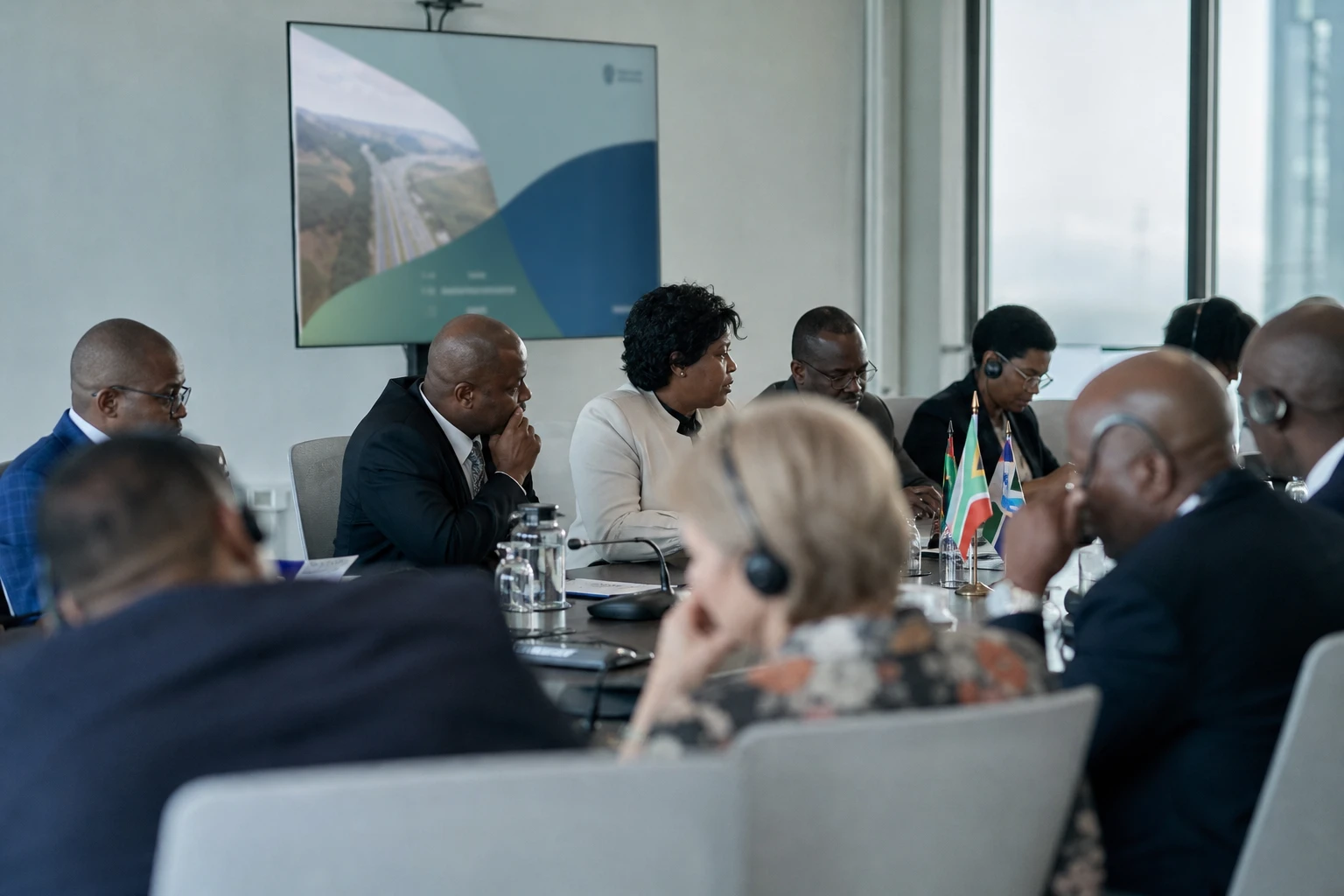
When winter cuts major routes, logistics chains slow down
In South Africa, the cold is more than a feeling on windscreens. When snow, ice and fog settle over mountain passes, they affect everyday journeys first, then the movement of goods, ambulances, deliveries and families living far from major cities. The balance of travel between the country’s interior and its coasts is put under strain. The N3, one of the main road corridors between Gauteng and KwaZulu-Natal, is particularly vulnerable to these southern hemisphere winter episodes, especially around Van Reenen Pass, where black ice can form without being visible at first glance.
This kind of disruption is also a reminder of a wider reality: in a vast country organised around a handful of strategic routes, the weather quickly becomes a matter of public economic concern. In southern Africa, where South Africa carries significant weight in the regional movement of goods and people within SADC, a road closure can be enough to extend transport delays well beyond one province. The terrain, highlands and cold fronts coming in from the ocean combine to create a recurring mix, but one that is rarely harmless.
Warnings across several provinces as mountain passes become impassable
In late July, the South African Weather Service reported a spell of severe weather, with disruptive rain in KwaZulu-Natal, a risk of light snowfall in the highest areas of the Drakensberg, and fog, ice and sub-zero temperatures on elevated sections of the N3, including Van Reenen Pass. Road authorities warned that when the thermometer drops below zero, black ice can appear on the road surface and make driving dangerous without any visible warning.
In this context, several sections of the N3 were closed or heavily restricted, notably between the KwaZulu-Natal border and the Free State, as well as around sensitive points on the network. The same applies to other routes: mountain passes linking secondary towns, rural areas and trade corridors become the first points of failure. This is where the vulnerability of a country whose mobility still depends largely on roads becomes apparent.
The Eastern Cape also saw closures on exposed sections. In this province, snow and ice often affect mountain roads before reaching major urban centres. The result is tangible: communities can be temporarily cut off, while emergency services have to contend with access routes slowed or even closed. The week’s warnings also covered the Free State, southern Gauteng, Mpumalanga, the Western Cape and the Northern Cape, showing how a single cold spell can spread across a large part of the country.
The impact is not the same for all South Africans
For urban motorists, the main advice is to avoid non-essential journeys and wait for conditions to improve. For people in rural areas, the stakes are higher. A closed road can mean reduced access to school, markets, healthcare and day-to-day work. A skid on an icy slope can also immobilise a lorry and block an entire route for hours. That is why road operators are urging drivers to reduce speed, increase following distances and avoid overestimating a vehicle’s capabilities on a cold or wet road surface.
Transport and logistics companies face another cost: delays. On a route such as the N3, a closed pass or the need to divert traffic onto secondary routes can affect delivery times between Durban, Johannesburg and the intermediate centres of the Free State and KwaZulu-Natal. Carriers must then weigh up safety, fuel, driver fatigue and the need to keep supply chains moving. This is no minor technical issue. In a country where the port of Durban and the inland corridor underpin a significant share of trade, every hour lost on the road has repercussions beyond the province directly affected.
The authorities’ message is therefore very practical. The Road Traffic Management Corporation has already reiterated in its winter road safety advice that drivers should adjust their driving to icy road surfaces, slow down before bridges and in shaded areas, and avoid overestimating their vehicle’s grip, even if it has four-wheel drive. In this case, such guidance is essential because conditions change quickly between the plains, highlands and mountain passes.
A test of resilience for infrastructure and regional coordination
This cold spell points to a broader issue for South Africa: the resilience of the road network remains central to practical sovereignty. The country has meteorological, road safety and traffic management institutions, but severe winter episodes are a reminder that preparedness, road maintenance and coordination between provinces remain decisive. Early warnings, road treatment crews and the temporary closure of certain passes have become tools for managing risk, not merely measures to improve comfort.
At SADC level, the impact is immediate. South Africa serves as an entry point and transit hub for several trade flows in the southern African region. When weather deteriorates on its inland roads, delays increase for cargoes coming from or bound for neighbouring countries. The issue is therefore not only South African. It affects the flow of corridors, the continuity of services and the ability of states to manage increasingly frequent climate shocks together. In the southern hemisphere winter, the question is not only where it snows. It is how long roads, emergency services and the real economy can keep going.