Algeria
 Egypt
 Libya
 Morocco
 Sudan
 Tunisia
 Benin
 Burkina Faso
 Cabo Verde
 Côte d'Ivoire
 Ghana
 Guinea
 Guinea-Bissau
 Liberia
 Mali
 Mauritania
 Niger
 Nigeria
 Senegal
 Sierra Leone
 The Gambia
 Togo
 Cameroon
 Central African Republic
 Chad
 DR Congo
 Equatorial Guinea
 Gabon
 Republic of the Congo
 São Tomé and Príncipe
 Burundi
 Comoros
 Djibouti
 Eritrea
 Ethiopia
 Kenya
 Madagascar
 Malawi
 Mauritius
 Mozambique
 Rwanda
 Seychelles
 South Sudan
 Tanzania
 Uganda
 Angola
 Botswana
 Eswatini
 Lesotho
 Namibia
 South Africa
 Zambia
 Zimbabwe
In Mogadishu, innovation is still seeking ground rules
In Somalia, starting a business is no longer just a matter of having an idea. It also depends on an ecosystem capable of supporting, financing and protecting projects. In Mogadishu, start-ups are therefore moving ahead in a promising but still unstable environment, where access to the market matters as much as legal certainty.
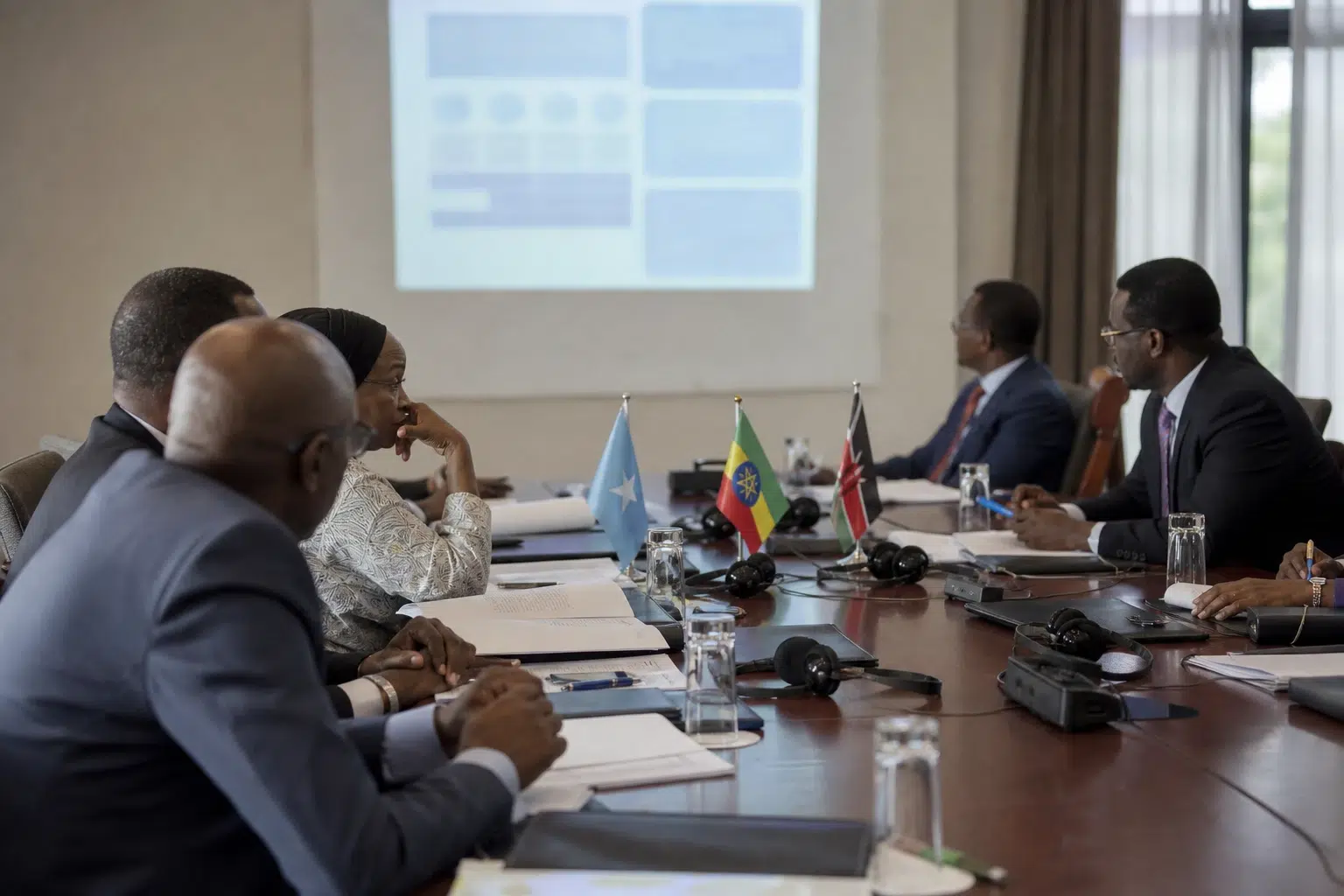
It was in this context that a national innovation network was launched in Mogadishu, on the sidelines of a forum devoted to entrepreneurship and innovation. The network brings together incubators, chambers of commerce and public institutions to organise support for young businesses. It is part of the BIC Somali project, implemented by the United Nations Industrial Development Organization and funded by the European Union. UNIDO says the project, which focuses on business incubators and SMEs in Somalia, runs from 2021 to 2026.
A young country, an economy under pressure
The initiative comes at a time when job creation remains a central challenge in the country. The World Bank notes that nearly 500,000 young people enter the Somali labour market each year, while around 80,000 jobs are created over the same period. The gap is immense. It explains why entrepreneurship, self-employment and digital services have become economic as well as social issues.
The Somali government’s ambition is clear: to make start-ups a driver of growth where formal wage employment is expanding too slowly. In a country where urbanisation is accelerating and cities are becoming centres of new activity, incubators can act as bridges. They help turn an idea into a registered activity, and then into a business capable of attracting customers, partners and, sometimes, credit. The World Bank also notes that private-sector-led job creation is at the heart of its strategy in Somalia.
Encouraging figures, but still modest
The programme’s organisers report initial results: more than 3,600 applications across three cohorts, around 500 people initially trained, more than 200 entrepreneurs supported through incubation, and a further 75 businesses supported in the latest cohort. These figures show that demand exists. They also reveal the limits of a programme still taking shape, given the scale of the business community it needs to reach. The figures were provided by the project’s organisers and have not, at this stage, been published as part of a comprehensive independent assessment.
The launch of a national network could nevertheless expand its reach. By linking incubators, chambers of commerce and ministries, the state is seeking to reduce the fragmentation of initiatives. In an environment where start-ups often work in isolation, coordination matters as much as funding. It can also help standardise training, direct project founders to the right services and make the range of support on offer easier to navigate.
The real bottleneck is still legal
A more fundamental obstacle remains. Somalia’s investment climate continues to be hampered by the lack of robust intellectual property protection. The US State Department’s 2025 Investment Climate Statement on Somalia notes that there is no formal legislation on the matter and that no specific constitutional provision governs such protection. The report adds that businesses still face difficulties moving money, and that electricity is expensive and unreliable.
This legal uncertainty directly affects innovators. Without clear rules on patents, trademarks or rights to creations, a start-up is more likely to hesitate before investing in a product, an app or a commercial identity. The risk is not theoretical: it can deter partners, complicate fundraising and slow the formalisation of businesses. The European Union, in its country fact sheet on intellectual property in Somalia, confirms that the country is a member of ARIPO, the African Regional Intellectual Property Organization, but has not yet signed its core protocols.
The Somali government has nevertheless announced that legislation on intellectual property is being prepared. If passed, it could fill a long-standing gap and give entrepreneurs a more predictable framework. In the real economy, that would matter to urban SMEs, young graduates, women entrepreneurs and incubators seeking to develop businesses capable of securing finance. The task is therefore institutional, but also highly practical.
Regional integration, a way out of crisis
Somalia is also making progress at regional level. Since 4 March 2024, it has been a full member of the East African Community, an regional integration organisation that now brings together eight partner states, including Burundi, Kenya, Uganda, Tanzania and South Sudan. For Mogadishu, membership opens up greater prospects for movement, trade and regulatory harmonisation with its East African neighbours.
At continental level, the logic is the same. Somalia has also approved ratification of the agreement establishing the African Continental Free Trade Area, although the process of bringing it into force and fully implementing it still needs to be consolidated. The stakes are high: for an economy such as Somalia’s, the AfCFTA could expand the potential market for young businesses, provided customs, digital and trade rules keep pace.
In this context, the innovation network launched in Mogadishu is not a symbolic gesture. It is a test of economic governance. The question is no longer simply whether Somalia can create start-ups. It is whether it can offer them a lasting framework, compatible with regional markets and the demands of a modern economy. The next challenge will therefore be less about declaring support than translating it into laws, services and stable funding.