Algeria
 Egypt
 Libya
 Morocco
 Sudan
 Tunisia
 Benin
 Burkina Faso
 Cabo Verde
 Côte d'Ivoire
 Ghana
 Guinea
 Guinea-Bissau
 Liberia
 Mali
 Mauritania
 Niger
 Nigeria
 Senegal
 Sierra Leone
 The Gambia
 Togo
 Cameroon
 Central African Republic
 Chad
 DR Congo
 Equatorial Guinea
 Gabon
 Republic of the Congo
 São Tomé and Príncipe
 Burundi
 Comoros
 Djibouti
 Eritrea
 Ethiopia
 Kenya
 Madagascar
 Malawi
 Mauritius
 Mozambique
 Rwanda
 Seychelles
 South Sudan
 Tanzania
 Uganda
 Angola
 Botswana
 Eswatini
 Lesotho
 Namibia
 South Africa
 Zambia
 Zimbabwe
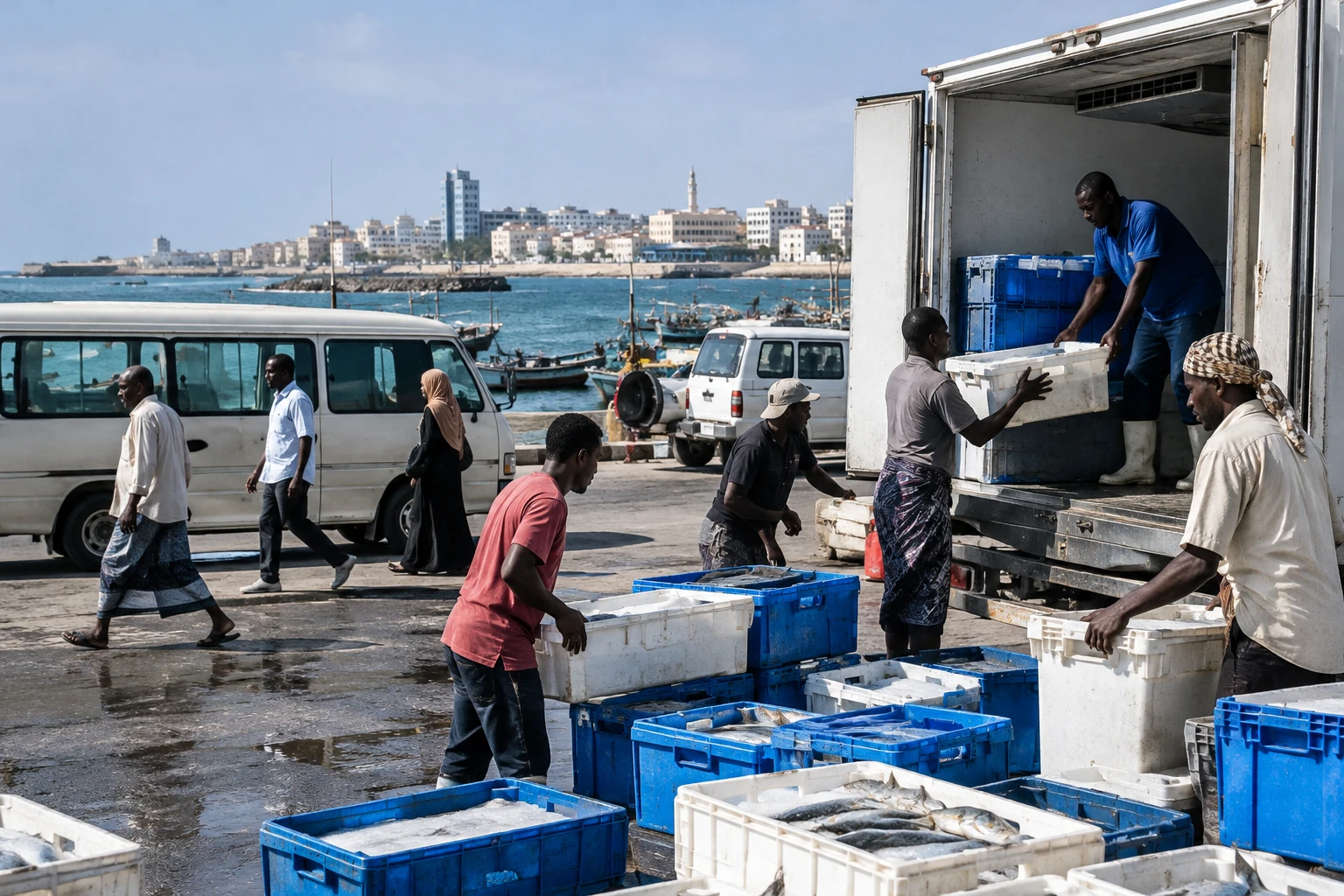
Duty-free access can open a commercial door. It does not guarantee that Somali fish will reach Chinese ports, or that revenues will benefit the communities that catch them. Somalia therefore faces a dual challenge: turning a market-access agreement into local economic activity without undermining marine stocks.
A commercial outlet, but not yet a ready supply chain
On 13 July 2026, in Mogadishu, Somalia and China signed a protocol on inspection and quarantine requirements for Somali wild aquatic products. The text is intended to allow fish and other covered products to enter the Chinese market at zero tariff. A Somali media outlet reported that official exports were expected to begin in September. But the information reviewed does not confirm that shipments have actually started.
This distinction matters. Removing tariffs reduces the cost of entry, but does not remove other conditions for access. Products must comply with Chinese health standards, be traceable and come from authorised establishments. Authorities must also be able to inspect their quality and issue the required certificates.
The obstacles are concrete: cold-storage facilities, refrigerated transport, suitable quays and processing units are still needed to preserve fish and ship it regularly. Without this equipment, fishers and small businesses may be unable to supply the volumes or quality buyers require.
Nor should the health protocol be confused with a general fishing authorisation for Chinese vessels. It concerns the export of products. Fishing licences are governed by other decisions and monitoring arrangements.
Licences and monitoring at sea
This legal distinction does not erase tensions over the exploitation of Somali waters. In March 2024, Somalia’s Fisheries Ministry issued 19 deep-sea licences to Chinese longliners targeting tuna, according to a World Bank document. The permits generated $1 million, shared with the federal member states. A licence does not, on its own, prove that a vessel has broken the law; it does, however, make the monitoring of catches, fishing areas and compliance with rules essential.
Local concerns are part of a longer history. Monitoring vast maritime areas remains difficult, while surveillance and enforcement capacity is limited. Artisanal fishers depend directly on coastal catches. They have fewer resources than industrial fleets to travel farther offshore, preserve their catch or withstand a decline in catches.
In December 2024, a fishing boat owned by Chinese interests was detained off Puntland, in north-eastern Somalia. Local authorities said its licence had expired; the precise circumstances of the incident and the allegations concerning its activities do not establish that all foreign vessels fish illegally. The episode nevertheless showed how licensing rules, the powers of federal and regional authorities, and safety at sea can overlap.
Who will capture the value of the fish?
If exports grow, their benefits will depend on how the sector is organised. Storage and processing infrastructure could create jobs on land, particularly in ports, workshops and transport. But if companies able to invest control purchasing, storage and shipping on their own, fishers could remain confined to selling raw catches, with only a small share of the final value.
Commercial pressure could also shift priorities. A rise in export orders could favour species that are most profitable abroad, at the expense of supplies to Somali markets. The risk is not automatic: it will depend on permitted volumes, targeted species, any seasonal closures and the ability to punish violations.
The federal government, federal member state administrations and coastal communities therefore have shared interests, but not always identical ones. Licence revenues and investment appeal to the authorities. Fishers need sustainable access to fishing grounds and transparent mechanisms for reporting abuses. Publishing licences, tracking vessels and reporting on inspections would help reduce suspicion and protect resources.
A Somali and regional issue
Somalia is a member of the Intergovernmental Authority on Development (IGAD), a regional organisation in the Horn of Africa. Fish and markets do not stop at borders: coastal trade, maritime surveillance and the fight against illegal fishing call for coordination among neighbouring countries. IGAD highlights, in particular, the importance of regional trade in fishery products for incomes and food security.
The issue is also linked to the work of the Indian Ocean Tuna Commission, which sets management rules for migratory species. For Somalia, access to the Chinese market could diversify outlets and encourage investment. But the decisive measure will not simply be the number of shipments: it will be necessary to see who owns the facilities, what revenues go to local actors and whether stocks remain capable of replenishing themselves.
The trade protocol creates an opportunity, not a guarantee of development. Its impact will be judged by the implementation of health and maritime controls, the transparency of licences and the place given to Somali fishers in the value chain.