Algeria
 Egypt
 Libya
 Morocco
 Sudan
 Tunisia
 Benin
 Burkina Faso
 Cabo Verde
 Côte d'Ivoire
 Ghana
 Guinea
 Guinea-Bissau
 Liberia
 Mali
 Mauritania
 Niger
 Nigeria
 Senegal
 Sierra Leone
 The Gambia
 Togo
 Cameroon
 Central African Republic
 Chad
 DR Congo
 Equatorial Guinea
 Gabon
 Republic of the Congo
 São Tomé and Príncipe
 Burundi
 Comoros
 Djibouti
 Eritrea
 Ethiopia
 Kenya
 Madagascar
 Malawi
 Mauritius
 Mozambique
 Rwanda
 Seychelles
 South Sudan
 Tanzania
 Uganda
 Angola
 Botswana
 Eswatini
 Lesotho
 Namibia
 South Africa
 Zambia
 Zimbabwe

In Somalia, protecting a tree can be about conserving soil, but it can also be a show of power. In territories controlled or influenced by al-Shabaab, environmental rules serve local management, surveillance of the population and the armed group’s communications strategy.
An ecological issue turned into a tool of authority
The phenomenon is not new. Since the early 2010s, al-Shabaab has presented some environmental decisions as a response to the everyday difficulties faced by communities. Bans on single-use plastic bags, tree-planting campaigns, the clearing of irrigation canals and flood prevention measures all give the group the image of a force able to administer areas where the Somali state remains largely absent.
An analysis by the Centre on Armed Groups, published on 1 October 2026, examined this strategy. Researchers studied more than a decade of al-Shabaab communications. They also gathered testimony from residents and commanders in regions under the group’s influence, to compare public announcements with local practices.
According to Ashley Jackson, the centre’s co-director, the group uses climate-related rhetoric to portray itself as more attentive to people’s needs than the federal government based in Mogadishu. This message is part of a broader political contest: in several rural areas, controlling access to water, roads, markets and services also helps consolidate de facto authority.
Trees: protecting soil and gaining military advantage
The ban on cutting certain trees illustrates this ambiguity. In a country beset by drought, limiting felling can slow erosion, preserve pastureland and protect the few remaining areas of vegetation. But the same rule can also be driven by military calculations.
Vegetation provides cover from aerial surveillance. Trees can conceal the movements of fighters, equipment depots and routes used by units. From this perspective, a measure presented as ecological also helps reduce the group’s visibility to drones and satellites.
For residents, the consequences are more immediate. Wood is still used to build, cook, repair homes and produce charcoal. When restrictions are imposed without alternatives, they can cut the incomes of families already affected by drought, rising prices and forced displacement.
Fines of up to about $1,000 have been reported for violations. This is a considerable penalty in rural areas of Somalia. It also shows that the environmental rule is not enforced through awareness-raising alone. It is backed by a coercive system, with courts, local officials and networks of control.
A climate crisis heightens tensions
These decisions come as Somalia faces another period of acute food insecurity. According to an analysis by the Integrated Food Security Phase Classification, the international framework that measures levels of acute hunger, 5.4 million people could be in Crisis or worse between October and December 2026.
Nearly 1.5 million people are expected to reach the “Emergency” level. In Baidoa, in the South West State, about 26,000 displaced people could move into Phase 5, known as “Catastrophe”. This category describes households facing extreme losses of income and livelihoods. It can signal a risk of famine if aid does not arrive in time.
The risk is being driven by several factors. Years of drought have decimated herds and reduced harvests. Insecurity limits movement and pushes up transport costs. El Niño-related rains could then cause flooding in riverside areas and displacement camps.
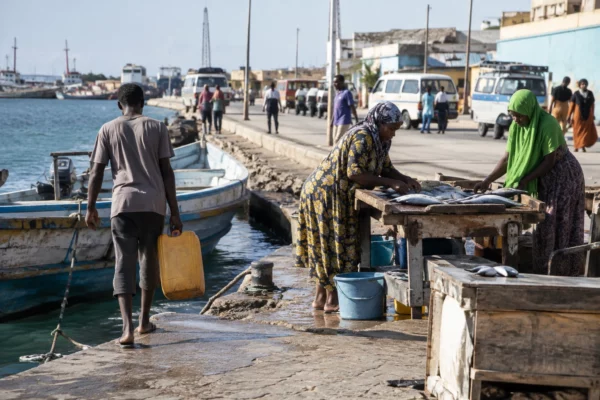
The contrast is particularly stark in Baidoa and Beledweyne. These towns host many families who have left the countryside. They concentrate humanitarian services, but also face intense pressure on water, housing, healthcare and markets. An environmental rule applied without taking this reality into account may therefore protect a resource in the long term while worsening an immediate emergency.
Governing without recognition
Al-Shabaab does not only impose bans. In some areas, it organises maintenance work, responds to disasters and regulates access to water points. Residents distinguish between measures that bring them a tangible benefit and those that mainly serve propaganda or the economic interests of local commanders.
This ability to intervene feeds the group’s strategy of seeking legitimacy. Al-Shabaab aims to show that it can provide services, enforce rules and respond to crises more quickly than official institutions. This does not mean that people support its project. In many localities, obedience is instead a matter of coercion, the need for security or a lack of alternatives.
Environmental control is also part of a war economy. Charcoal, water, pastureland and trade routes can all be taxed. Managing these resources generates revenue while making communities more dependent on local authorities. Ecological rules thus become a means of regulating activities, collecting revenue and monitoring movement.
A challenge for Mogadishu and IGAD
For Somalia’s federal government, the challenge goes beyond the military campaign. It must also re-establish a foothold in rural areas through credible services, an administrative presence and transparent resource management. Without this civilian dimension, security operations risk leaving a vacuum that al-Shabaab can fill again.
The issue also concerns the Intergovernmental Authority on Development, or IGAD, the regional organisation for East Africa. Somalia shares with its neighbours risks linked to droughts, floods, population displacement and cross-border trafficking. An effective climate policy must therefore bring together food security, access to water, protection of livelihoods and dialogue with communities.
The coming months will be decisive. The October-to-December rainy season, developments in Baidoa and humanitarian access to territories controlled by al-Shabaab will show the scale of the crisis. They will also reveal whether environmental rules are genuinely reducing residents’ vulnerability or are primarily being used to strengthen the power of an armed group.