Algeria
 Egypt
 Libya
 Morocco
 Sudan
 Tunisia
 Benin
 Burkina Faso
 Cabo Verde
 Côte d'Ivoire
 Ghana
 Guinea
 Guinea-Bissau
 Liberia
 Mali
 Mauritania
 Niger
 Nigeria
 Senegal
 Sierra Leone
 The Gambia
 Togo
 Cameroon
 Central African Republic
 Chad
 DR Congo
 Equatorial Guinea
 Gabon
 Republic of the Congo
 São Tomé and Príncipe
 Burundi
 Comoros
 Djibouti
 Eritrea
 Ethiopia
 Kenya
 Madagascar
 Malawi
 Mauritius
 Mozambique
 Rwanda
 Seychelles
 South Sudan
 Tanzania
 Uganda
 Angola
 Botswana
 Eswatini
 Lesotho
 Namibia
 South Africa
 Zambia
 Zimbabwe
When the sea closes, the price of rice in Mogadishu rises fast
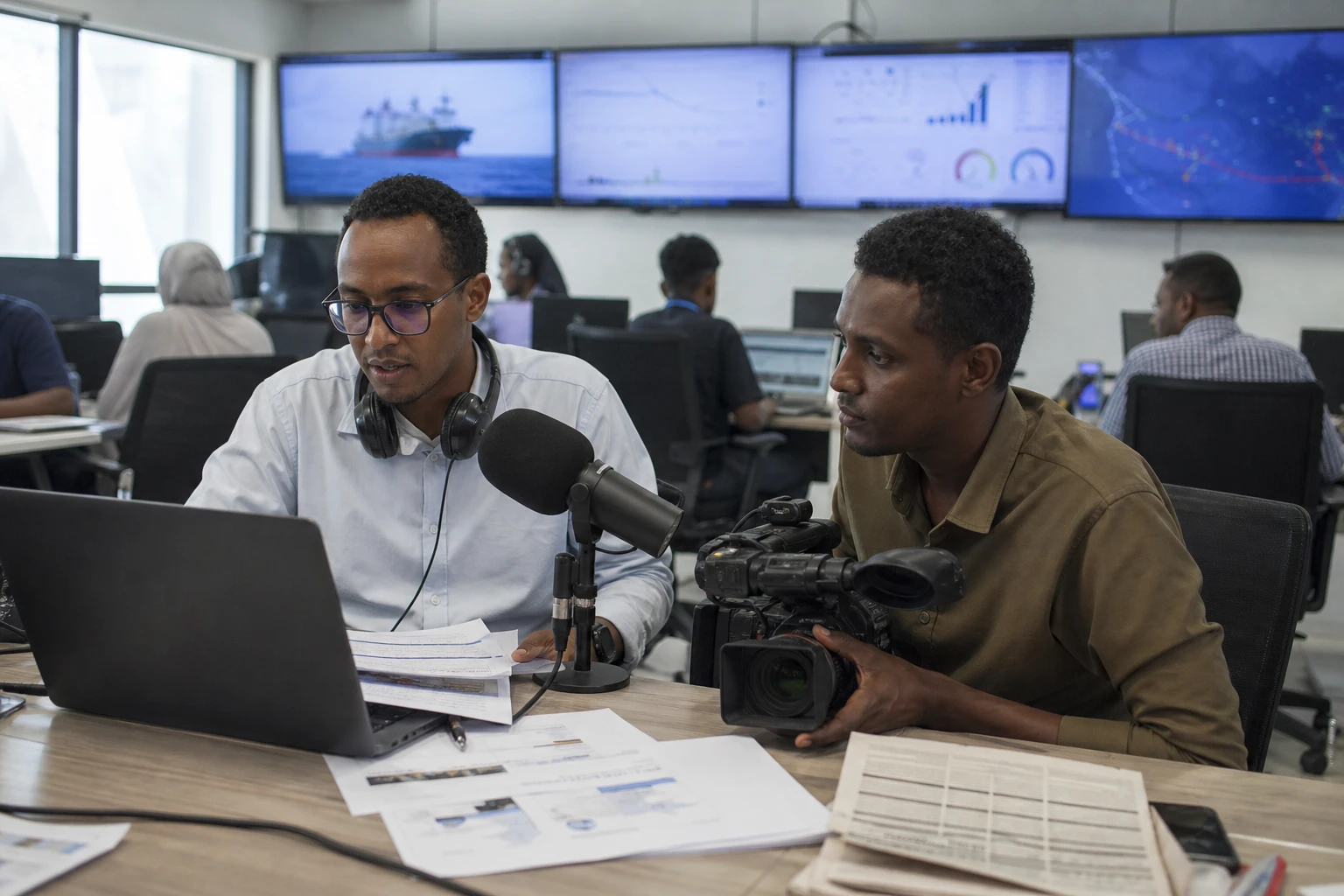
In Somalia, trade does not pass only through offices and contracts. It passes through the sea. When maritime routes come under strain off Yemen and in the Gulf of Oman, the impact is quickly visible in warehouses, then on the market stalls of Mogadishu. This is where a significant part of Somali families’ daily lives plays out, as they depend on imports for basic foodstuffs and a large share of consumer goods. The country is a coastal nation, facing the Indian Ocean and the Gulf of Aden, with an economy that remains highly sensitive to transport, insurance and transit costs.
This vulnerability is not new. But it takes on a different scale when tensions around the Bab al-Mandeb Strait, the passage between the Red Sea and the Gulf of Aden, combine with concerns linked to the Strait of Hormuz. Maritime trade in the region cannot sustain uncertainty for long. Shipowners weigh their options. So do traders. And ports that can adapt gain ground.
Mogadishu seeks to sidestep shocks along the Red Sea-Gulf corridor
The response from Mogadishu is pragmatic. Somali operators have begun reviewing their supply routes to limit exposure to disruption in the area. The director of the Mogadishu seaport says exporters have been contacted to change their routes, with a sugar ship from Sri Lanka arriving directly for the first time. This marks a clear shift. Until now, some cargo flows more often passed through Gulf hubs, such as the United Arab Emirates, Oman or Saudi Arabia, before being rerouted to Somalia.
This choice is not insignificant. Port authorities describe the Port of Mogadishu as the country’s main maritime gateway and a central point for Somali imports and exports. The Ministry of Ports and Maritime Transport also notes that Somalia occupies a strategic position on the maritime routes of the Horn of Africa. In practice, this means that a longer route, a higher insurance premium or a delivery delay can quickly have an impact on the domestic market.
The Port of Mogadishu has already invested in more flexible operations. It now offers pilotage services around the clock, according to its official website, facilitating the reception of ships and the management of schedules. In January 2026, Somalia’s national news agency also presented the port as a regional transshipment hub, following the launch of a direct Colombo-Mogadishu service by MSC. This matters. When a direct route becomes possible, importers cut out intermediaries, save time and limit some additional costs.
Yemen, Djibouti and Somalia: a shared trading space under pressure
Rising tensions around Bab al-Mandeb are not confined to the Yemen theatre. They spill over into the entire trading zone linking the Arabian Peninsula, the Horn of Africa and the Indian Ocean. The International Organization for Migration said that the escalation of fighting in Yemen had displaced more than 85,000 people, including more than 2,000 who arrived in Djibouti by boat. The figure is a reminder that maritime crises are also human crises, with borders opening again to families fleeing war even as they close to goods.
For Somalia, the stakes are twofold. On the one hand, the country must secure its supplies. On the other, it must preserve the flow of its trade in an unstable regional environment. The IMF’s Somalia analysis team has already noted that regional disruptions are weighing on transport costs, insurance and import prices. In other words, the bill does not stop at the port quay. It runs through the entire supply chain, to wholesalers and then households.
Mogadishu could therefore gain a relative advantage from more direct routes, if they reduce delays and exposure to danger zones. But that advantage remains fragile. A capital can absorb a logistics shock faster than provincial markets, where margins are thin and distribution networks longer. In an economy where imports remain crucial, formal traders and informal resellers are all exposed, but not in the same way. Those with reserves, solid contracts and stable cash flow are better able to weather the impact. Small retailers, meanwhile, pass on increases almost immediately.
A signal for the Horn of Africa and the African Union
The Somali case goes beyond the immediate situation. It illustrates a structural feature of the Horn of Africa: countries bordering the Red Sea and the Gulf of Aden share risks, but also logistical opportunities. Djibouti, Somalia, Ethiopia and Kenya closely monitor every deterioration in maritime security, because their supply chains are interconnected. In this area, competition between ports is not just about the size of their quays. It is about the ability to guarantee regular services, fast procedures and a degree of predictability.
This issue must also be viewed on a continental scale. For the African Union and regional organisations such as IGAD, maritime security is no longer a peripheral concern. It affects the movement of goods, the mobility of people and price stability. When tensions rise at Bab al-Mandeb, Somalia is doing more than adjusting its routes. It is testing its trade resilience, while becoming part of a broader reshaping of routes in the western Indian Ocean. The next thing to watch is straightforward: whether these direct routes will remain temporary adjustments or become a new feature of Somali trade.