Algeria
 Egypt
 Libya
 Morocco
 Sudan
 Tunisia
 Benin
 Burkina Faso
 Cabo Verde
 Côte d'Ivoire
 Ghana
 Guinea
 Guinea-Bissau
 Liberia
 Mali
 Mauritania
 Niger
 Nigeria
 Senegal
 The Gambia
 Togo
 Cameroon
 Central African Republic
 Chad
 DR Congo
 Equatorial Guinea
 Gabon
 Republic of the Congo
 São Tomé and Príncipe
 Burundi
 Comoros
 Djibouti
 Eritrea
 Ethiopia
 Kenya
 Madagascar
 Malawi
 Mauritius
 Mozambique
 Rwanda
 Seychelles
 Somalia
 South Sudan
 Tanzania
 Uganda
 Angola
 Botswana
 Eswatini
 Lesotho
 Namibia
 South Africa
 Zambia
 Zimbabwe
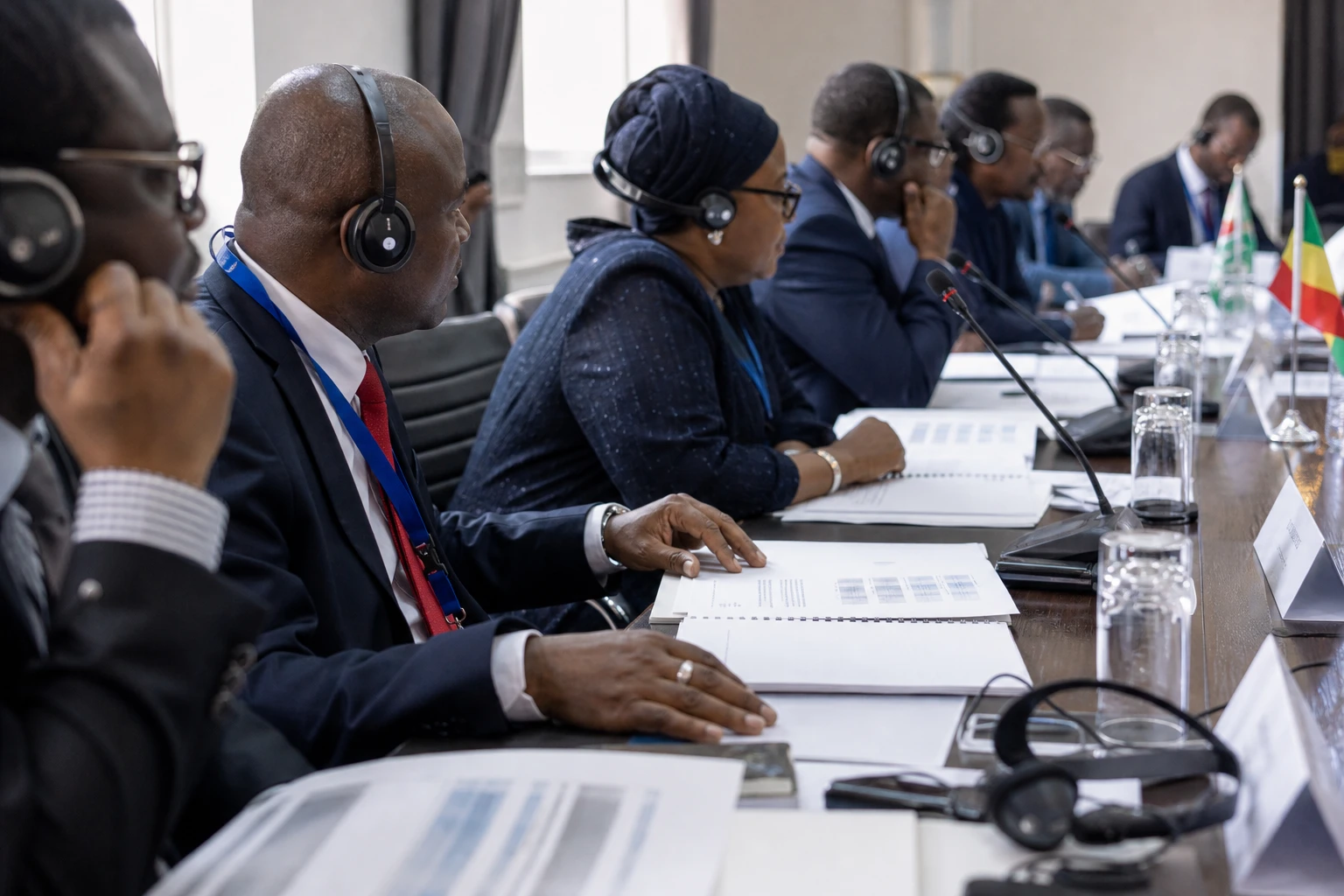
In Freetown, electoral reform reshapes the landscape ahead of 2028
In Sierra Leone, the debate goes beyond the mechanics of voting. It touches on how power is built, how the regions weigh against the capital, Freetown, and how women gain access to decision-making positions. In a country where every electoral reform is seen as a test of trust, parliament faces a weighty political choice: retain rules that require the future president to build broad support, or switch to a system that is easier to organise but more contested in its effects on legitimacy.
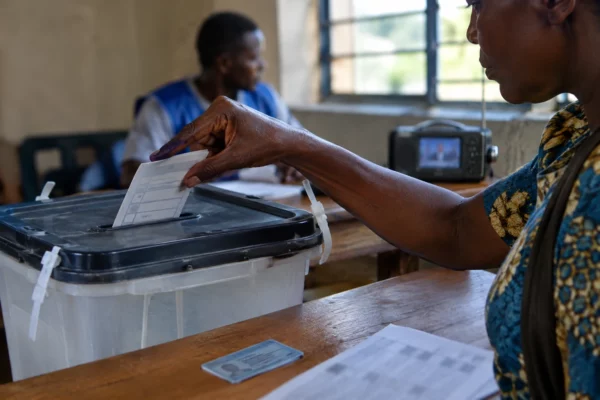
The debate is taking place within a specific institutional framework. The 1991 Constitution currently stipulates that a presidential candidate must secure at least 55% of valid votes to be elected in the first round; otherwise, the top two candidates face each other in a second round. Sierra Leone’s parliament has 146 members, including 132 elected representatives and 14 paramount chiefs representing the districts, giving territorial representation particular weight in the country’s political life.
What the bill under discussion proposes
On Sunday, President Julius Maada Bio urged MPs to adopt the constitutional reform currently under consideration, as discussions have stalled for several weeks. The head of state presented the proposal as the result of years of consultations and as a text intended to reflect contributions from all districts and sectors of society. His address put the issue back at the centre of the political agenda, less than two years before the 2028 presidential election.
According to details debated publicly in parliament, the reform would introduce proportional representation for some elections, lower the presidential victory threshold from 55% to 50% plus one vote, and establish a 30% quota for women in political governance positions. Justice Minister Alpha Sesay also told MPs in late July that the future executive should take regional characteristics, gender equality and the inclusion of minorities into account in government appointments.
The proposal therefore affects more than the presidential election. It also redraws how seats and responsibilities could be distributed. This is a sensitive issue in a country where the balance between urban and rural areas, and between the northern, eastern, southern and western districts, shapes perceptions of the state. Debates over proportional representation are not abstract: they determine who enters parliament, who is left out and what place is given to minority currents.
Simple majority, second round or broader legitimacy
The president’s camp and MPs close to the SLPP support a threshold of 50% plus one vote. Their argument is straightforward: a second round is costly, prolongs political tension and can increase security risks. The APC opposition, by contrast, argues for retaining the 55% threshold, saying it forces candidates to seek broader national support and gives the winner a stronger base. This disagreement lies at the heart of the issue. It pits a logic of institutional efficiency against one of more exacting political validation.
Supporters of proportional representation put forward another argument, prominent in Sierra Leone’s debate: better representation for women, young people and minorities, and reduced local tensions linked to elections won by narrow margins. This is not a theoretical promise. In Sierra Leone, women’s representation in institutions has already increased, and recent debates have shown that a clearer quota could accelerate the trend. The government is therefore seeking to reconcile inclusion and stability, with no guarantee that the two objectives will always coincide.
The reform also raises a procedural question. Several MPs and civic actors have called for the most sensitive aspects of a constitutional revision not to be treated as a simple technical adjustment. Under the 1991 framework, some amendments may in practice require higher thresholds, or even a popular vote, depending on the provisions concerned. In other words, the debate is not only about substance but also about process.
A Sierra Leonean issue, but also a West African one
The issue has clear regional significance. Sierra Leone belongs to ECOWAS, the Economic Community of West African States, which closely monitors electoral reforms and commitments to institutional stability across the subregion. The organisation has also taken part in discussions on implementing reform recommendations and on electoral models, including proportional representation and hybrid systems. The issue is therefore being watched well beyond Freetown, as it touches on the credibility of political transitions in West Africa.
For Julius Maada Bio, the stakes are particular. He is leading Sierra Leone towards the end of his second and final term, which means he cannot be a candidate in 2028. This gives his remarks a double reading: those of a head of state seeking to leave an institutional legacy, and those of a government seeking to lock in an electoral framework before a change of power. In practice, the reform will be judged by its ability to produce lasting consensus, not merely to secure a temporary majority in parliament.
What happens next will depend on the parliamentary timetable for the third session of the Sixth Parliament and on how the opposition’s reservations are resolved. If the bill advances, it could change Sierra Leone’s political grammar for several electoral cycles. If it stalls, the country will enter the 2028 period with the same rules but an institutional dispute still unresolved. In either case, the decision will say much about Freetown’s institutions’ ability to produce rules accepted by a majority of political and social actors.