
 Algeria
 Egypt
 Libya
 Morocco
 Sudan
 Tunisia
 Benin
 Burkina Faso
 Cabo Verde
 Côte d'Ivoire
 Ghana
 Guinea
 Guinea-Bissau
 Liberia
 Mali
 Mauritania
 Niger
 Senegal
 Sierra Leone
 The Gambia
 Togo
 Cameroon
 Central African Republic
 Chad
 DR Congo
 Equatorial Guinea
 Gabon
 Republic of the Congo
 São Tomé and Príncipe
 Burundi
 Comoros
 Djibouti
 Eritrea
 Ethiopia
 Kenya
 Madagascar
 Malawi
 Mauritius
 Mozambique
 Rwanda
 Seychelles
 Somalia
 South Sudan
 Tanzania
 Uganda
 Angola
 Botswana
 Eswatini
 Lesotho
 Namibia
 South Africa
 Zambia
 Zimbabwe
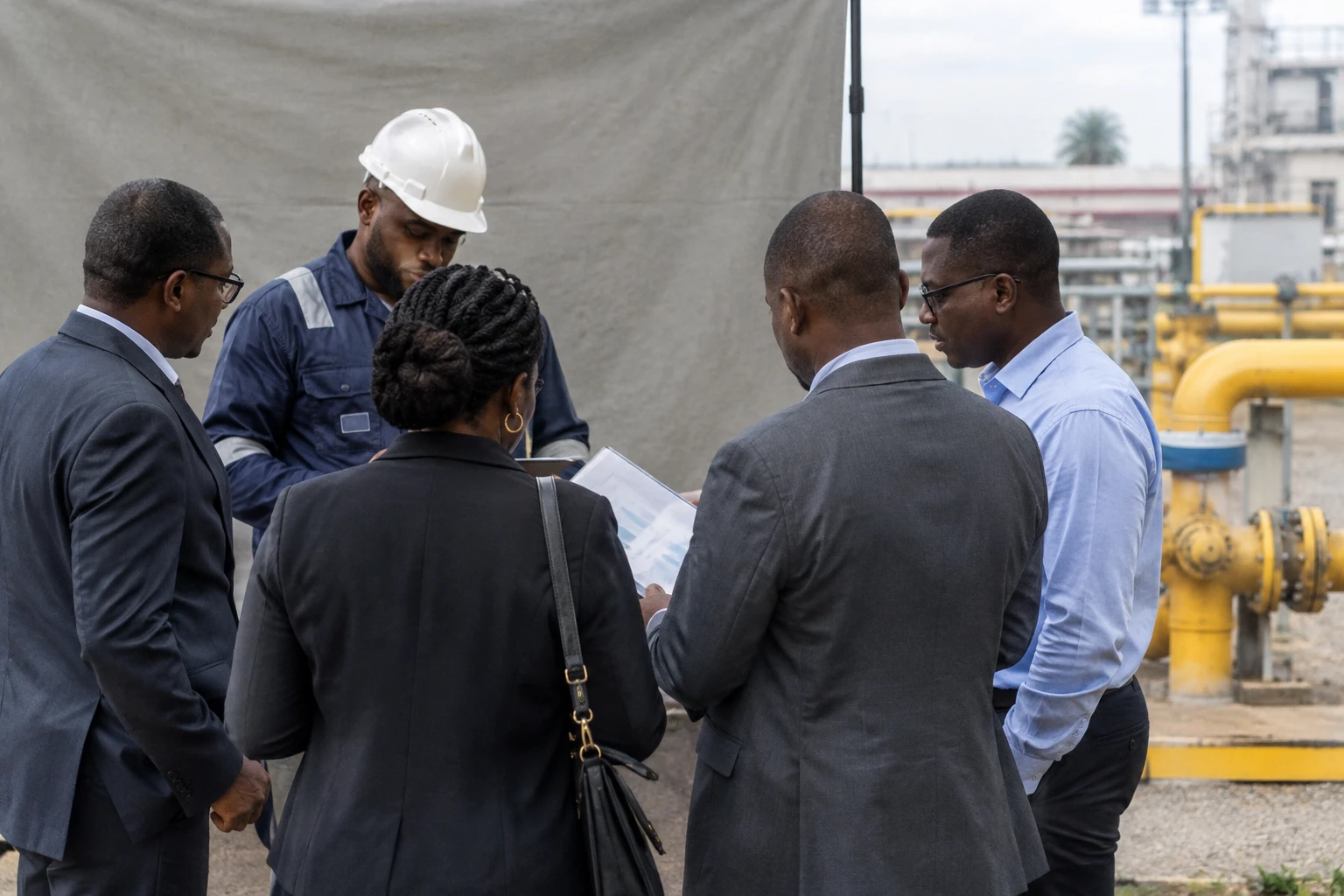
For factories and businesses that depend on gas delivered by pipeline, a change of ownership of a network matters as much as major production announcements. In Nigeria, Shell’s proposed sale to Nigerian company Vaaris Energy concerns infrastructure that already serves industrial and commercial customers.
A domestic network passes into Nigerian hands
On 13 October 2026, Shell announced that it had signed an agreement to sell all its interests in Shell Nigeria Gas Group to Vaaris Energy Limited. The transaction concerns domestic gas distribution, not the group’s production or export activities. The financial terms have not been disclosed. The sale remains subject to regulatory approvals and other completion conditions.
Established in 1998, Shell Nigeria Gas supplies natural gas to more than 130 industrial and commercial customers. Its network comprises about 170 kilometres of pipelines in Ogun, Abia and Rivers states. These figures are reported by Nigerian media outlets The Punch and BusinessDay.
Until the transaction is completed, Shell Nigeria Gas remains part of the Shell group and continues its operations. The amount, completion timetable and precise arrangements for service continuity have not been announced in the information published. It is therefore too early to assess the sale’s effects on customers or employees.
A strategy already evident in the oil sector
The sale is part of the transformation of Shell’s Nigerian portfolio. In March 2025, the group completed the sale of its onshore subsidiary SPDC to Renaissance Africa Energy Company. The local company took over Shell’s 30% stake in a joint venture active notably in the Niger Delta. Shell said at the time that it wanted to focus its Nigerian investment on deep-water activities and integrated gas. Shell’s confirmation of the sale states that its gas and deep-water activities were not included in the transaction.
The sale of Shell Nigeria Gas extends this refocusing, but it does not mean Shell is leaving Nigeria’s gas sector. The group retains a 25.6% stake in Nigeria LNG, the company that operates the liquefaction terminal on Bonny Island. Liquefied natural gas, or LNG, is gas cooled for transport by ship. Shell also retains offshore projects, meaning projects at sea.
In October 2025, Shell and its Nigerian partner Sunlink Energies took a final investment decision to develop the HI gas project offshore. Shell holds 40% of the project and Sunlink 60%. At its planned peak, production is expected to supply up to 350 million standard cubic feet of gas a day to Nigeria LNG. Start-up is expected before the end of the decade, according to Shell’s announcement on the HI project.
Distribution, a concern for local industry
The sale shifts an activity distinct from those that dominate the major debates about hydrocarbons. Shell Nigeria Gas does not produce gas: it distributes it to customers who use it in their operations. For connected businesses, the central question will therefore be continuity of deliveries and the new operator’s ability to maintain the network. The transaction does not yet reveal whether Vaaris will change investment or service terms.
The network spans three states, far from Abuja, the federal capital. Available figures do not detail the distribution of customers by state or their contribution to the local economy. They nevertheless show that the issue goes beyond the relationship between Shell and Vaaris: industrial and commercial sites depend on infrastructure whose future operator will have to keep it running. The practical consequences will vary according to the businesses served and the energy solutions available to them.
For Vaaris Energy, the announced acquisition opens the door to gas distribution, complementing its activities in the oil and gas sector. But the information published so far does not specify its development plan, investment commitments or the terms on which it will take over operations. These factors will weigh in the assessment of the buyer’s ability to maintain service and, potentially, extend the network.
A deal to watch beyond Nigeria
At national level, the transaction reflects two simultaneous developments: assets are passing to Nigerian companies, while Shell retains interests in offshore production projects and the LNG chain. The SPDC precedent shows that the transfer of ownership of energy assets also depends on public approvals. The sale of Shell Nigeria Gas will likewise have to clear the announced regulatory stages before it can be considered complete.
The deal also concerns West Africa. Nigeria is a member of ECOWAS, the Economic Community of West African States. But the agreement primarily concerns a distribution network located in three Nigerian states: no regional extension of the network has been announced. Its immediate significance will therefore be felt in the country, at the intersection of industrial customers’ needs, gas policy and the growing role of local operators.
The next steps will be obtaining approvals, completing the sale and publishing more precise information on the operational transition. In the meantime, Shell retains control of the business and Vaaris is not yet its operator. The distinction matters: the agreement marks a strategic direction, not a completed transfer.



