Algeria
 Egypt
 Libya
 Morocco
 Sudan
 Tunisia
 Benin
 Burkina Faso
 Cabo Verde
 Côte d'Ivoire
 Ghana
 Guinea
 Guinea-Bissau
 Liberia
 Mali
 Mauritania
 Niger
 Nigeria
 Senegal
 Sierra Leone
 The Gambia
 Togo
 Cameroon
 Central African Republic
 Chad
 DR Congo
 Equatorial Guinea
 Gabon
 Republic of the Congo
 São Tomé and Príncipe
 Burundi
 Comoros
 Djibouti
 Eritrea
 Kenya
 Madagascar
 Malawi
 Mauritius
 Mozambique
 Rwanda
 Seychelles
 Somalia
 South Sudan
 Tanzania
 Uganda
 Angola
 Botswana
 Eswatini
 Lesotho
 Namibia
 South Africa
 Zambia
 Zimbabwe
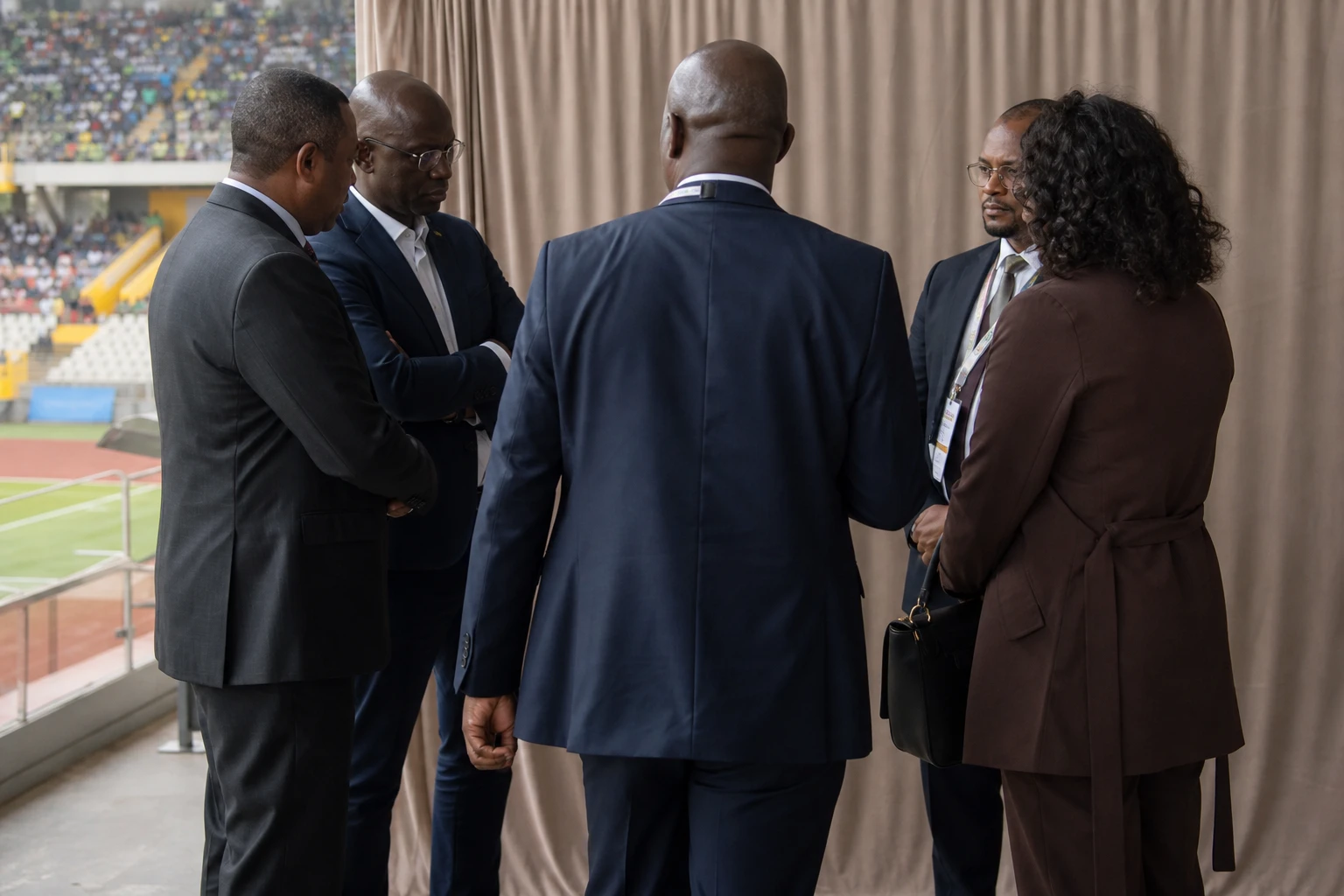
At half-time, Senegal hold a valuable lead in Ethiopia. The Lions are 1-0 up thanks to Ibrahim Mbaye, but the first half has shown an Ethiopian side dangerous in its volume of play, despite a lack of precision in front of goal.
Senegal take an early lead
Senegal struck in the 11th minute. Ibrahim Mbaye converted one of the Lions’ few clear-cut chances to put his side ahead. The goal immediately changed the balance of a match being played at Bahir Dar Stadium in Ethiopia, not in Addis Ababa.
This is the second matchday in Group J of the 2027 Africa Cup of Nations qualifiers. It is therefore not the final matchday of the group. Senegal are primarily looking to get their campaign fully under way after drawing 1-1 with Mozambique on 25 September.
For Patrick Vieira, this is his second competitive match in charge of the Lions. The Franco-Senegalese coach began his tenure with a draw in Maputo. An away win would give him his first victory in a campaign that is also intended to lay the foundations for a new cycle.
The Senegalese Football Federation had framed this international window as a period of transition. Following changes to the coaching staff and Sadio Mané’s absence for this spell, several players now need to take on greater responsibility. Ibrahim Mbaye is among the generation expected to broaden the national side’s attacking options.
Senegal possession, Ethiopian pressure
The first-half statistics paint a contrasting picture of the match. Senegal have dominated the ball, with 68% possession against Ethiopia’s 32%. This control has allowed the Lions to slow the pace after taking the lead and limit space through the middle.
Ethiopia have, however, had more attempts on goal. The Walia Ibex have registered eight shots, compared with two for Senegal. None of those eight efforts was on target. Senegal, by contrast, have hit the target with their only attempt and turned it into a goal.
That difference sums up the first half. The Ethiopians have moved the ball well and applied regular physical pressure. However, they have lacked the final touch. The Lions, meanwhile, have been ruthlessly efficient with their first genuinely clear opportunity.
Set pieces have also favoured the home side, who have won two corners to Senegal’s one. Ethiopia have also been flagged offside, while no offside position has been recorded against Senegal.
On the disciplinary front, Senegal have one booking. The Lions have committed two fouls in the first half, compared with four for Ethiopia. These figures alone do not convey the intensity of the contest, but they confirm a committed and physical opening period.
Group J tightens up
Before this second matchday, Sudan were top of Group J with three points. The Sudanese had beaten Ethiopia 1-0 on the opening matchday. Mozambique and Senegal each had one point after their draw, while Ethiopia had none.
Group J comprises four teams: Senegal, Mozambique, Sudan and Ethiopia. In this format, the top two teams are to qualify directly for the 2027 AFCON finals. The tournament will be hosted by Kenya, Uganda and Tanzania, not Morocco as the initial material stated.
A Senegalese win would take the Lions to four points, at least temporarily. They would then join Sudan at the top of the group, pending the result of the day’s other match. That scenario would strengthen Senegal’s position, without settling the race for qualification.
Ethiopia can still get back into the match. The team have shown enough energy to trouble the Senegalese defence. They must, however, improve the quality of their shots and make better use of their spells of possession in the final third.
The second half, a test for Vieira
Senegal’s challenge will be different after the break. The Lions must preserve their lead without sitting too deep. Their dominant possession now needs to produce more chances, or they risk allowing Ethiopia to build sustained pressure around the penalty area.
Patrick Vieira will also need to monitor his team’s fitness. The journey, the intensity of the contest and the local conditions could all take their toll in the final half-hour. The coach’s decisions will offer a measure of his squad’s depth and the ability of its new leaders to manage an away match.
The match is being played in a distinctive regional context. Senegal belong to the Confederation of African Football and the Economic Community of West African States, ECOWAS. Ethiopia, meanwhile, is part of the Horn of Africa. This encounter therefore brings together two footballing traditions and two distinct regional settings, beyond the Group J standings alone.
For Dakar, the immediate objective is simple: hold on to the lead and leave with three points. For Vieira, the goal is broader. He is looking to build a team capable of controlling a match, withstanding pressure and turning its dominance into clear-cut chances.
After this match, Senegal are due to face Comoros in Marseille on 4 October in a friendly. But before that fixture, the Lions must finish the job in Bahir Dar. The 1-0 half-time score is in their favour. Ethiopia’s eight shots are a reminder, however, that the lead remains fragile.