Algeria
 Egypt
 Libya
 Morocco
 Sudan
 Tunisia
 Benin
 Burkina Faso
 Cabo Verde
 Côte d'Ivoire
 Ghana
 Guinea
 Guinea-Bissau
 Liberia
 Mali
 Mauritania
 Niger
 Senegal
 Sierra Leone
 The Gambia
 Togo
 Cameroon
 Central African Republic
 Chad
 DR Congo
 Equatorial Guinea
 Gabon
 Republic of the Congo
 São Tomé and Príncipe
 Burundi
 Comoros
 Djibouti
 Eritrea
 Ethiopia
 Kenya
 Madagascar
 Malawi
 Mauritius
 Mozambique
 Rwanda
 Seychelles
 Somalia
 South Sudan
 Tanzania
 Uganda
 Angola
 Botswana
 Eswatini
 Lesotho
 Namibia
 South Africa
 Zambia
 Zimbabwe
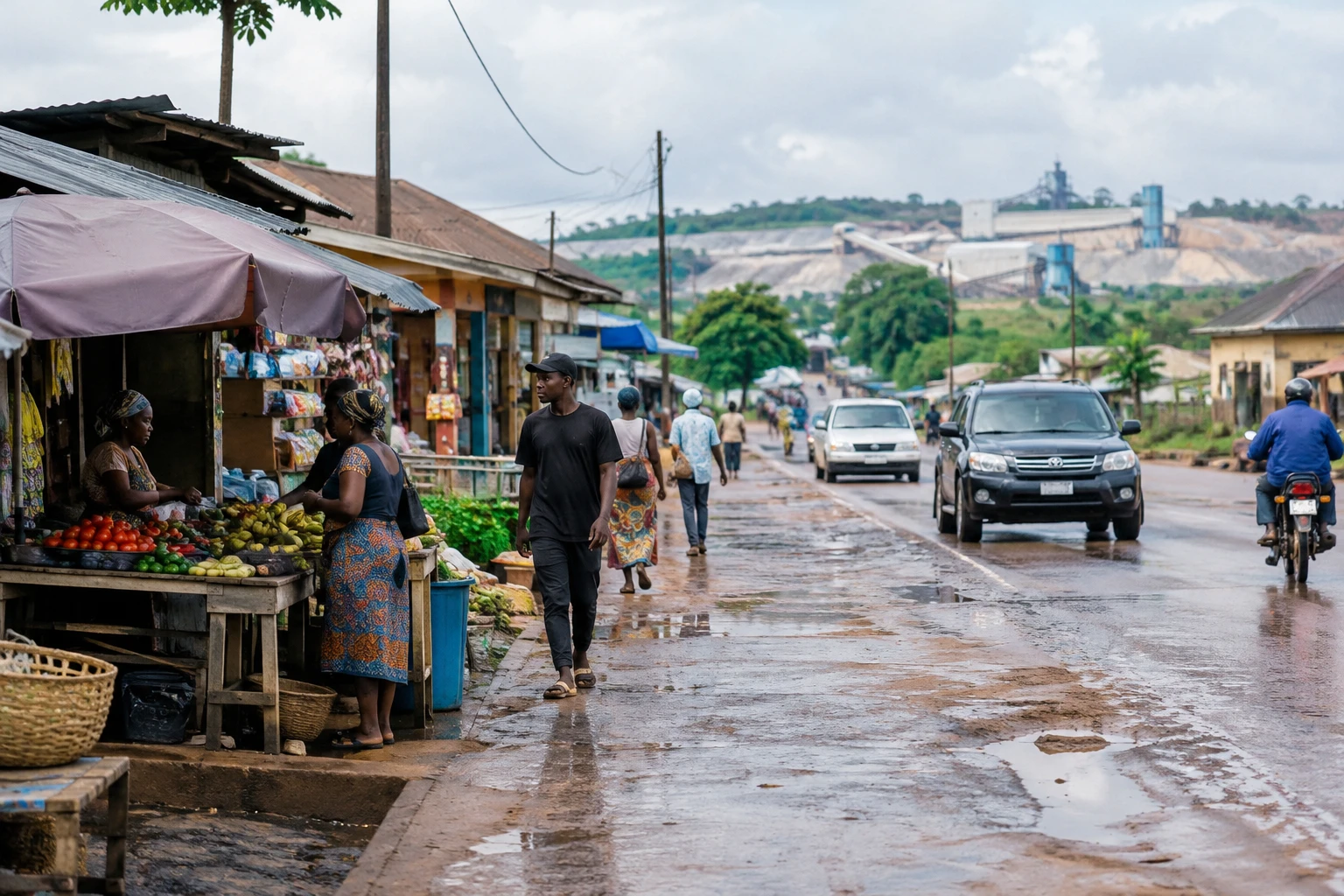
In Iperindo, in Osun State, rainfall can now affect a question that extends beyond the boundaries of the mine: what place will industrial gold take in Nigeria’s economy, and who will benefit? Segilola, the country’s main industrial gold mine, has cut its 2026 production forecast after bad weather disrupted mining.
Rain disrupts the mining schedule
Nigeria remains best known for hydrocarbons, but its authorities have been seeking for several years to develop solid minerals. Segilola, operated by Canadian company Thor Explorations in Osun State in the country’s south-west, is a flagship project in this strategy. The mine is located in a region where industrial mining coexists with artisanal gold-mining activities.
At regional level, the issue is linked to the work of ECOWAS, the Economic Community of West African States. The organisation is seeking, among other things, to align mining policies and encourage the local processing of resources. However, declared production alone does not show what share of the value remains in the country or benefits neighbouring communities.
On 14 October, Thor Explorations cut its annual target to 70,000–72,000 ounces of gold, from a range of 75,000 to 85,000 ounces announced in January. The company attributed the revision to heavy rains at Segilola in late August and their impact on mining operations. It has not publicly detailed the extent of the damage or the work required.
The mine produced 15,515 ounces in the third quarter. In the first nine months of 2026, the total reached 54,924 ounces. To meet the new target, it would therefore need to mine between 15,076 and 17,076 ounces in the final quarter. This calculation shows the remaining effort, but does not predict operating conditions through to the end of the year.
The contrast with 2025 is clear: Segilola produced 91,910 ounces that year, an 8% increase on the previous year. Thor reported annual revenue of $325.5 million. The company also said that higher gold prices had contributed to those results. Past performance therefore does not guarantee 2026 revenues: both the volumes mined and the selling price will affect the overall figures.
Beyond volumes, the question of local benefits
Lower production may reduce the operator’s sales revenue and affect payments linked to its activities. But the specific impact on Nigerian public finances or those of Osun State cannot be inferred from the announced volumes alone. It depends in particular on the tax regime, royalties, costs and applicable agreements. Thor’s announced adjustment does not provide this information.
For neighbouring communities, the stakes are also measured in jobs, purchases from local businesses, access to land and water management. The rainy season is a reminder that weather risks are not an abstract variable: they can alter the pace of an open-pit operation. The announcement of the revised target, however, does not specify the consequences for residents, infrastructure or the environment.
This caution matters in a case where mining can give rise to expectations and tensions over the sharing of benefits and governance. In 2024, the Osun State government publicly raised questions about the project’s operations, the environment and its interests in the project. That position does not settle these disputes, but it is a reminder that production figures do not capture the full range of local issues.
Thor is also assessing the possibility of developing an underground mine beneath the current open pit. The aim would be to extend the site’s life if resources and technical conditions allow. This is an option to assess, not a decision to proceed with the conversion. Its viability will depend on studies, the investment required, safety and the necessary permits.
A test for Nigeria’s mining ambitions
For Abuja, the federal capital, Segilola is a practical test of economic diversification: turning a deposit into a sustainable operation, better integrated into national supply chains and beneficial beyond the company itself. The federal ministry responsible for solid minerals and the Osun authorities have distinct responsibilities in sector governance. Year-end results will show production, but they alone cannot measure the quality of this integration.
The issue also extends beyond Nigeria. In West Africa, where gold plays an important role in several economies, ECOWAS discussions on mining co-operation and resource processing have practical significance. The question is not simply how to produce more, but how to strengthen skills, suppliers and value added in the region, while managing environmental and social impacts.
The next benchmark will be the full 2026 results: production actually achieved, sales, revenues and more detailed explanations of the impact of the rains. The available information establishes a lower forecast and quarterly production below the pace required for the original target. It does not yet make it possible to quantify the losses caused by the bad weather or their ultimate consequences for employees, public finances and communities in Osun.