Algeria
 Egypt
 Libya
 Morocco
 Sudan
 Tunisia
 Benin
 Burkina Faso
 Cabo Verde
 Côte d'Ivoire
 Ghana
 Guinea
 Guinea-Bissau
 Liberia
 Mali
 Mauritania
 Niger
 Senegal
 Sierra Leone
 The Gambia
 Togo
 Cameroon
 Central African Republic
 Chad
 DR Congo
 Equatorial Guinea
 Gabon
 Republic of the Congo
 São Tomé and Príncipe
 Burundi
 Comoros
 Djibouti
 Eritrea
 Ethiopia
 Kenya
 Madagascar
 Malawi
 Mauritius
 Mozambique
 Rwanda
 Seychelles
 Somalia
 South Sudan
 Tanzania
 Uganda
 Angola
 Botswana
 Eswatini
 Lesotho
 Namibia
 South Africa
 Zambia
 Zimbabwe
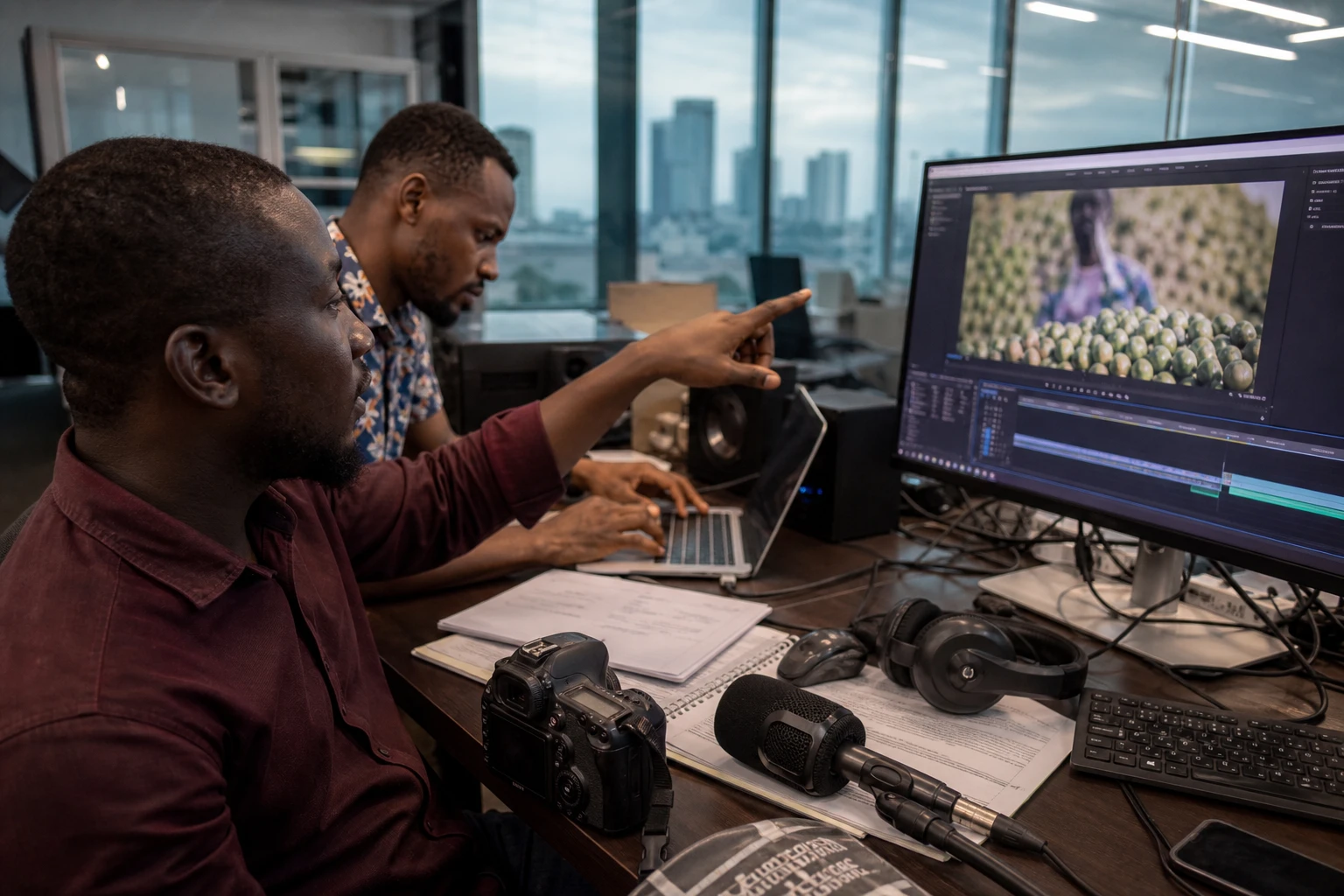
A Nigerian company chooses France to accelerate its growth
For many African exporters, the real challenge is no longer just in the fields or at the ports. It lies in the ability to retain more value on the continent, and then capture it in Europe too. That is precisely the bet of a Nigerian company that has made agricultural processing and short supply chains its commercial pitch, with Lagos as its base and Paris as its European foothold.
Nigeria is particularly well suited to this. Abuja is at the heart of ECOWAS, the West African community whose headquarters are in the Nigerian capital, and the country remains a major economic partner for France in sub-Saharan Africa. Bilateral relations have also gained new depth since President Bola Tinubu’s state visit to France in October 2024.
From Lagos to Paris, then on to Marseille: the shortened supply-chain strategy
Creativo El Matador describes itself as a Nigerian agricultural export, logistics and trading group. Its own materials refer to activities involving cashew nuts, dried hibiscus, tiger nuts, gum arabic and other agricultural commodities, with offices in Lagos, Paris and Accra, as well as direct work with producers in northern Nigeria.
The company says it has built its growth on a simple idea: to prevent African products from passing through long and costly supply chains before reaching European consumers. According to its founder and chief executive, Adebowale Adeyeye, the group wants to create value “locally and in France” from products destined for the French market but sourced from Africa. This approach is consistent with the company’s stated positioning, which emphasises processing, quality and traceability rather than simply exporting raw goods.
The choice of France is no accident. Paris offers direct access to the European market, specialist buyers and an ecosystem supporting international investment. Business France, the public agency responsible for supporting companies internationally, has a team dedicated to Nigeria, based in Lagos. According to French diplomats, the country is also France’s leading trading partner in sub-Saharan Africa.
What a French base means for the Nigerian model
Creativo El Matador’s French office has been presented as an intermediate step, with a target of 24 jobs over three years. The company also says it has acquired land near Marseille to build a warehouse, followed by a processing plant, with operations due to begin by the end of the year, according to the project’s initial account. These plans outline a familiar move up the value chain: first trade, then logistics, and finally processing.
This sequence changes the equation for several players. For the company, it cuts delays, brings products closer to customers and limits some transit costs. For Nigerian producers, it could provide more stable outlets, provided quality and volume requirements are met. For European consumers, it promises better control over the origin and handling of goods. But the real benefit will depend on the ability to process a larger share of production in Nigeria, rather than merely shifting value from one port to another.
The group’s founder also fits into a broader vision of African agribusiness. A profile published by the African Leadership Institute describes him as the founder of an agricultural value-chain optimisation company, with an African-owned and operated cashew factory in Nigeria employing more than 300 women and 25 men. Although this information concerns another aspect of the group, it sheds light on its overall direction: local processing as a means of economic sovereignty, not just a slogan.
Beyond a Paris office, a signal for West Africa
The Creativo El Matador case resonates beyond Nigeria. In West Africa, where ECOWAS has sought to strengthen economic integration since 1975, an increasing number of companies are thinking in terms of regional corridors, logistics platforms and direct access to international markets. A Nigerian group’s opening of a base in France shows that African value chains are no longer being conceived solely with Asia or raw commodities in mind.
This development also says something about Nigeria’s place in the continental economy. With Abuja as the ECOWAS headquarters and Lagos as a commercial engine, the country continues to produce entrepreneurs able to navigate West African markets, the diaspora and European business centres. France, for its part, is seeking to consolidate an already substantial economic relationship with the region’s largest economy. It remains to be seen whether this expansion will result in genuine industrial capacity in Marseille, rather than simply a commercial showcase.