Algeria
 Egypt
 Libya
 Morocco
 Sudan
 Tunisia
 Benin
 Burkina Faso
 Cabo Verde
 Côte d'Ivoire
 Ghana
 Guinea
 Guinea-Bissau
 Liberia
 Mali
 Mauritania
 Niger
 Nigeria
 Senegal
 Sierra Leone
 The Gambia
 Togo
 Cameroon
 Central African Republic
 Chad
 DR Congo
 Equatorial Guinea
 Gabon
 Republic of the Congo
 São Tomé and Príncipe
 Burundi
 Comoros
 Djibouti
 Eritrea
 Ethiopia
 Kenya
 Madagascar
 Malawi
 Mauritius
 Mozambique
 Rwanda
 Seychelles
 Somalia
 South Sudan
 Tanzania
 Uganda
 Angola
 Botswana
 Eswatini
 Lesotho
 Namibia
 Zambia
 Zimbabwe
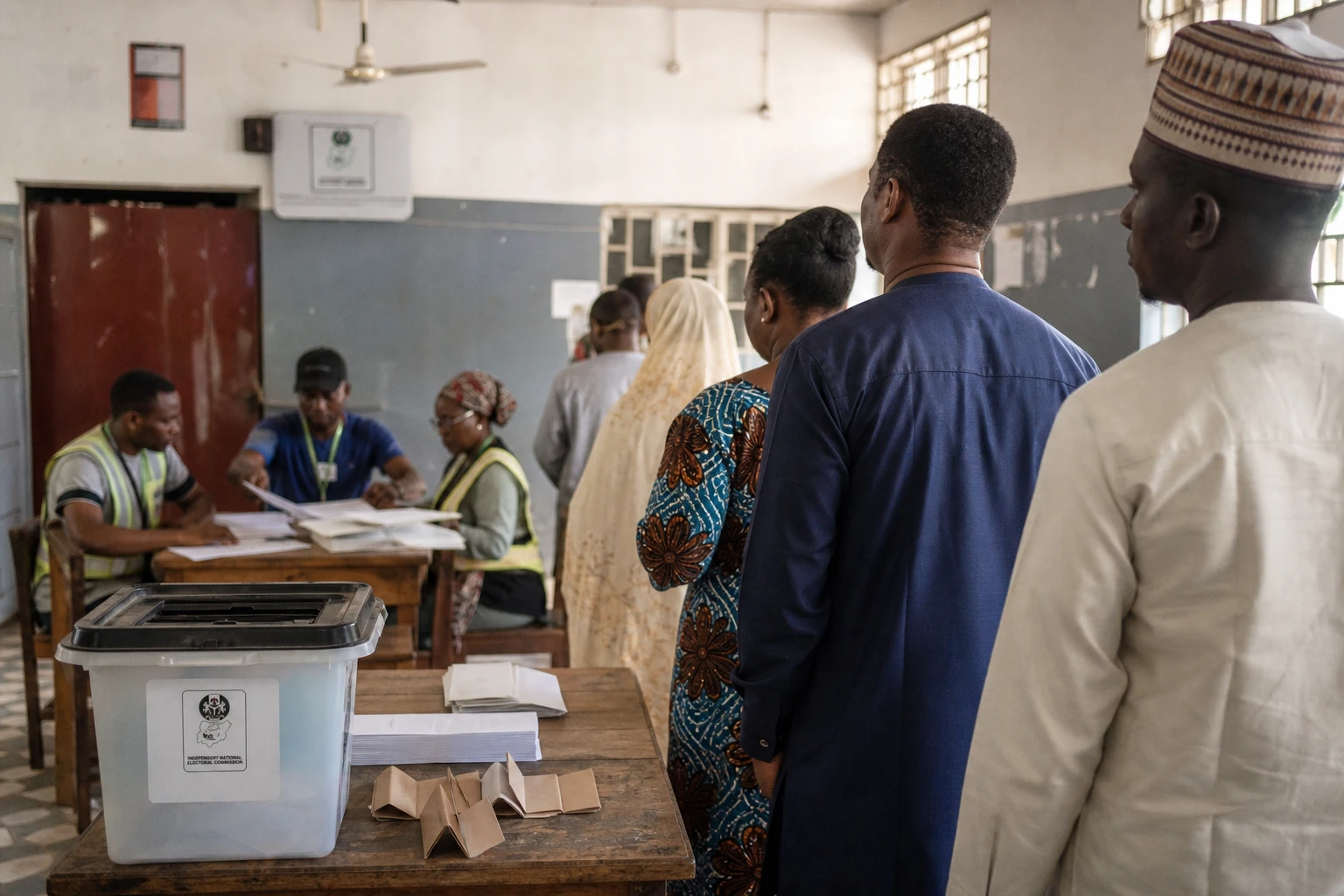
An elimination that changes the story of Nigerian women’s football
In Casablanca, the margin for error was slim. For Nigeria, more than a simple play-off was at stake: the team had to preserve a historic record, with the Super Falcons long serving as a benchmark for women’s football in Africa. The defeat by South Africa now opens a tougher new chapter for a side accustomed to setting the pace on the continent.
The verdict is stark. Nigeria will not take part in the 2027 Women’s World Cup, the first time since the tournament was created in 1991. The team, coached by Justine Madugu, were beaten 2-1 by South Africa in a play-off in Casablanca, as part of the 2026 Women’s Africa Cup of Nations, which also serves as Africa’s qualifying tournament for the World Cup in Brazil.
Casablanca, a testing ground for a new hierarchy
The regional context matters. Morocco is hosting the 2026 Women’s Africa Cup of Nations, held in Rabat and Casablanca, in an expanded 16-team format. The four semi-finalists qualify directly for Brazil. The others must go through FIFA’s inter-confederation play-offs, an even more selective mini-tournament.
This structure reflects a major shift: the Confederation of African Football has turned the Women’s Africa Cup of Nations into a genuine gateway to the World Cup, rather than simply a continental title. Six African nations can reach the 2027 World Cup, four through the WAFCON and two through the FIFA play-off tournament. For Africa, every match therefore counts twice.
In this context, South Africa progressed efficiently. Thembi Kgatlana opened the scoring in the second half, before Refiloe Jane restored a two-goal advantage for Banyana Banyana. Nigeria reignited the contest with a 93rd-minute penalty by Christy Ucheibe, but could not force anything more.
The importance of details and the pressure to deliver
The game was tense to the end. Jane was then sent off after receiving a second yellow card for handling the ball in her penalty area, before South African goalkeeper Kaylin Swart saved a final shot from Michelle Alozie in the closing moments. Matches of this kind are often decided by a few actions, a few seconds and emotional control.
For Nigeria, the sporting blow is all the greater because the team remains the continent’s most consistent presence at the World Cup. FIFA records nine Nigerian appearances in the competition, more than any other African team, ahead of Ghana, South Africa, Cameroon and Morocco. It is precisely this record that makes the absence in 2027 so remarkable.
But the story does not end with Nigeria. Ghana also secured a place in the inter-confederation play-off tournament after coming from behind to beat Côte d’Ivoire 2-1 on the same day in Casablanca. The Black Queens have therefore extended their campaign, despite a tense financial backdrop. The Ghana Football Association rejected some allegations of non-payment, while the sports ministry said that allowances had already been paid or were being processed.
What this says about West Africa and the continent
For Abuja, this elimination raises a fundamental question: how can Nigeria maintain its continental dominance as competition intensifies, opponents become better organised and margins shrink? Nigeria remains a symbolic power, but South Africa showed that a well-organised team, with established patterns of play and cooler management of difficult spells, can unsettle even a historic benchmark.
The wider continental significance is greater still. The rise of teams such as South Africa and Ghana, in a tournament hosted by Morocco, confirms that African women’s football is becoming more open and competitive. The debate is no longer just about the continental title. It is also about access to the world’s biggest stages, resources, visibility and international schedules.
The next steps are already mapped out. In November and December 2026, the first round of the World Cup play-offs will bring six teams together at a single venue. The two best will progress to the final round in February 2027, where three places at the tournament in Brazil will be awarded. Nigeria will have to watch from the sidelines. For the continent, it will be a full-scale test of the place African women’s football now occupies in the global game.