
 Algeria
 Egypt
 Libya
 Morocco
 Sudan
 Tunisia
 Benin
 Burkina Faso
 Cabo Verde
 Côte d'Ivoire
 Ghana
 Guinea
 Guinea-Bissau
 Liberia
 Mali
 Mauritania
 Niger
 Senegal
 Sierra Leone
 The Gambia
 Togo
 Cameroon
 Central African Republic
 Chad
 DR Congo
 Equatorial Guinea
 Gabon
 Republic of the Congo
 São Tomé and Príncipe
 Burundi
 Comoros
 Djibouti
 Eritrea
 Ethiopia
 Kenya
 Madagascar
 Malawi
 Mauritius
 Mozambique
 Rwanda
 Seychelles
 Somalia
 South Sudan
 Tanzania
 Uganda
 Angola
 Botswana
 Eswatini
 Lesotho
 Namibia
 South Africa
 Zambia
 Zimbabwe
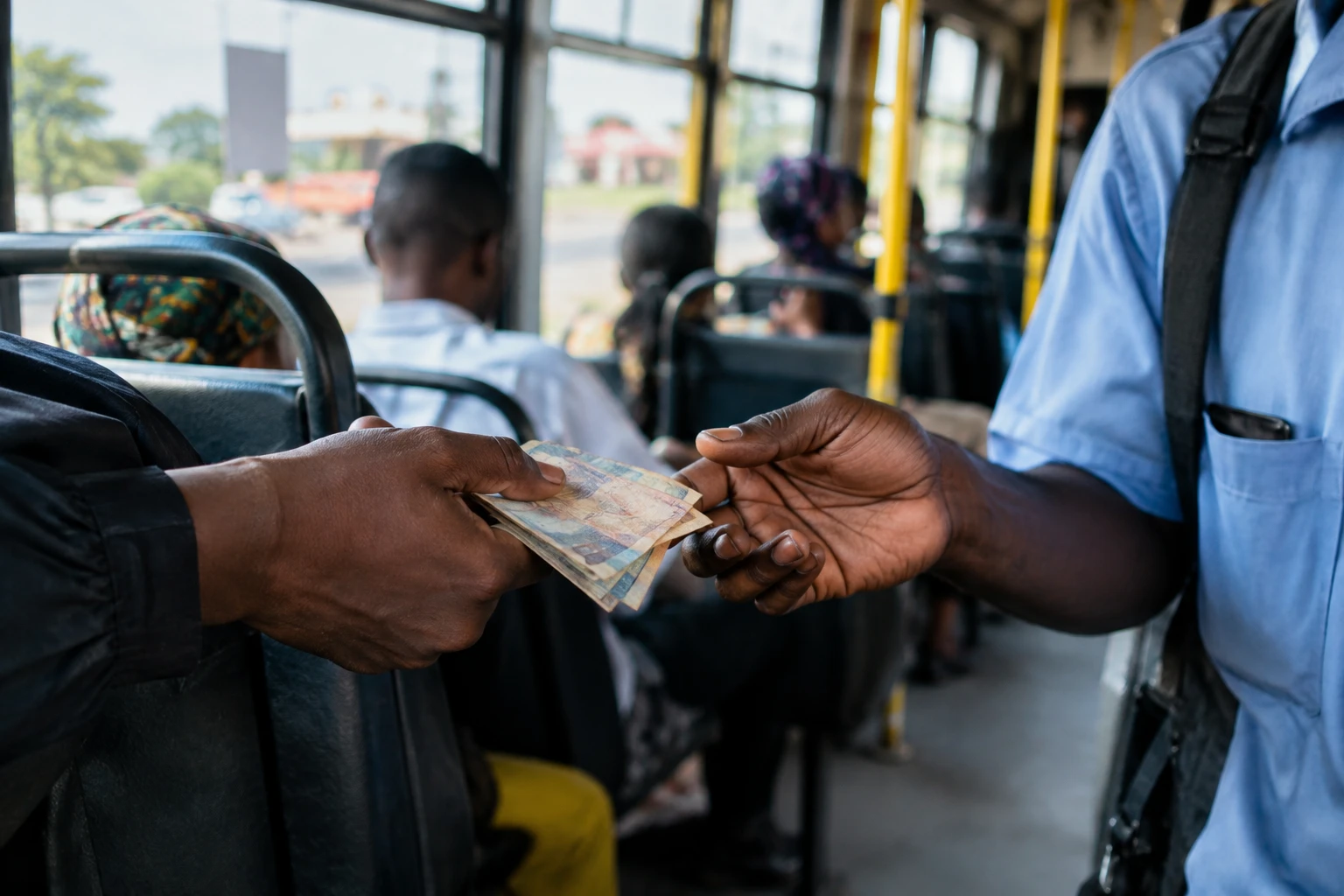
When commuting costs absorb an increasing share of wages, temporary support can avert a fresh rupture between the Nigerian state and its employees. But in Nigeria, the agreement reached in Abuja does not resolve the central disagreement: the timing of any increase in the minimum wage.
A compromise after weeks of tension
On 27 October 2026, the federal government and the Nigeria Labour Congress (NLC), one of the country’s main trade union federations, reached an agreement at a conciliation meeting in Abuja. The deal provides for transport support of 70,000 naira a month for six months, starting in November. Several Nigerian media outlets reported the terms of the agreement. Channels Television details the agreement between the government and the NLC; Premium Times confirms its main provisions.
The amount is equivalent to about $52 at the exchange rate cited in reports on the agreement. This equivalent may vary with the naira’s value. The document refers to transport support applying “at all levels”, but practical arrangements, including the categories of staff covered and the payment mechanism, will need to be clarified.
The meeting comes amid a stand-off over purchasing power, commuting costs and unpaid allowances. The NLC had threatened industrial action if its demands were not addressed. The compromise temporarily eases the confrontation, without settling all the union’s demands.
Arrears to be paid, but minimum wage remains unresolved
The memorandum also provides for arrears of a particular allowance owed since 1 May 2026 to be paid in three monthly instalments from November. For health workers, the government has pledged to settle 19 months of outstanding allowances over three months, starting in December.
The parties agreed to set up a minimum wage negotiating committee immediately. However, they failed to agree on when a new rate would take effect. This matters: transport support limited to six months is no substitute for a lasting basic wage and does not guarantee that employers in the federal states will implement the same measures.
The scope of the agreement is also disputed within the trade union movement. The Trade Union Congress (TUC), another national federation, rejected the flat-rate support and called for higher wages instead of temporary assistance. TheCable reports the TUC’s position. The reaction is a reminder that the agreement with the NLC does not represent the backing of all workers’ organisations.
Support whose impact will depend on implementation
Nigeria has been undergoing a period of economic adjustment since 2023, notably following the removal of the federal fuel subsidy. The decision changed the price of an essential input for travel and commercial activity. The pressure is unevenly distributed: public servants travelling daily to urban centres face different costs from employees living near their workplace, while informal workers are not covered by a public-sector pay agreement.
For employees covered by the deal, 70,000 naira may offset some commuting costs, but the support is time-limited. For the federal budget, commitments on arrears and transport come on top of wage discussions. The memorandum also calls on state and local governments to take part in the support scheme: their response will determine whether the measure in practice extends beyond the federal sphere.
This distinction matters in a federation where federal, state and local administrations have different responsibilities and budgetary capacity. An agreement announced in Abuja therefore does not, by itself, guarantee uniform payments to all public servants across the country.
The next meeting will be a test of credibility
The two sides are due to meet again a month after signing to review the implementation of their commitments. The first payments, the timetable for settling arrears and the establishment of the minimum wage committee will show whether the compromise delivers concrete results.
Across West Africa, tensions over commuting costs and pay also feature in debates about protecting incomes in the face of economic reforms. Nigeria, a major demographic and economic force in the region, will have to reconcile support for workers, budget constraints and social dialogue. For now, the agreement halts an immediate escalation; it does not close either the debate on wages or the question of how support is divided among the different levels of government.



