
 Algeria
 Egypt
 Libya
 Morocco
 Sudan
 Tunisia
 Benin
 Burkina Faso
 Cabo Verde
 Côte d'Ivoire
 Ghana
 Guinea
 Guinea-Bissau
 Liberia
 Mali
 Mauritania
 Niger
 Senegal
 Sierra Leone
 The Gambia
 Togo
 Cameroon
 Central African Republic
 Chad
 DR Congo
 Equatorial Guinea
 Gabon
 Republic of the Congo
 São Tomé and Príncipe
 Burundi
 Comoros
 Djibouti
 Eritrea
 Ethiopia
 Kenya
 Madagascar
 Malawi
 Mauritius
 Mozambique
 Rwanda
 Seychelles
 Somalia
 South Sudan
 Tanzania
 Uganda
 Angola
 Botswana
 Eswatini
 Lesotho
 Namibia
 South Africa
 Zambia
 Zimbabwe
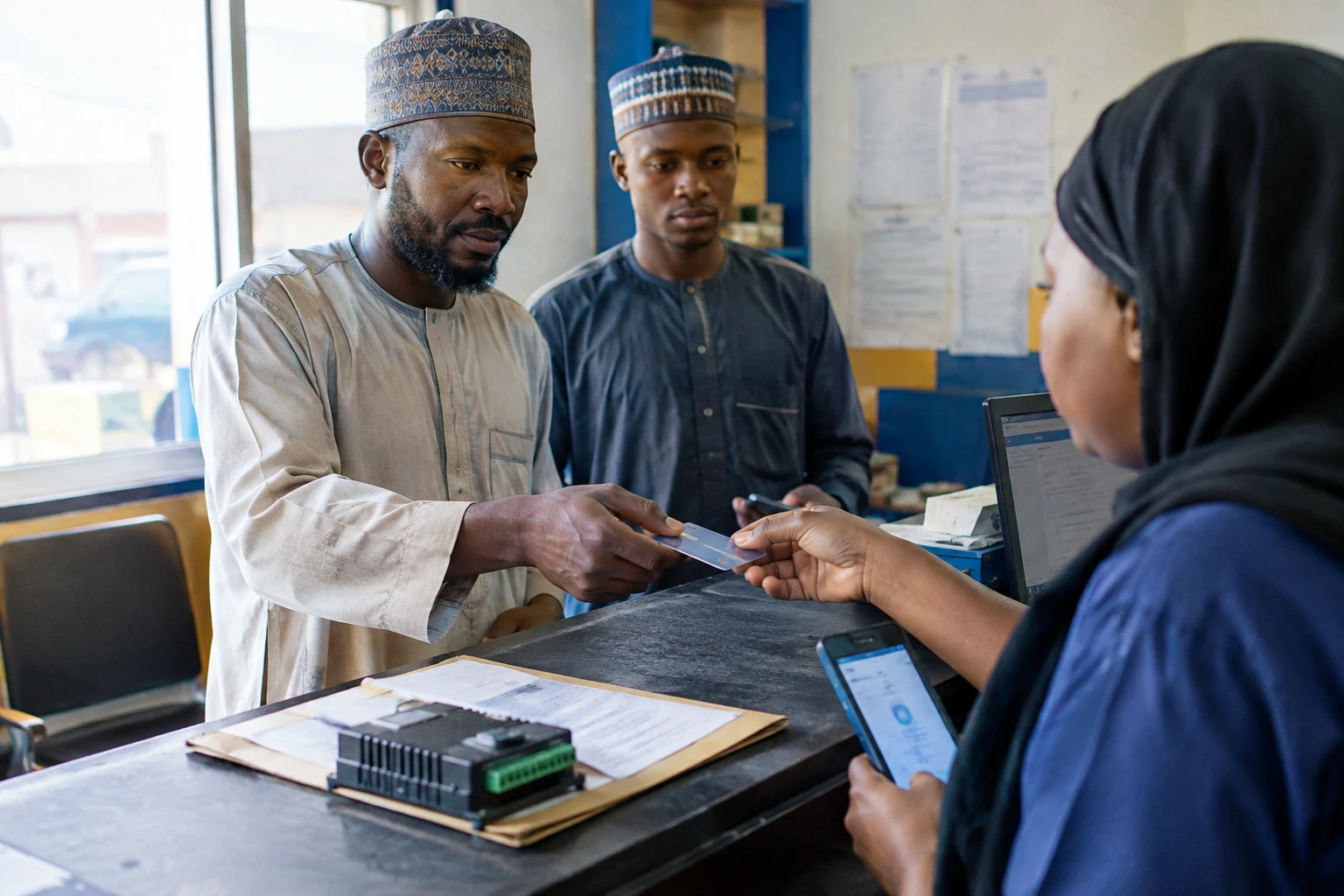
In villages far from the electricity grid, the challenge is not limited to installing solar panels. Equipment must also be delivered quickly, works financed and sufficient power provided to households and small businesses. In Nigeria, new financing is aimed precisely at this logistical link.
Financing to prepare equipment in advance
British International Investment (BII), the UK development finance institution, is providing Okra Solar with a $7 million debt facility. According to information released on 29 October 2026, the company plans to use the funds to purchase in advance the components needed for around 150,000 new connections. The roll-out could benefit nearly 750,000 people, an estimate that will depend on the projects being completed and the number of people served by each connection.
The financing mainly changes the procurement timetable. Until now, Okra ordered equipment after signing agreements with local developers, often in batches of a few thousand units. The facility is intended to allow it to build up stock and place larger orders before each project is fully contracted. The stated aim is to reduce the time between an agreement being concluded and equipment arriving on site.
This mechanism addresses a practical difficulty for decentralised electrification companies: projects may be ready on paper but held up by the financing and transport of equipment. By bringing purchases forward, Okra hopes to shorten this stage. The financing does not, however, guarantee that contracts will be signed or that all the announced connections will be commissioned.
An intermediate solution between an individual kit and a mini-grid
Okra Solar provides a technology known as a “mesh-grid”. Solar panels and batteries supply several nearby homes. Smart devices manage the sharing of electricity between households and neighbouring businesses. The system can thus connect small-scale installations without replicating all the infrastructure of a conventional grid.
This configuration sits between two better-known solutions. An individual solar kit supplies energy to a single household, but may not meet the needs of a productive activity. A mini-grid supplies a group of customers, with equipment and development costs that can be higher. The mesh-grid seeks to combine a modular installation with shared energy, particularly in dispersed communities.
The technology does not replace the national grid and is not suitable for every area. Its viability depends in particular on how close users are to one another, battery capacity, maintenance costs and local demand. For households, the tariff remains a key issue. For developers, the balance between revenue, maintenance and network expansion determines whether service can continue.
Nigeria, a testing ground for off-grid solutions
Nigeria’s energy challenge is considerable. According to a World Bank document covering 2023 data, around 86.6 million people were then living without access to electricity. This figure, close to the estimate of 87 million cited in project data, describes the national situation but does not by itself show where needs are located or what quality of service people who are already connected receive.
The response involves several approaches: grid expansion, mini-grids and stand-alone solar systems. Nigeria’s DARES programme — Distributed Access through Renewable Energy Scale-up — supports decentralised energy access in particular. Implemented by the Nigerian Rural Electrification Agency with World Bank support, it provides financing for a range of renewable solutions. In 2025, the agency partnered with Okra Solar and Nigerian companies on mesh-grid projects.
The presence of local players is crucial: they know the communities, organise installation and provide some of the follow-up. Okra has already worked in Nigeria with energy service companies, including First Electric, Creeds and Renewvia. An earlier $4.5 million working capital facility from EDFI ElectriFI was already intended to finance the manufacture of orders for the Nigerian market. The new agreement therefore extends an expansion strategy already under way, rather than introducing the technology to the country.
More capital, but results still to be measured
The financing comes as the market attracts more investment. GOGLA’s 2025 report, published by the off-grid solar industry association, records $315 million invested globally in companies in the sector. Nigeria secured $114 million, the highest national total that year. This increase demonstrates investor interest, but does not directly measure the number of new connections or their affordability.
The challenge now is to turn capital into reliable services. Households need a regular and affordable electricity supply. Shops, workshops and local services can also benefit from more stable power to extend their opening hours or use electrical equipment. But these benefits are not automatic: they require appropriate tariffs, sustainable maintenance and equipment able to meet local needs.
For developers, advance purchasing can reduce waiting times and make it easier to plan works. For rural communities, the impact will depend on actual deployment, service quality and payment arrangements. The announced connections are a target, not a result already achieved.
Across West Africa, the Nigerian experience is relevant to discussions about access to electricity beyond major cities and the role of decentralised solutions in energy policies. It is also part of the World Bank and African Development Bank’s Mission 300 initiative, which aims to expand access to electricity in sub-Saharan Africa by 2030. The next step to watch will be the conversion of financed stock into signed contracts, and then into operational installations.



