Algeria
 Egypt
 Libya
 Morocco
 Sudan
 Tunisia
 Benin
 Burkina Faso
 Cabo Verde
 Côte d'Ivoire
 Ghana
 Guinea
 Guinea-Bissau
 Liberia
 Mali
 Mauritania
 Niger
 Senegal
 Sierra Leone
 The Gambia
 Togo
 Cameroon
 Central African Republic
 Chad
 DR Congo
 Equatorial Guinea
 Gabon
 Republic of the Congo
 São Tomé and Príncipe
 Burundi
 Comoros
 Djibouti
 Eritrea
 Ethiopia
 Kenya
 Madagascar
 Malawi
 Mauritius
 Mozambique
 Rwanda
 Seychelles
 Somalia
 South Sudan
 Tanzania
 Uganda
 Angola
 Botswana
 Eswatini
 Lesotho
 Namibia
 South Africa
 Zambia
 Zimbabwe
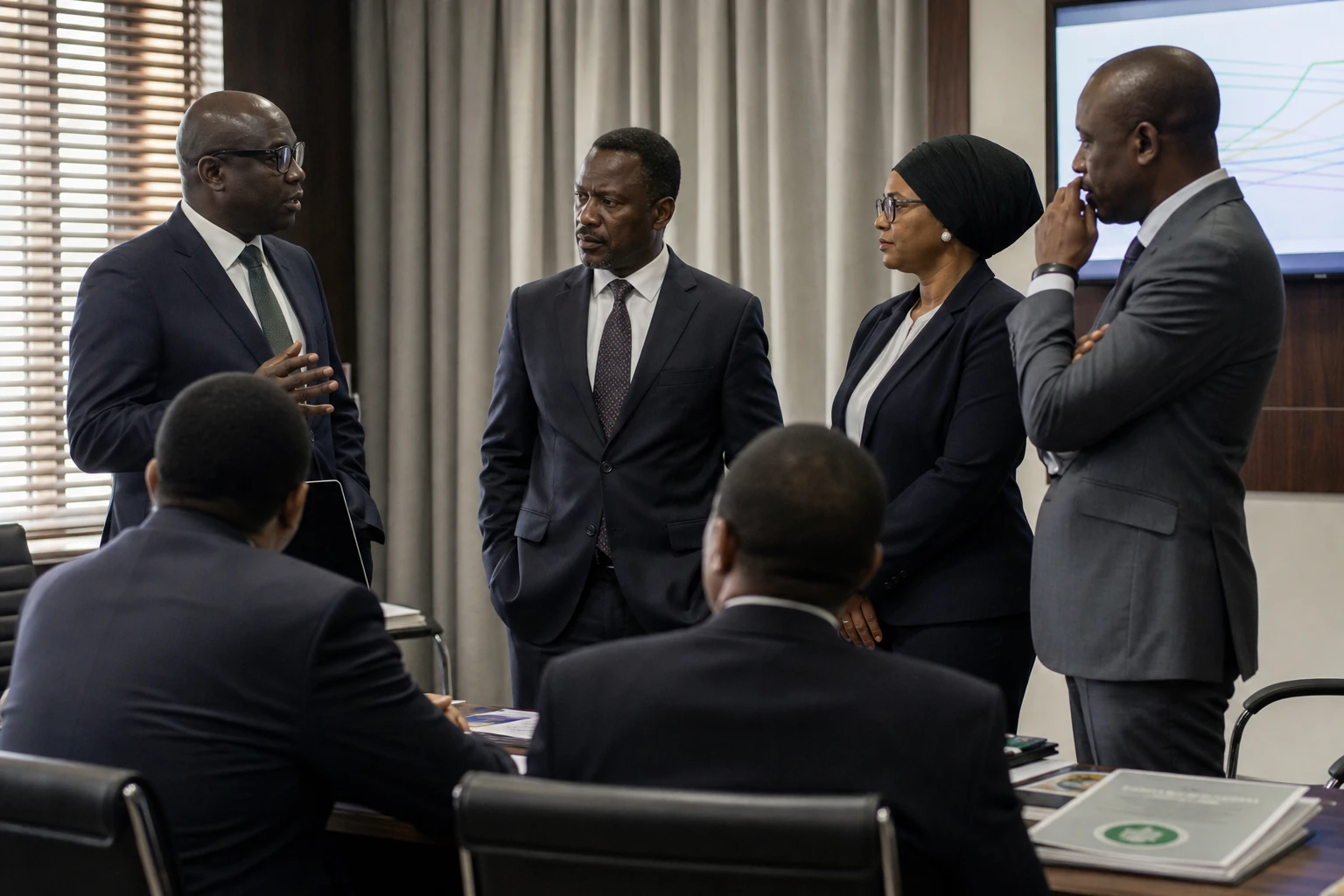
In Nigeria, electricity remains a tangible development issue, not just a technical matter
In many Nigerian communities, the challenge is not simply switching on a light. It is running a water pump, keeping medicines cold, charging a phone, or powering a workshop or shop. That is where mini-grids matter. They can respond more quickly than extending the main grid in areas that are dispersed or difficult to connect.
Nigeria, whose capital is Abuja, remains one of the African countries most affected by the electricity access deficit. The latest Tracking SDG7 report, published in 2026, says 87 million people in the country lacked access to electricity, leaving it in first place globally in absolute terms. Across the continent, this reality continues to weigh on economic activity, particularly outside major cities.
Against this backdrop, the Rural Electrification Agency, the federal body responsible for rural electrification, is expanding decentralised solutions. Its website says the agency, established as part of the electricity sector reform, oversees mini-grids, home solar systems and equipment for public services. Its stated goal is clear: to provide more reliable energy where the national grid remains costly, unstable or absent.
In Plateau, a 1.5 MW project is part of a broader strategy
In Pankshin, Plateau State, the REA has launched construction of a 1.5 MW interconnected hybrid solar mini-grid. The news was made public on 22 July 2026 by several Nigerian media outlets, including Channels Television, citing an agency statement. The project is part of the Nigeria Electrification Project, initially supported by the African Development Bank and by other partners financing the electricity sector.
The term “hybrid” is significant. According to details reported by the local press, the installation combines solar power, 2 MWh of batteries and a 600 kW backup generator. This type of system can absorb fluctuations in solar generation and secure supply in the evening or during periods of peak demand. Connection to the local grid should also help supply households, businesses and small-scale productive activities.
Neither the total cost nor the precise commissioning schedule has been made public at this stage. This is not unusual for electrification projects, but it still makes it impossible to assess the cost per connection or the actual pace of delivery. In a country where expectations are high, the transition from launch to completion remains the decisive step.
This new project comes a few months after another development in the same state. In November 2025, the REA had already commissioned a 50 kWp solar mini-grid in the community of Namu, also in Plateau. The agency describes Pankshin as its second major milestone in the state, signalling a gradual foothold in this part of north-central Nigeria.
Why these mini-grids matter to households and the local economy
Nigeria’s problem is not only a lack of installed capacity. It also suffers from unequal distribution, a fragile grid and significant losses. In this context, mini-grids offer a targeted response. They avoid relying entirely on a long, costly power line. They also give small businesses that need a regular supply to produce, sell and store goods greater certainty.
This approach is now firmly embedded in Nigerian public policy. The Nigeria Electrification Project has supported 125 mini-grids and enabled the sale of more than one million home solar systems, reaching more than 5.5 million people, according to the World Bank. The REA, for its part, says programmes launched under the NEP and DARES labels have already expanded electricity access to several million Nigerians.
The figures nevertheless show that the scale of the problem remains immense. The 2026 report on Sustainable Development Goal 7 notes that the pace of electrification in sub-Saharan Africa must accelerate substantially to achieve universal access by 2030. Nigeria looms large in this equation. It accounts for a major share of the global deficit. That is why every successful project matters, but also why no single project can be enough.
For rural households, the impact is immediate when a project works. Spending on fuel falls. The noise of diesel generators disappears. Shops stay open longer. Phones remain charged. Schools and health centres gain a more continuous power supply. For young businesses, it is also a matter of economic survival. A stable supply reduces losses and makes investment more credible.
A signal for West Africa as energy demand rises
The issue extends far beyond Plateau. In West Africa, energy access remains tied to population growth, rapid urbanisation and rising productive needs. For ECOWAS, energy cooperation and the interconnection of markets remain strategic priorities. On the ground, however, decentralised solutions continue to play a major role in villages, small towns and areas on the outskirts of major transport corridors.
Nigeria is testing a model that also interests other African economies: combining solar power, storage, limited thermal backup and locally anchored service provision. This approach has international support, but its success depends above all on three practical factors: the quality of operations, the ability to connect productive uses and the stability of the regulatory framework. The Federal Ministry of Power, the REA, state governments and private developers therefore all have an essential role to play.
In the short term, the question is no longer whether mini-grids are useful. That has already been demonstrated. The real questions concern the pace of deployment, long-term maintenance and gradual integration with the national grid. This is where part of Nigeria’s credibility in its energy transition will be determined, as will part of Africa’s response to the electricity access deficit.