Algeria
 Egypt
 Libya
 Morocco
 Sudan
 Tunisia
 Benin
 Burkina Faso
 Cabo Verde
 Côte d'Ivoire
 Ghana
 Guinea
 Guinea-Bissau
 Liberia
 Mali
 Mauritania
 Niger
 Senegal
 Sierra Leone
 The Gambia
 Togo
 Cameroon
 Central African Republic
 Chad
 DR Congo
 Equatorial Guinea
 Gabon
 Republic of the Congo
 São Tomé and Príncipe
 Burundi
 Comoros
 Djibouti
 Eritrea
 Ethiopia
 Kenya
 Madagascar
 Malawi
 Mauritius
 Mozambique
 Rwanda
 Seychelles
 Somalia
 South Sudan
 Tanzania
 Uganda
 Angola
 Botswana
 Eswatini
 Lesotho
 Namibia
 South Africa
 Zambia
 Zimbabwe
In Abuja, the service station becomes an energy services hub
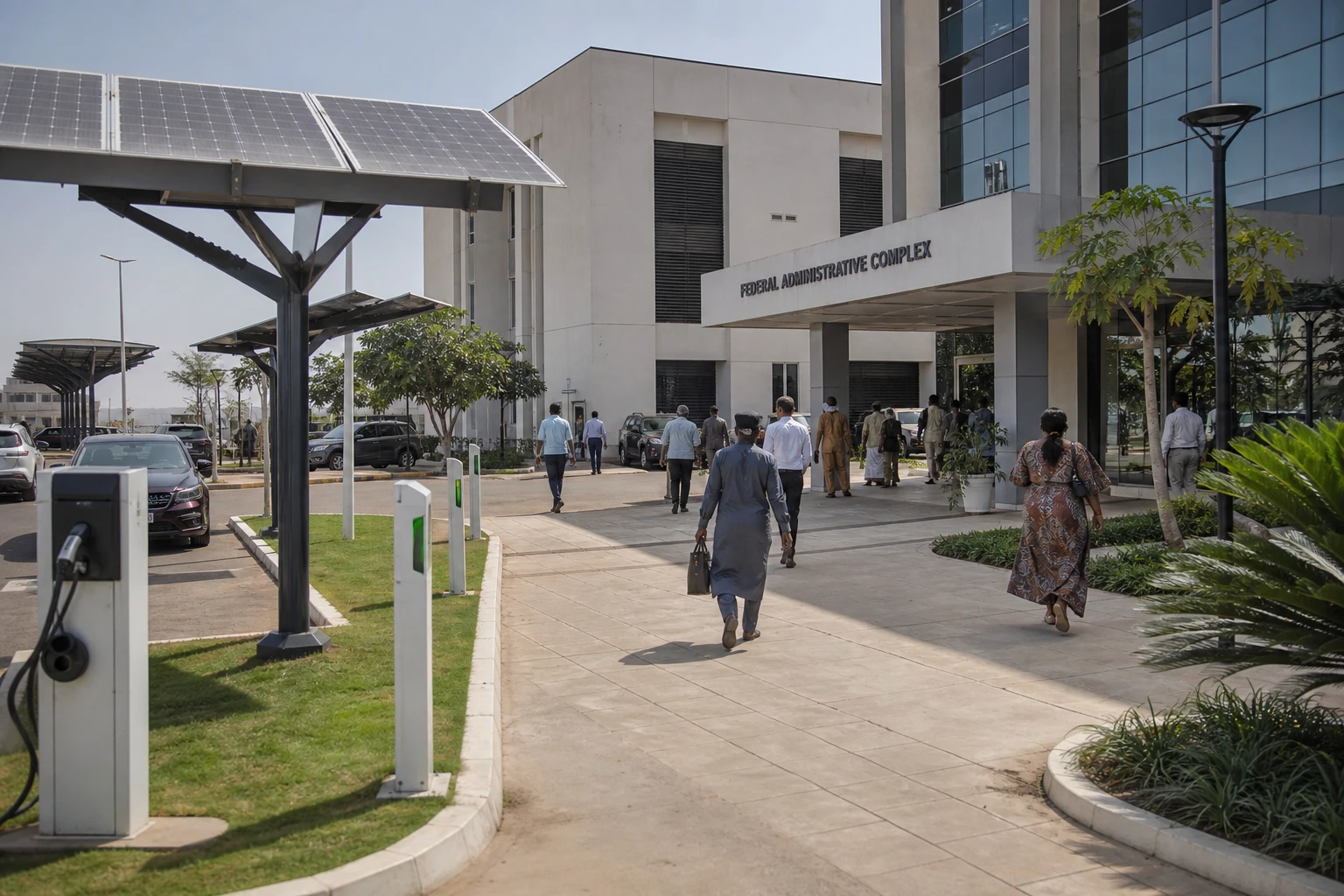
In Nigeria, filling up is no longer enough to define a service station. In the federal capital, Abuja, operators are now testing a place where motorists can buy fuel, charge an electric vehicle, use cooking gas and, eventually, access CNG, the compressed natural gas used as a fuel. This shift says much about the Nigerian market: customers want to move faster, pay differently and find several solutions in one place.
This change is taking place in a country where energy distribution remains under considerable pressure. Nigeria, West Africa’s largest economy, has long relied on a network of service stations designed solely for petrol. But the gradual end of subsidies, the rise of digital payments and the emergence of new fuels are disrupting established habits. In Abuja, the downstream sector is reorganising under the combined impact of oil reform and competition from new energy players.
What NNPC Retail is putting in place
NNPC Retail, the distribution subsidiary of Nigerian National Petroleum Company Limited, has inaugurated its first “smart” station in Abuja and says it plans to open between 50 and 70 more within six months. The site, on Bill Clinton Drive along Airport Road, was developed on land provided by the Nigeria Immigration Service, reflecting an institutional arrangement involving a public administration and the national oil group.
The system is based on a self-service model available 24 hours a day. Customers use the NNPC Retail mobile app, add funds to a digital wallet, generate a code and dispense fuel themselves. Staff remain on hand to help customers who are not familiar with the digital tool. The station also has electric vehicle charging points, installed with African Motor Works, an automatic car wash, liquefied petroleum gas (LPG) supply and solar power capacity reported at more than 200 kilowatts.
An area for CNG is planned, but is not yet operational. NNPC Retail’s management says it wants to extend the model to other cities, with several more units in Abuja and two others in Kano. The company has not yet disclosed the programme’s cost, its sources of financing or a precise timetable for the entire network.
A shift driven by market reform
NNPC Retail’s message is part of a broader transformation of the Nigerian market. The sector’s deregulation and the start of operations at Dangote Refinery have changed the dynamics of downstream trade. Distributors are no longer competing only on the price per litre or proximity. They are also seeking to retain urban customers who expect fast, safe and connected services.
In this context, the Abuja station looks less like a pump and more like a mobility platform. Fuel remains at its centre, but is now joined by electric vehicle charging and LPG, with CNG to follow. This diversification responds to several realities. First, demand for convenience. Second, the search for solutions that cost less than petrol. Finally, the desire to establish a presence before other private networks do so.
For customers, the benefits are clear in major urban centres. Employees, ride-hailing drivers, company fleets and households with connected devices can count on continuity of service. For drivers less familiar with digital technology, the model still requires human assistance. The shift is therefore not only technological. It is social too.
The precedent of electric charging points and the question of actual pace
The announcement nevertheless warrants caution. This is not NNPC’s first foray into electric mobility. In May 2024, its new energies subsidiary had already inaugurated in Abuja what was presented as the country’s first electric vehicle charging point, under a memorandum of understanding involving local businesses. Yet the expansion announced at the time has left no visible trace on a large scale in the sources available.
The same applies to CNG. The federal government has made the fuel a central part of its post-subsidy plans, with ambitious targets for conversions and stations. But deployment is progressing more slowly than the announcements suggest. In June 2026, assessments published in the Nigerian press still pointed to a significant gap between official ambitions and stations actually opened. This shows that infrastructure announcements must be tracked over time, neighbourhood by neighbourhood and city by city.
The electric vehicle charging market is also still embryonic. Available estimates put Nigeria at a very low level in terms of public charging points, especially compared with the coverage of conventional service stations. In other words, NNPC Retail’s strategy is starting from a genuine gap. But filling it will require far more than a few urban showcases. It will take equipment, maintenance, reliable electricity and a clear pricing structure.
What this signal means for Nigeria and the region
For Abuja, the project sends a political and economic signal. The state-owned group wants to show that it can remain relevant in a liberalised market. It also wants to ensure that the energy transition is not captured only by high-end niches. By bringing together a public administration, a local company and a subsidiary of the national group, the project offers a glimpse of the kind of coalition needed to modernise the sector.
For the rest of Nigeria, the stakes are broader. If the model holds up, it could inspire other ECOWAS cities, in the Economic Community of West African States. Regional capitals face the same questions: fuel costs, urban congestion, a shortage of electric vehicle charging and the need for hybrid solutions. Nigeria, with its demographic and economic weight, can serve as a laboratory. But a laboratory only convinces if the announced stations actually open, operate sustainably and remain accessible to the greatest number of people.
The next stage will therefore depend on execution. Attention will turn to the next promised openings in Abuja, then to Kano and other major cities. That is where it will become clear whether the multi-energy station becomes a new distribution norm or merely a showcase of modernity in a market still in transition.