
 Algeria
 Egypt
 Libya
 Morocco
 Sudan
 Tunisia
 Benin
 Burkina Faso
 Cabo Verde
 Côte d'Ivoire
 Ghana
 Guinea
 Guinea-Bissau
 Liberia
 Mali
 Mauritania
 Niger
 Senegal
 Sierra Leone
 The Gambia
 Togo
 Cameroon
 Central African Republic
 Chad
 DR Congo
 Equatorial Guinea
 Gabon
 Republic of the Congo
 São Tomé and Príncipe
 Burundi
 Comoros
 Djibouti
 Eritrea
 Ethiopia
 Kenya
 Madagascar
 Malawi
 Mauritius
 Mozambique
 Rwanda
 Seychelles
 Somalia
 South Sudan
 Tanzania
 Uganda
 Angola
 Botswana
 Eswatini
 Lesotho
 Namibia
 South Africa
 Zambia
 Zimbabwe
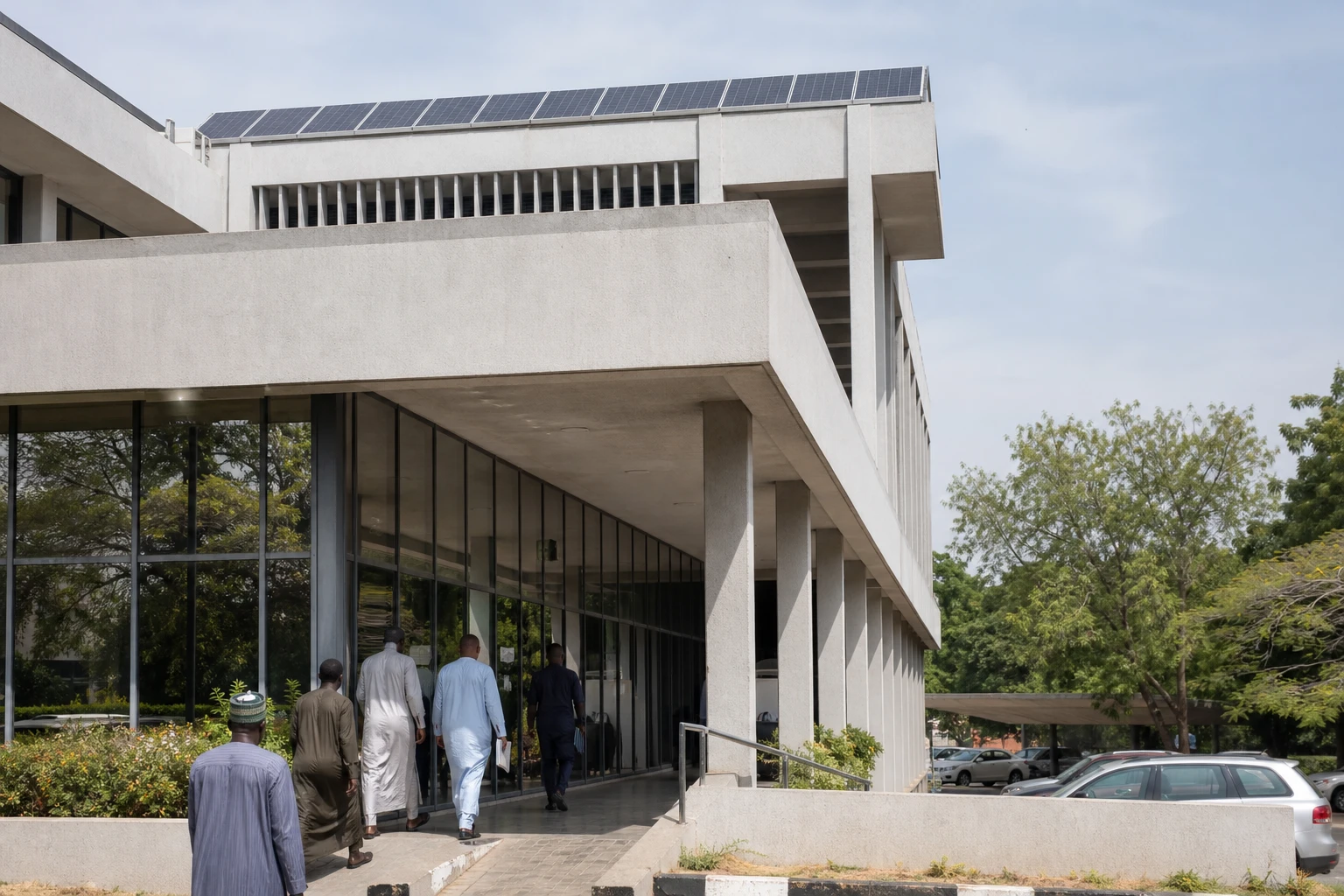
A concrete boost for businesses already generating their own power
In Nigeria, electricity is both a production cost and a matter of economic survival. At many industrial sites, hospitals, campuses and office buildings, solar power is no longer a symbol of the energy transition: it has become a tool for keeping operations running, reducing dependence on the public grid and generators. The new net metering framework finally gives a value to solar power that was previously going to waste.
This change comes in a country where more than 80 million people still lack access to electricity, according to the World Bank, and where decentralised solutions are expanding rapidly to fill gaps in the grid. In Abuja, the Nigerian Electricity Regulatory Commission, or NERC, has published the 2026 Net Metering Regulations, part of a broader sequence of sector reforms since the Electricity Act 2023.
What the NERC regulations change
The mechanism is simple in principle. Customers with grid-connected photovoltaic systems will be able to feed their surplus electricity into their distributor’s network and receive a credit against their bill. The value of exported energy will be calculated at a tariff approved by NERC. The scheme covers installations ranging from 50 kW to 1.5 MW, making it primarily suited to businesses, public institutions, shopping centres, industrial sites and some educational and healthcare facilities.
The change is significant because it turns surplus solar power into an economic asset. Before this framework, excess power produced at weekends, on public holidays or during periods of low activity had no monetary value. Now, the prosumer can recoup their investment more quickly. The regulations do, however, impose several conditions: connection to an authorised distributor, a technical assessment, compliance with safety standards and the local network’s capacity to absorb the power fed into it.
The framework also relies on more sophisticated metering infrastructure. Participating installations will need to be equipped with bidirectional meters capable of recording both the electricity drawn from the grid and the power sent back to it. For the Nigerian market, this marks a new phase: grid-connected solar power that is metered and partially reflected in the final bill.
Why Abuja is backing prosumers
NERC’s decision responds to a very concrete economic reality. Nigeria’s economy continues to face an unreliable electricity supply, transmission constraints and a distribution system that is often fragile. In this context, many players have already invested in solar self-generation to secure their operations. The new regulations do not create this trend; they aim to make it more profitable and better structured.
GIZ, which supports the Nigerian Energy Support Programme with backing from Germany and the European Union, describes the regulations as the country’s first standard framework allowing eligible customers to export their surplus to the local distribution network. The aim is twofold: to improve the returns on private investment and accelerate the integration of decentralised renewables into Nigeria’s electricity system.
For large businesses, the benefit may be immediate. A solar roof installed on a factory, hospital or logistics centre often generates more power than it uses at certain times. Until now, that surplus was wasted. It can now reduce the monthly bill. For distributors, however, the equation is more complicated: they must accept an additional flow of power without destabilising a network already under pressure. The regulations therefore protect system stability by requiring technical approval for every connection.
A national reform that goes beyond solar power
This measure is part of a broader reshaping of Nigeria’s electricity market. NERC has already published other regulations in 2026, including rules on mini-grids, while in Abuja the federal authorities and Parliament are reaffirming the case for a more decentralised electricity market. Nigeria is moving towards a model in which state governments, distribution operators and decentralised generators play a greater role.
Across West Africa, the development is also being watched closely. ECOWAS has for several years promoted off-grid solutions and mini-grids to improve energy access, while several countries in the region are testing frameworks that support solar self-consumption. Nigeria, the continent’s largest electricity market by population, is sending a clear message: the energy transition is not just about new power plants, but also about organising a market for surplus electricity.
One decisive question remains: will the implicit buy-back tariff, distributors’ technical capacity and the wider rollout of bidirectional metering turn these regulations into a mass-market tool, or will they benefit only large consumers that are already well equipped? The answer will determine the reform’s real reach in the coming months, as Nigeria continues to seek wider access to electricity while modernising a system long dominated by costly self-generation.



