Algeria
 Egypt
 Libya
 Morocco
 Sudan
 Tunisia
 Benin
 Burkina Faso
 Cabo Verde
 Côte d'Ivoire
 Ghana
 Guinea
 Guinea-Bissau
 Liberia
 Mali
 Mauritania
 Niger
 Senegal
 Sierra Leone
 The Gambia
 Togo
 Cameroon
 Central African Republic
 Chad
 DR Congo
 Equatorial Guinea
 Gabon
 Republic of the Congo
 São Tomé and Príncipe
 Burundi
 Comoros
 Djibouti
 Eritrea
 Ethiopia
 Kenya
 Madagascar
 Malawi
 Mauritius
 Mozambique
 Rwanda
 Seychelles
 Somalia
 South Sudan
 Tanzania
 Uganda
 Angola
 Botswana
 Eswatini
 Lesotho
 Namibia
 South Africa
 Zambia
 Zimbabwe
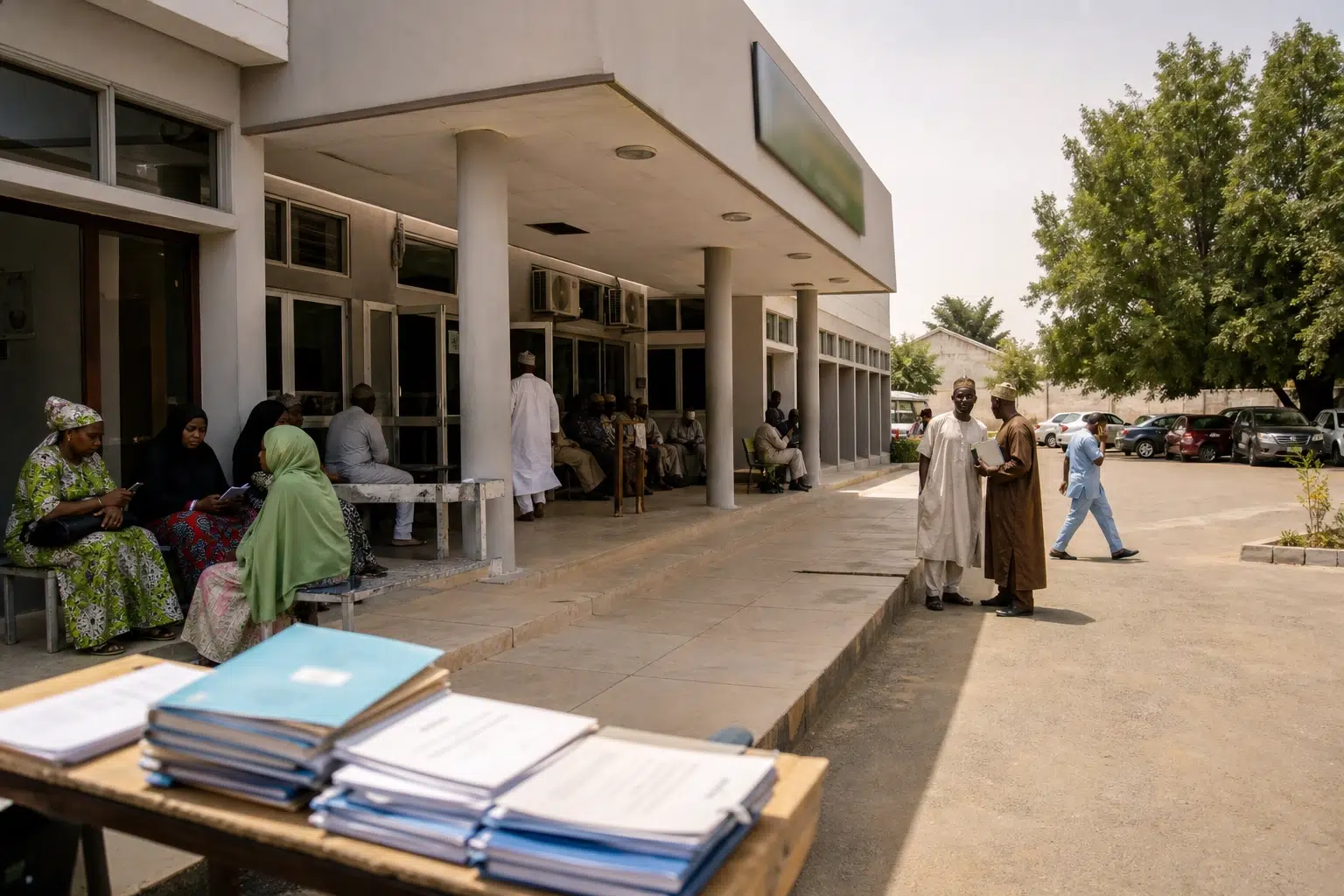
Deaths in custody in Minna raise questions about the entire system
In Niger State, central Nigeria, the deaths of 37 men arrested on suspicion of illegal gold mining have sparked more than a wave of outrage. They have reopened a simple but weighty question: what happens in practice when a mining case becomes a public security matter? The victims’ families are demanding answers. They want to know why their relatives, held in Minna, never came out alive.
Nigeria has faced previous shocks over artisanal gold mining. In several states in the north and centre of the country, informal mining generates quick income, but also networks of middlemen, traders and sometimes armed groups. The issue is therefore not only a matter for the courts. It affects resource regulation, site security and the credibility of the forces tasked with enforcing the law. Since 2024, the federal government has also set up “mining marshals”, a unit created to tackle illegal gold mining.
What is known about the facts so far
According to information made public, the victims had been arrested by the Nigeria Security and Civil Defence Corps (NSCDC), a federal paramilitary force tasked in particular with protecting infrastructure and supporting internal security. They were being held in Minna, the capital of Niger State, after an operation at a site suspected of illegal gold mining. The authorities have confirmed that 37 people died in custody. The federal Ministry of Information subsequently announced the creation of an independent ten-member committee and the suspension of the officers involved, on the instructions of President Bola Ahmed Tinubu. The committee is due to submit its report within two weeks.
At this stage, the exact cause of the deaths remains disputed. Initial information reported by AFP points to possible asphyxiation linked to overcrowding and poor ventilation in the cell, while local officials initially suggested illness. This discrepancy matters. It shows the need to distinguish the official account, which remains incomplete, from narratives that have already taken hold in the public sphere.
The institutional response was swift. The Ministry of Interior announced the suspension of the officers responsible for custody and the investigation, as well as the inclusion on the committee of representatives of the mining community, a traditional council in Minna, a representative of the Niger State government, a human rights lawyer and a public affairs analyst. This composition reflects an attempt to bring together government, expertise and local representation. It does not, on its own, replace a full and contested inquiry. But it indicates the political sensitivity of the case.
Why the case reaches beyond Minna
In Nigeria, artisanal gold mining is both a source of income and a blind spot in governance. For many families, it makes up for the lack of stable jobs. For the state, it often means lost tax revenue, environmental risks and a security challenge. In this context, a purely repressive response often creates tensions. Civil society organisations, including Amnesty International Nigeria and the Civil Society Legislative Advocacy Centre, have called for an independent inquiry, transparent autopsies and prosecutions if wrongdoing is established. They have also stressed families’ right to compensation.
The issue also concerns how the Nigerian state manages detention. NSCDC holding facilities are not prisons in the conventional sense, but the same duty to protect detainees applies: ventilation, capacity, access to medical care, records of arrests and accountability for guards. When 37 deaths occur in an enclosed space, the question is no longer just one of an operation gone wrong. It becomes a question of the chain of command, internal oversight and respect for the right to life.
The first demonstrations in Minna also show the immediate social impact. Relatives gathered outside the general hospital where the bodies had been taken, while police dispersed protesters with tear gas and imposed a night-time curfew in the city. For residents, the case extends beyond the bereaved families. It raises a broader question: how can the fight against illegal mining, site security and humane treatment of those arrested be reconciled?
A warning for West Africa
The tragedy also resonates across the region. In several West African countries, artisanal gold mining attracts thousands of workers, often far from decision-making centres. ECOWAS, the Economic Community of West African States, has for years urged its members to better regulate mining supply chains, but a wide gap remains between the rules and realities on the ground. When a state uses force against a sector that is already informal, it risks fuelling distrust rather than bringing the activity under control.
Abuja now faces a twofold challenge. It must establish, unambiguously, what caused the deaths of the 37 detainees. It must also show that reform of mining security goes beyond setting up special units. Observers will therefore be watching three things in the coming days: the independent committee’s report, the support provided to the families and any sanctions against the officers implicated. Beyond the case of Minna, the image of a state capable of protecting its citizens, even when it arrests them, is at stake.