
 Algeria
 Egypt
 Libya
 Morocco
 Sudan
 Tunisia
 Benin
 Burkina Faso
 Cabo Verde
 Côte d'Ivoire
 Ghana
 Guinea
 Guinea-Bissau
 Liberia
 Mali
 Mauritania
 Niger
 Senegal
 Sierra Leone
 The Gambia
 Togo
 Cameroon
 Central African Republic
 Chad
 DR Congo
 Equatorial Guinea
 Gabon
 Republic of the Congo
 São Tomé and Príncipe
 Burundi
 Comoros
 Djibouti
 Eritrea
 Ethiopia
 Kenya
 Madagascar
 Malawi
 Mauritius
 Mozambique
 Rwanda
 Seychelles
 Somalia
 South Sudan
 Tanzania
 Uganda
 Angola
 Botswana
 Eswatini
 Lesotho
 Namibia
 South Africa
 Zambia
 Zimbabwe
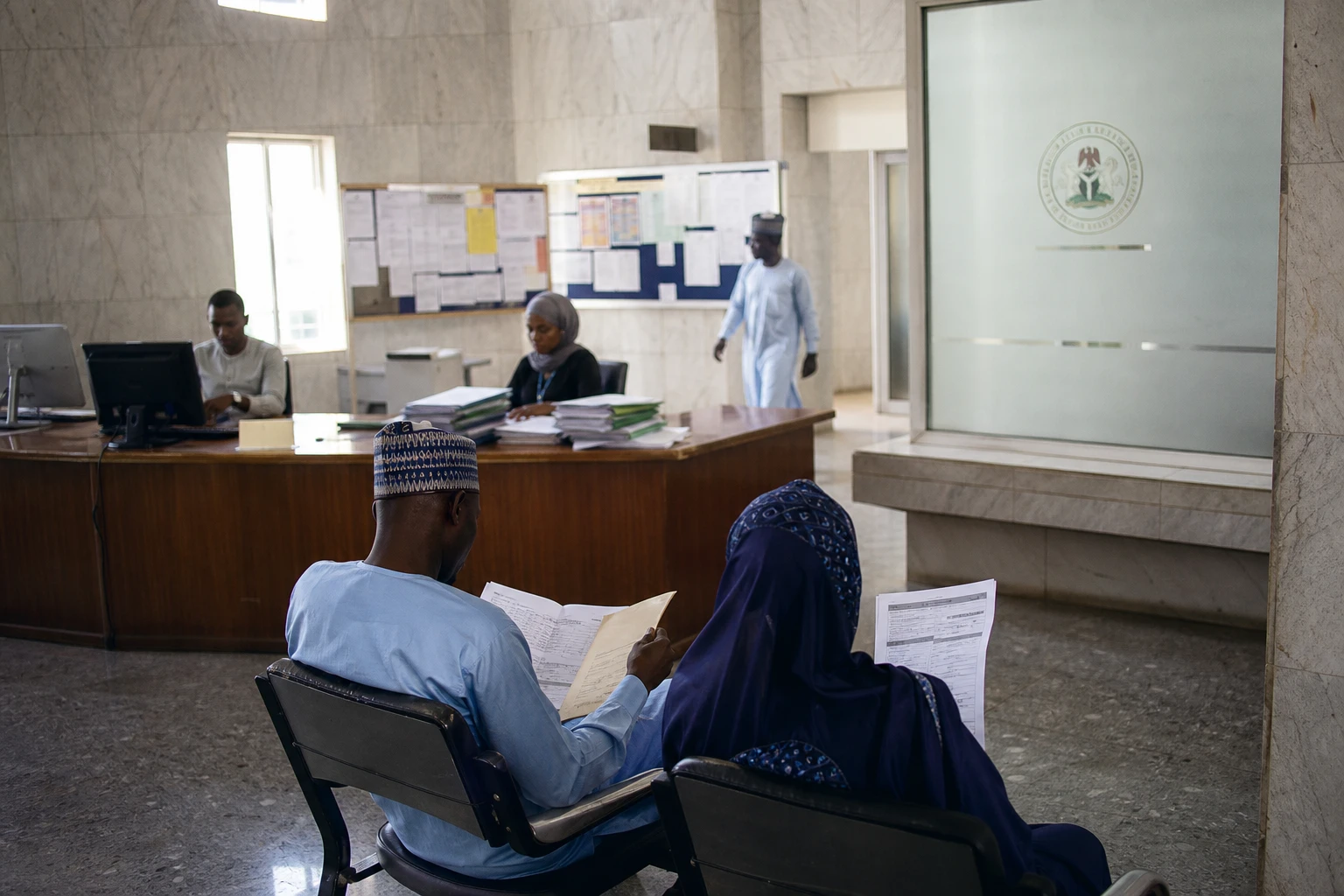
In north-western Nigeria, insecurity is no longer confined to roads and markets
In Gusau, the capital of Zamfara State, displaced families now live within sight of their abandoned villages. The paradox is stark: fleeing just a few kilometres is not always enough to escape armed men, as the threat follows people into urban outskirts, schools and makeshift camps. Nigeria, whose federal capital is Abuja, is facing a crisis in which kidnapping is no longer merely an isolated crime, but an organised form of predation.
This security pressure extends beyond the north-west. The country is facing several outbreaks of violence at once: banditry in the north-west, a jihadist insurgency in the north-east, communal tensions in the central region, and a rise in kidnappings in other areas previously seen as more stable. In this context, national responses also matter for West Africa, where cross-border flows of weapons, armed groups and criminal economies are a concern for ECOWAS, the Economic Community of West African States.
Forced displacement has become a means of survival, not a choice
Available data show the scale of the phenomenon. The UNHCR said in 2025 that Nigeria remained one of the world’s largest centres of internal displacement, with millions of people uprooted, a significant proportion of them in the north of the country. In the north-west, violence linked to bandits, agropastoral conflicts and attacks on civilians is driving repeated departures, sometimes to informal camps or nearby towns considered somewhat less exposed.
Motorcycle raids, villages surrounded at night, houses set ablaze and ransoms demanded from farmers or families have become recurring features of this violence. ACLED describes the spread of armed banditry in the north-west, with spillover into other states. Its recent monitoring also shows that mass kidnappings have intensified nationwide, confirming that the phenomenon is no longer confined to a few isolated strongholds.
In rural communities, this economy of fear is stalling production. Farmers sometimes abandon their fields or pay to access them. Displaced families lose livestock, harvests, documents and support networks. In the short term, towns offering refuge absorb the exodus. In the medium term, they face rising demand for food, water, healthcare and accommodation, without adequate infrastructure.
Figures confirm a criminal enterprise turned industry
Financially, kidnapping pays. Several recent estimates point to the same conclusion: kidnapping for ransom has become a structured criminal market. A report cited in 2025 said that 4,722 people had been kidnapped in Nigeria between July 2024 and June 2025, with about 2.57 billion naira actually paid, against demands far higher. In August 2026, the Associated Press reported that a new SBM Intelligence estimate put ransoms paid over the previous 12 months at 7.78 billion naira, or about $5.8 million.
These figures tell only part of the story. A large proportion of kidnappings are never reported, and many families pay in silence. The problem is therefore broader than the published figures suggest. It also affects schools, places of worship, bus stations and secondary roads. In several states, fears of further attacks have led parents to withdraw their children from school, a particularly serious effect in a country already facing one of the world’s highest numbers of out-of-school children, according to Unesco.
The state’s response remains uneven. The federal government raised the defence and security budget to 5.41 trillion naira in its 2026 budget proposal, while the presidency announced a security emergency in November 2025, authorising new recruits to the army and police. In August 2026, it also approved a pay rise for military personnel. These steps signal a genuine effort, but they also reflect the scale of pressure on the security forces.
Local militias, the army and a fragile social contract
In several north-western states, self-defence groups backed by the authorities have been mobilised to fill gaps in the state’s presence. Here, too, the solution carries risks of its own. An armed local force may provide protection faster than a centralised operation, but it may also fuel abuses, communal rivalries and the lasting spread of weapons. Analysts cited by ACLED warn that the proliferation of armed actors makes it even harder to reassert control over the territory.
Nigeria’s experience resonates beyond its borders. In the Sahel belt and in several coastal West African countries, criminal groups and armed actors are testing the weaknesses of states: poorly controlled roads, forests used as refuges, fragile local finances and slow justice systems. When kidnapping becomes an economic model, it affects more than the direct victims. It erodes trust, hampers trade, drives up transport costs and undermines public authority, including in regional capitals.
What is at stake in Nigeria, then, is more than a policing crisis. It is a test of the federal government’s, state governments’ and regional institutions’ ability to protect people without permanently delegating security to parallel actors. The central question is no longer just how to free hostages. It is how to shut down a criminal market that has become embedded in everyday life, from Zamfara to Oyo, and whose effects are already spilling beyond Nigeria’s borders.



