Algeria
 Egypt
 Libya
 Morocco
 Sudan
 Tunisia
 Benin
 Burkina Faso
 Cabo Verde
 Côte d'Ivoire
 Ghana
 Guinea
 Guinea-Bissau
 Liberia
 Mali
 Mauritania
 Niger
 Senegal
 Sierra Leone
 The Gambia
 Togo
 Cameroon
 Central African Republic
 Chad
 DR Congo
 Equatorial Guinea
 Gabon
 Republic of the Congo
 São Tomé and Príncipe
 Burundi
 Comoros
 Djibouti
 Eritrea
 Ethiopia
 Kenya
 Madagascar
 Malawi
 Mauritius
 Mozambique
 Rwanda
 Seychelles
 Somalia
 South Sudan
 Tanzania
 Uganda
 Angola
 Botswana
 Eswatini
 Lesotho
 Namibia
 South Africa
 Zambia
 Zimbabwe
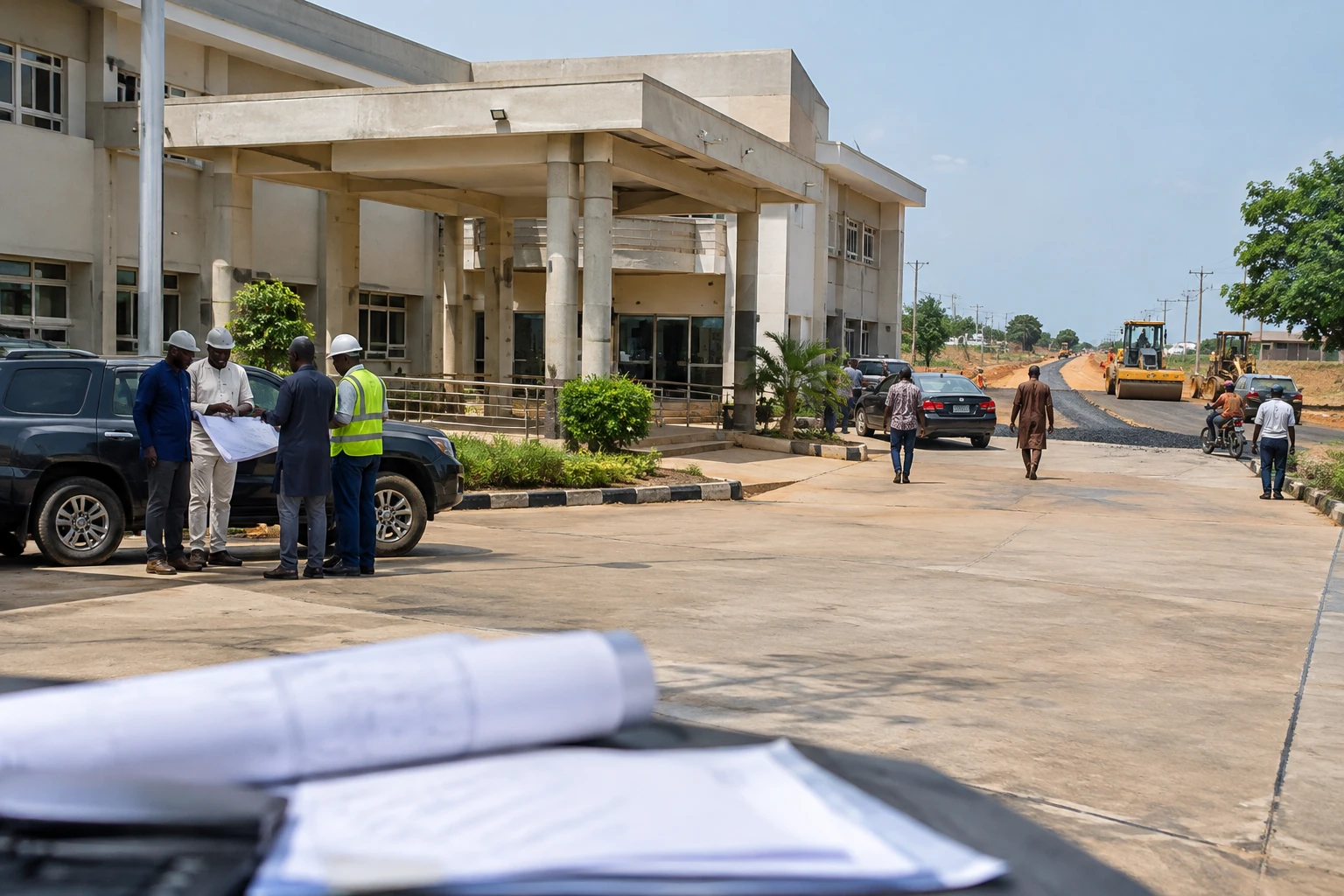
A road can bring producers closer to markets. But for residents of north-central Nigeria, the question is also immediate: how much more time and money will it take to travel or move a harvest during the works? The launch of a major project between Lambata and Kontagora brings this issue to the fore.
A corridor at the heart of trade in Niger State
The route links Lambata, Bida, Mokwa, Makera and Kontagora in Niger State, in the country’s central west. It serves farming communities and commercial centres. It is also part of a federal road network connecting several regions of Nigeria, whose capital is Abuja.
The road has already experienced traffic problems. In May 2026, the federal government ordered emergency repairs on the Bida-Lambata route after complaints from transporters and several days of major disruption. In August, a drivers’ protest halted traffic around Mokwa amid security concerns. These episodes are a reminder that a strategic road must remain passable even before a major project is completed. The report on emergency repairs to the Bida-Lambata road and the account of disruption around Mokwa document these difficulties.
At regional level, improving domestic links also matters for trade within the Economic Community of West African States (ECOWAS), which brings together West African countries. A national road alone cannot guarantee better cross-border traffic. It can, however, help connect production areas to major trade routes.
Federal project, with figures still at odds
The project was officially launched in Bida on 13 October 2026. Nigeria’s Minister of Works, David Umahi, and Niger State Governor Mohammed Umaru Bago took part in the ceremony. The government describes the project as a reconstruction and widening of the road, intended to improve the transport of people and goods.
The stated length varies between reports: some give about 376 kilometres, others 401 kilometres. The published cost also differs. Government information released before the launch cited about 1.5 trillion naira, while reports from the ceremony put the figure at 1.8 trillion. The publicly available information reviewed does not make clear whether these figures refer to different versions of the project or a revision. It is therefore best not to present them as a single, definitive figure.
The authorities say the Dangote Group is to carry out the work under the federal tax credit scheme for infrastructure. The scheme allows a company to fund infrastructure and receive a tax credit in return. Several Nigerian media outlets have reported the company’s involvement and the financing mechanism. Galaxy TV’s report on the project launch refers in particular to the Dangote Group’s role.
The project forms part of President Bola Tinubu’s “Renewed Hope” agenda, which makes infrastructure a priority for investment. However, the announcement of funding or the start of work does not yet provide details on the timetable, traffic arrangements during construction or mechanisms for monitoring expenditure.
The road alone will not bring prices down
For farmers and traders, a more reliable link could reduce delays and improve access to markets. Transporters could also save time if the road surface and bridges are suited to traffic. But these benefits will depend on maintenance, safety along the route and links to the secondary roads serving farms and local markets.
The link with the cost of living is real, but should not be oversimplified. Transport affects the final price of food, but is not the only factor: fuel costs, agricultural inputs, harvests, storage and commercial margins also matter. Available data therefore do not support the claim that this project alone will lower food prices.
The figures attributed in the original material to a World Bank report published in October 2026 are not repeated here as established facts. The World Bank’s 8 October 2026 press release concerns state spending priorities and increased capital investment, but does not confirm the specific fuel price, food inflation and road spending figures cited in that material. The World Bank does, however, report that food inflation reached 20.3% in July 2026. This figure illustrates the continued pressure on households, but does not make it possible to isolate transport’s contribution. The World Bank’s overview of public spending by Nigerian states sets out the priorities and limitations of this trend.
The impact will not be the same for everyone. Communities along the route may benefit from better access to services and markets, but also face dust, diversions and interruptions during construction. Transporters will chiefly want a passable road and predictable journey times. Urban and rural households will benefit from any easing of costs only if logistical savings are actually passed on to prices.
Monitoring delivery will be crucial
For Niger State and the federal government, the challenge therefore goes beyond laying a new road surface. Costs, deadlines, construction quality and access for communities along the route must all be monitored. The gap between the announced figures makes the publication of detailed information on the contract and its financing particularly important.
Across West Africa, the project is a reminder that connectivity depends as much on national infrastructure as on its maintenance and links to regional routes. The next steps to watch are clarification of the cost and length, actual progress on the work and measures to keep traffic moving. Only then can the project turn a federal announcement into tangible improvements for producers, traders and travellers.