Algeria
 Egypt
 Libya
 Morocco
 Sudan
 Tunisia
 Benin
 Burkina Faso
 Cabo Verde
 Côte d'Ivoire
 Ghana
 Guinea
 Guinea-Bissau
 Liberia
 Mali
 Mauritania
 Niger
 Senegal
 Sierra Leone
 The Gambia
 Togo
 Cameroon
 Central African Republic
 Chad
 DR Congo
 Equatorial Guinea
 Gabon
 Republic of the Congo
 São Tomé and Príncipe
 Burundi
 Comoros
 Djibouti
 Eritrea
 Ethiopia
 Kenya
 Madagascar
 Malawi
 Mauritius
 Mozambique
 Rwanda
 Seychelles
 Somalia
 South Sudan
 Tanzania
 Uganda
 Angola
 Botswana
 Eswatini
 Lesotho
 Namibia
 South Africa
 Zambia
 Zimbabwe
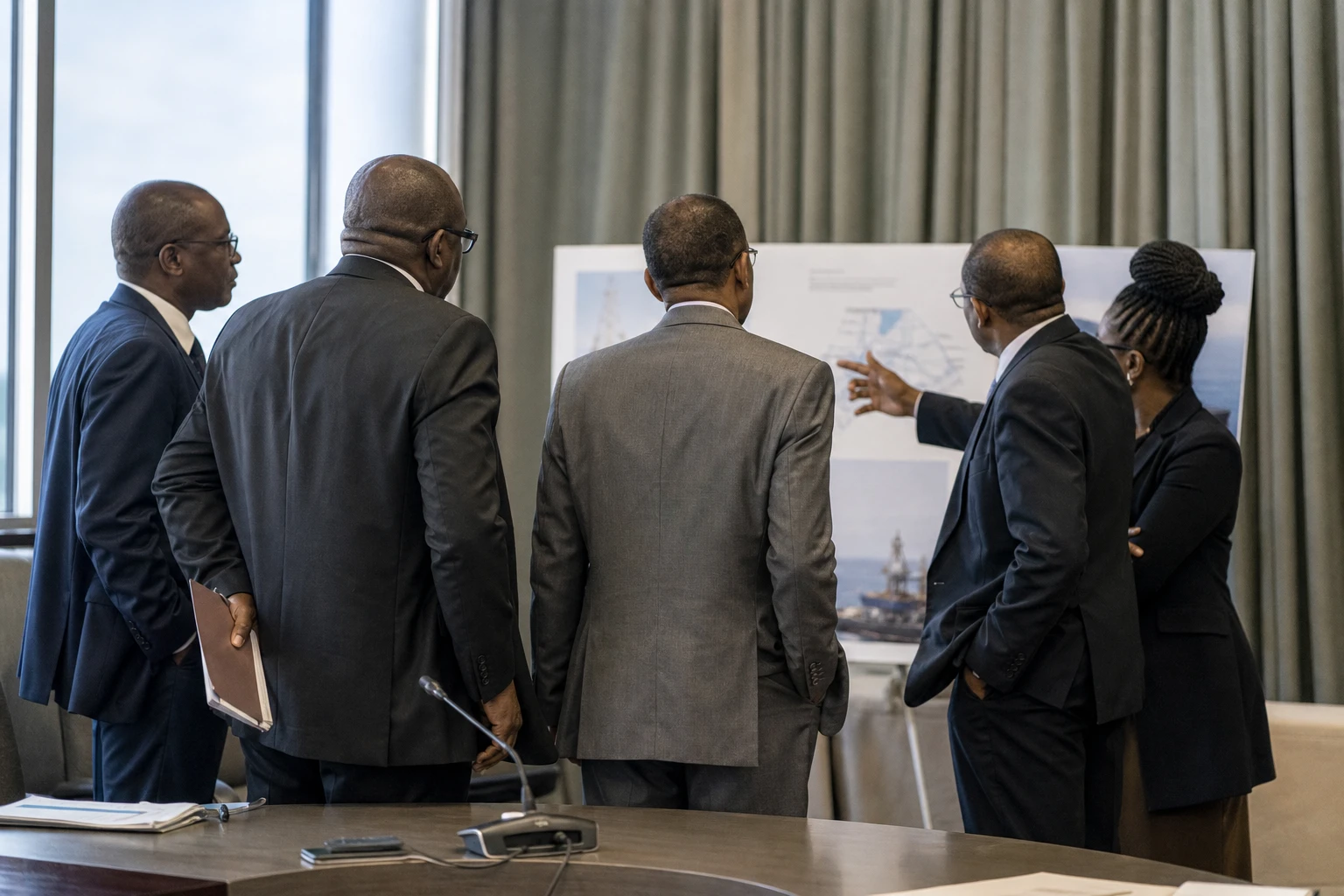
In Nigeria, the challenge is no longer simply having large gas reserves. It is now about getting the gas in time to infrastructure capable of turning it into revenue, energy and jobs. The Ima project is part of a race against the clock to supply Nigeria’s main natural gas production site.
A new field to secure supplies to Bonny Island
On 23 September 2026, TotalEnergies and its Nigerian partner AMNI announced the final investment decision to develop the Ima gas field offshore Nigeria. This step authorises the project to move into its execution phase.
TotalEnergies will operate the project with a 40% stake. Nigerian company AMNI will hold 60%. The field is located in the offshore OML 112 and OML 117 licences, in shallow waters near Bonny Island, in Rivers State.
The development will be based on a single platform. It will be connected to the Nigeria LNG site by a pipeline approximately 22 kilometres long. Nigeria LNG operates the complex on Bonny Island, which converts gas into LNG destined mainly for international markets.
Production is expected to start in 2028. At peak capacity, Ima is expected to supply about 350 million cubic feet of gas per day, or more than 60,000 barrels of oil equivalent per day. These figures are confirmed by TotalEnergies’ official announcement and several Nigerian media outlets specialising in energy.
Ima’s gas is expected to meet nearly a third of the needs of Nigeria LNG’s Train 7. The expansion project is intended to increase the complex’s liquefaction capacity from 22 to 30 million tonnes a year. The six units currently in operation are already among Nigeria’s leading industrial and export assets.
Available gas, a decisive condition for Train 7
The timing of Ima nevertheless reveals a significant difficulty. Nigeria LNG is aiming to bring Train 7 on stream before Ima is expected to start up in 2028. The company will therefore have to secure other volumes during this transition period.
The problem is structural. Nigeria has substantial gas reserves, but its collection, transport and processing capacity remains insufficient. Disruptions to oil and gas pipelines, acts of vandalism, technical constraints and investment delays have repeatedly reduced the volumes available to facilities on Bonny Island.
In its reference data, Nigeria LNG says its six trains can produce 22 million tonnes of LNG a year. This capacity, however, depends on a continuous gas supply. A liquefaction plant cannot operate at full capacity if the gas molecules do not reach its processing units.
Nigeria LNG officials have recently estimated that the facilities are operating below their nominal potential. This situation weighs on exports, foreign currency earnings and the reliability of delivery contracts. It also limits Nigeria’s ability to take full advantage of global LNG demand.
The Ima project therefore addresses a specific industrial need. It is not simply a matter of opening a new field. The aim is to supply existing infrastructure whose expansion requires additional, steady volumes.
An unassociated gas project with a reduced technical footprint
Ima will produce non-associated gas. This term refers to gas extracted from a field that is not dependent on oil production. Its development can therefore help increase gas supplies without waiting for a corresponding rise in oil extraction.
TotalEnergies describes the project as a facility with controlled costs and emissions. The platform will be powered by electricity from the mainland. The plan also calls for no routine flaring—that is, a ban on continuously burning surplus gas—and continuous methane monitoring.
The company also says that the main subcontractors will be Nigerian. Information released in Nigeria also points to a significant role for workers from host communities during the development phase. These commitments will need to be monitored as the project is carried out, particularly in communities along the Rivers State coastline.
The announced cost varies across available communications. TotalEnergies cites an investment of more than $600 million, while Nigerian sources put estimates as high as about $1.1 billion. The difference may be explained by differing calculation scopes, but the final amount has not been presented consistently in public announcements.
A test for Abuja’s gas strategy
For the Nigerian authorities, Ima is part of an effort to turn gas reserves into productive activity. The government is seeking to attract capital into non-associated gas, develop infrastructure and increase export revenues.
The project follows the decision to move ahead with Ubeta, another gas development led by TotalEnergies and the Nigerian National Petroleum Company. Ubeta is also expected to contribute to supplies for the Nigerian market and LNG-related facilities.
The timeline nevertheless remains vulnerable to delays. Offshore projects require specialised equipment, complex logistics and coordination between operators, regulators and local communities. Meeting the 2028 deadline will therefore be an early indicator of Nigeria’s ability to turn investment decisions into actual production.
For export companies, the stakes are commercial. More stable production can reduce the risk of missing cargoes and strengthen Nigeria’s position in the global LNG market. For the state, the stakes are fiscal and industrial. For local communities, the benefits will depend above all on jobs created, contracts awarded locally and the quality of revenue-sharing arrangements.
Significance beyond Nigeria’s borders
The Ima project directly concerns Nigeria, but its implications extend across West Africa. The region still relies heavily on energy infrastructure that is unevenly distributed. Projects capable of increasing gas production can support exports, electricity supplies and local industries, provided the resource is not reserved solely for foreign markets.
Within ECOWAS, the Economic Community of West African States, Nigeria’s choices influence regional energy balances. The country remains the largest economy in the bloc and a central player in electricity, gas and energy product transport projects.
The next milestone will be twofold: tracking progress on Train 7 and verifying that Ima’s promised volumes actually reach Bonny Island from 2028. Only then will Nigeria be able to turn its geological advantage into lasting industrial capacity.