Algeria
 Egypt
 Libya
 Morocco
 Sudan
 Tunisia
 Benin
 Burkina Faso
 Cabo Verde
 Côte d'Ivoire
 Ghana
 Guinea
 Guinea-Bissau
 Liberia
 Mali
 Mauritania
 Niger
 Senegal
 Sierra Leone
 The Gambia
 Togo
 Cameroon
 Central African Republic
 Chad
 DR Congo
 Equatorial Guinea
 Gabon
 Republic of the Congo
 São Tomé and Príncipe
 Burundi
 Comoros
 Djibouti
 Eritrea
 Ethiopia
 Kenya
 Madagascar
 Malawi
 Mauritius
 Mozambique
 Rwanda
 Seychelles
 Somalia
 South Sudan
 Tanzania
 Uganda
 Angola
 Botswana
 Eswatini
 Lesotho
 Namibia
 South Africa
 Zambia
 Zimbabwe
In Nigeria, investors look first for stable rules
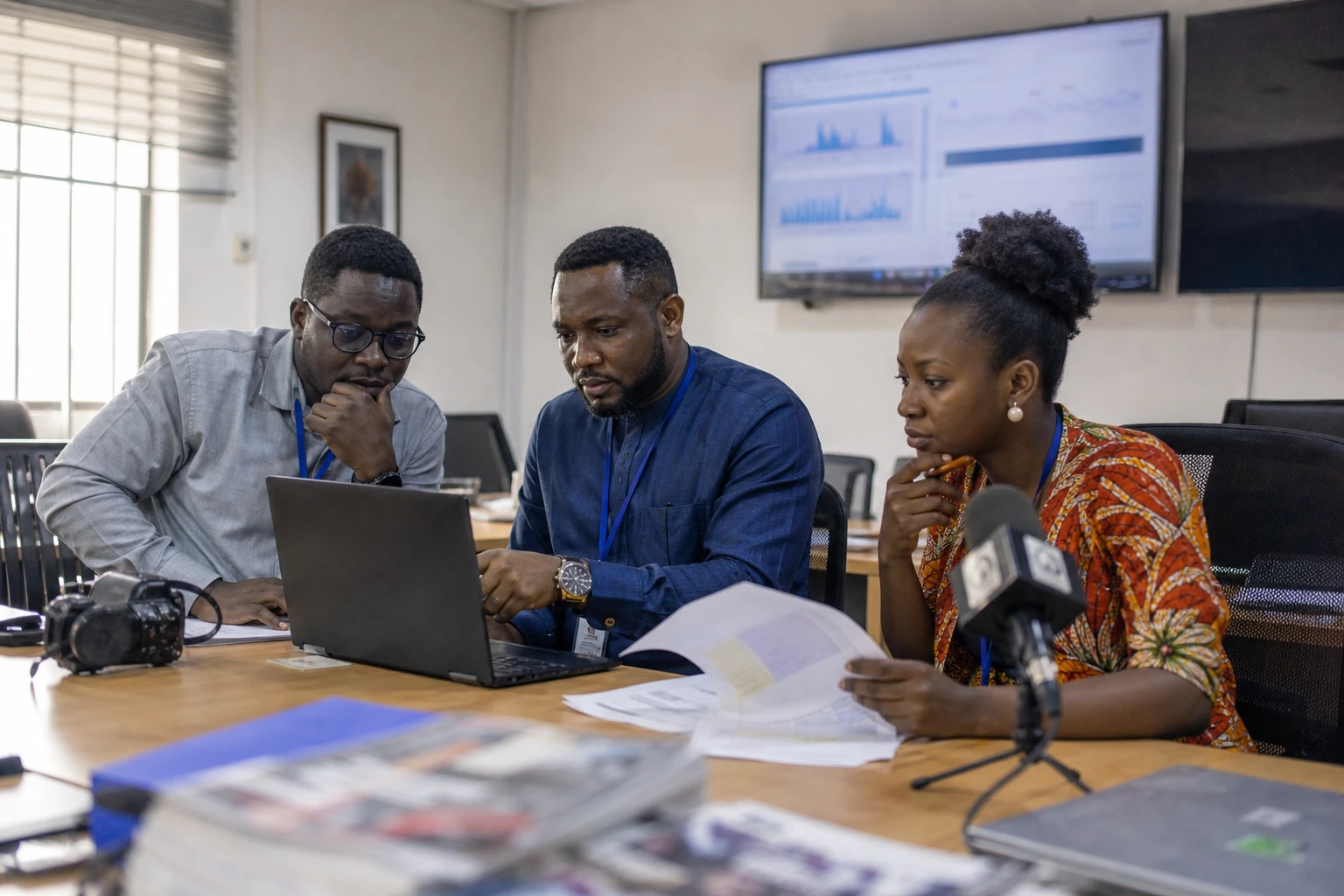
In Abuja, the question is no longer just about signing agreements. It is whether the reforms promise a clear framework, robust enough to attract capital, create jobs and endure. For German businesses, Nigeria remains a major test: an immense but demanding market, where access to foreign currency, taxation and business security matter as much as commercial potential.
This issue also comes at a particular regional moment. ECOWAS, whose headquarters are in Abuja, continues to urge its member states to harmonise rules, facilitate trade and attract private capital into infrastructure. At the same time, the African Union is strengthening its economic integration agenda through the AfCFTA, the African Continental Free Trade Area, which aims to facilitate trade between countries across the continent.
Berlin is looking to Abuja, but through an economic lens
German Foreign Minister Johann Wadephul’s visit to Nigeria served to put business back at the heart of bilateral relations. In Lagos, he met representatives of the Nigerian business community before travelling on to Abuja. Berlin’s official message is clear: Germany wants to broaden its partnerships on the continent and sees Nigeria as an indispensable player in West Africa.
The itinerary for the trip says much about Germany’s approach. Wadephul first visited Mauritania, then Nigeria, before travelling on to South Africa. Berlin presents the tour as an effort to consolidate economic and political partnerships on a continent where competition between powers is becoming more visible, including around energy, raw materials and industrial value chains.
Bilateral trade is already under way. German statistics show that in 2024, trade in goods between the two countries grew by about 10% compared with the previous year, according to figures cited by Berlin. Nigeria has also retained a place in Germany’s external trade, with imports and exports that remain modest compared with the world’s major trading powers, but significant within Germany’s African network.
Nigeria’s reforms serve as an argument for both capitals
The Nigerian government wants to use this diplomatic opening to promote a simple message: the country is reforming to become more predictable again. In Abuja, Foreign Minister Bianca Odumegwu-Ojukwu stressed the continuation of economic changes intended to improve the investment climate, strengthen governance and expand the role of the private sector. She spoke of implementing commitments agreed with the country’s partners.
These reforms are not abstract. The Central Bank of Nigeria has spent several months overhauling its foreign-exchange framework, ending the segmentation of the foreign-exchange market and transitioning the Investors’ and Exporters’ window to the Nigerian Foreign Exchange Market. The central bank says it wants to improve transparency, price discovery and investor confidence. It also launched the fourth edition of its foreign-exchange manual in May 2026.
For businesses, the signal is useful, but not enough. Naira reforms, tax changes and monetary discipline still need to have a tangible effect: facilitating payments, reducing uncertainty over margins and making investment decisions easier. The Central Bank kept its benchmark rate at 26.5% in May 2026, proof that disinflation and financial stability remain immediate priorities.
What Nigeria and Germany are really looking for
Nigeria is not waiting for promises of cooperation alone. The country is also seeking partners capable of supporting its industrial, energy and logistics ambitions. With an estimated population of more than 232 million in 2024, it remains the region’s largest market and a major demographic pivot in West Africa. At the same time, its economy remains sensitive to foreign-exchange shocks and investor expectations.
For Germany, the stakes are different. Berlin is seeking markets, economic allies and a more structured presence on a continent where relations are no longer limited to development aid. The African Union recalled in January 2026 that Germany remains an important bilateral partner of the organisation, with a commitment of €88 million announced for 2026-2027. This framework shows that German-African relations are now playing out both at continental level and through targeted national partnerships.
Across West Africa, the impact could be immediate. ECOWAS is seeking to revive integration through infrastructure, aviation, private investment and free movement. A closer economic relationship between Abuja and Berlin could therefore go beyond a simple bilateral relationship. It could support regional projects, cross-border value chains and industrial cooperation relevant to Lagos as much as to Accra, Abidjan or Dakar.
One concern remains: diplomatic announcements often come quickly, but investments take time to materialise. The real test will come in the months ahead, when the businesses invited to Lagos and the counterparts met in Abuja must turn political interest into contracts, jobs and visible projects. That is when the relationship between Nigeria and Germany will show its true measure.