
 Algeria
 Egypt
 Libya
 Morocco
 Sudan
 Tunisia
 Benin
 Burkina Faso
 Cabo Verde
 Côte d'Ivoire
 Ghana
 Guinea
 Guinea-Bissau
 Liberia
 Mali
 Mauritania
 Niger
 Senegal
 Sierra Leone
 The Gambia
 Togo
 Cameroon
 Central African Republic
 Chad
 DR Congo
 Equatorial Guinea
 Gabon
 Republic of the Congo
 São Tomé and Príncipe
 Burundi
 Comoros
 Djibouti
 Eritrea
 Ethiopia
 Kenya
 Madagascar
 Malawi
 Mauritius
 Mozambique
 Rwanda
 Seychelles
 Somalia
 South Sudan
 Tanzania
 Uganda
 Angola
 Botswana
 Eswatini
 Lesotho
 Namibia
 South Africa
 Zambia
 Zimbabwe
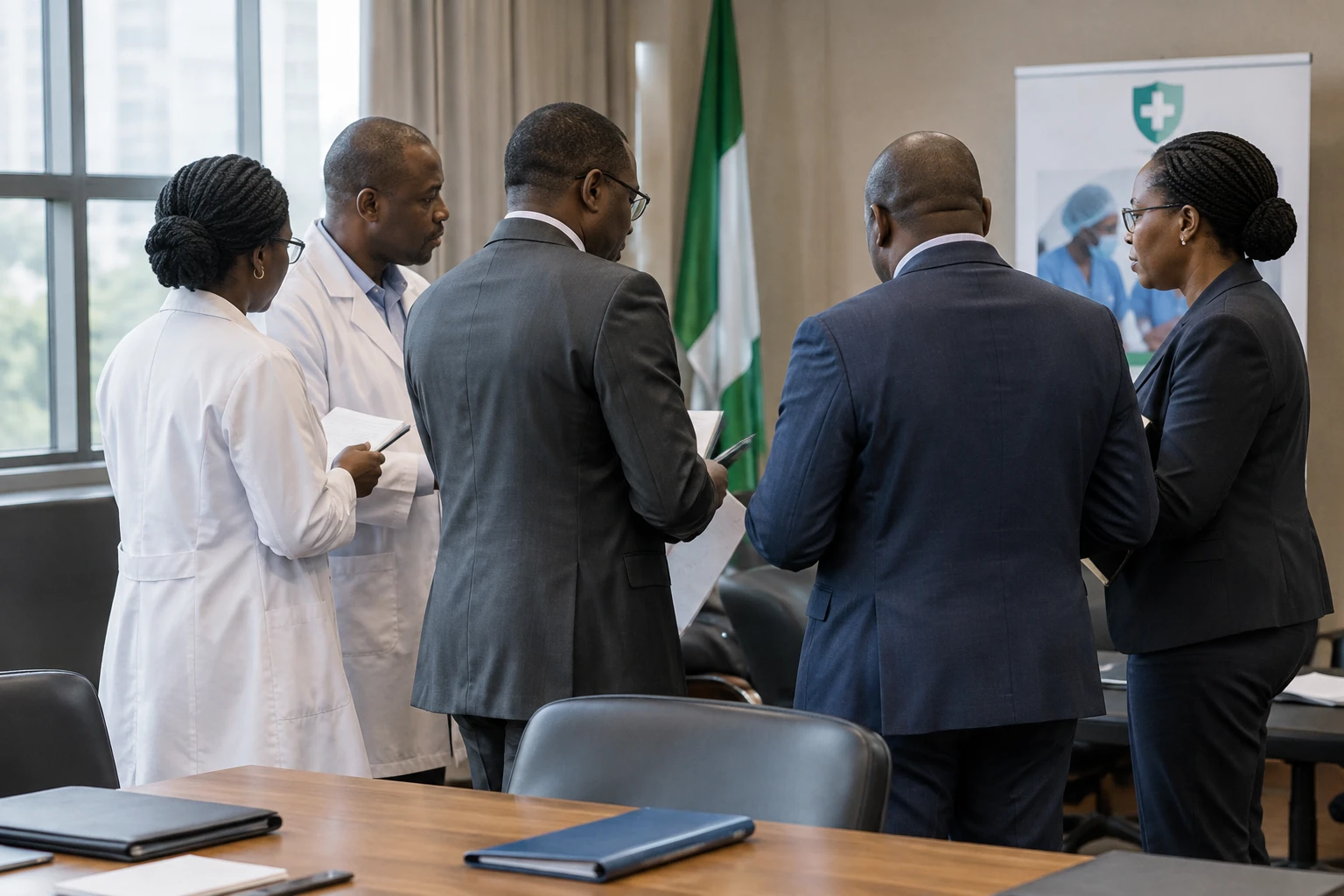
A confirmed Ebola case in Abuja and a former Senegalese president’s withdrawal from the race to lead the UN reflect two different realities. One is testing Nigeria’s health preparedness and regional coordination. The other is a reminder that Africa’s access to international posts also depends on the balance of power between states.
Confirmed case prompts swift response in Nigeria
The Nigerian government confirmed a case of Ebola virus disease in the Federal Capital Territory, where Abuja is located, on 20 October 2026. The patient, a woman who had arrived from Uganda, was isolated and given treatment. Authorities began tracing people who may have been in contact with her. The Federal Ministry of Health said 44 contacts had been identified in the first days of the response.
The distinction matters: as of the information available, authorities were reporting one confirmed case, not widespread transmission in Nigeria. Virus sequencing showed a genetic relationship with the virus detected in a case in Kenya. This sheds light on the link between the events, but does not by itself establish where or when the patient was infected.
Nigeria had stepped up surveillance after a case imported into Kenya was confirmed on 6 October. Its Nigeria Centre for Disease Control (NCDC) had already worked on screening, isolation, laboratory testing and contact tracing. The country had also gained significant experience during the 2014 West African epidemic, which was contained after a case arrived in Lagos. That experience is an asset, but does not remove the need for a response tailored to the current strain.
The current outbreak is caused by the Bundibugyo virus. It began in the Democratic Republic of the Congo and spread to several countries. The Nigerian case underscores the reach of regional travel: the person concerned had travelled from Uganda, while cases were also being reported in Kenya. Health authorities are examining travel routes and contacts, but the precise circumstances of transmission remain to be established.
For the public, the immediate priority is reliable and accessible information. Ebola is transmitted mainly through direct contact with the bodily fluids of a sick or deceased person, not simply by being in the same space. Healthcare workers and people who have had close contact are particularly affected by monitoring measures. In Abuja, the priority is therefore to identify contacts quickly and protect medical teams. In a large and densely populated country, surveillance must also remain alert to travel to other cities.
Nigeria’s Ministry of Health and the NCDC are coordinating the response with the health authorities of the Federal Capital Territory, the World Health Organization and Africa CDC, the African Union’s public health agency. This cooperation matters beyond national borders. The Economic Community of West African States (ECOWAS) brings together Nigeria and its neighbours, but transport links with Central and East Africa also make broader coordination necessary.
Macky Sall’s withdrawal exposes divided support
At the UN, former Senegalese president Macky Sall withdrew his candidacy for the post of secretary-general on 17 October. Burundi had nominated him in March. In announcing his decision, he cited the consultations following the Security Council’s informal straw poll, held on 16 October, and said he wanted to help pave the way for a consensus candidate.
The poll was not a public election with a conventional vote count. Security Council members submit confidential indications of their preferences among the candidates, before any possible recommendation to the General Assembly. According to information published about the process, Sall received ten ‘discourage’ indications in the informal poll. This result points to significant obstacles, but does not reveal each member’s detailed position or allow his withdrawal to be attributed to a single cause.
His candidacy had also highlighted a political difficulty in Africa: the lack of unanimous continental support. Burundi put his name forward, but it did not secure a clear consensus within the African Union. His withdrawal can therefore be seen both as a personal decision and as recognition of the limits of a candidacy without consolidated regional backing.
The unwritten rule of geographical rotation also weighs on this succession. It fuels the expectation that an African candidate could lead the organisation after António Guterres, whose term is due to end in late 2026. But regional origin does not guarantee election. The secretary-general is recommended by the Security Council, where the five permanent members have veto power, and then appointed by the General Assembly.
For Senegal, the withdrawal closes a diplomatic chapter linked to Macky Sall’s international legacy as the country’s president from 2012 to 2024. For African states, it raises a broader question: how can demographic weight and advocacy for fairer representation be turned into collective support, and then into influence in multilateral institutions? The debate is not limited to choosing an individual. It also concerns the ability of African governments to agree in advance.
Two issues, one need for coordination
The two issues involve different mechanisms. In the case of Ebola, the urgency is measured in days: confirm cases, trace contacts and share health information quickly. At the UN, the succession is shaped by negotiations between states and within the Security Council. In both cases, however, regional coordination affects each country’s room for manoeuvre.
For Nigeria, the next concrete indicator will be how contact tracing progresses and whether or not new infections emerge. For Macky Sall’s candidacy, attention shifts to the other contenders and the consultations that will precede the Security Council’s recommendation. These issues are a reminder that African affairs take shape on several scales: in health services and everyday travel, as well as in the institutions where the continent’s political representation is negotiated.
Nigerian health authorities confirmed the case and outlined the initial measures in a statement from the Federal Ministry of Health. The World Health Organization is monitoring the regional spread of the disease. Macky Sall’s withdrawal is recorded in the official UN secretary-general selection dossier.



