Algeria
 Egypt
 Libya
 Morocco
 Sudan
 Tunisia
 Benin
 Burkina Faso
 Cabo Verde
 Côte d'Ivoire
 Ghana
 Guinea
 Guinea-Bissau
 Liberia
 Mali
 Mauritania
 Niger
 Senegal
 Sierra Leone
 The Gambia
 Togo
 Cameroon
 Central African Republic
 Chad
 DR Congo
 Equatorial Guinea
 Gabon
 Republic of the Congo
 São Tomé and Príncipe
 Burundi
 Comoros
 Djibouti
 Eritrea
 Ethiopia
 Kenya
 Madagascar
 Malawi
 Mauritius
 Mozambique
 Rwanda
 Seychelles
 Somalia
 South Sudan
 Tanzania
 Uganda
 Angola
 Botswana
 Eswatini
 Lesotho
 Namibia
 South Africa
 Zambia
 Zimbabwe
When agricultural advice becomes a matter of economic survival
In many rural areas of Nigeria, a good season no longer depends on rain alone. It also depends on accurate information, received at the right time and understood on the ground. When a maize farmer is unsure whether to treat a disease, change seed or delay fertiliser application, a few days’ delay can be enough to lose a harvest. That is the challenge of agricultural advice: a discreet but decisive service for food security, rural incomes and market stability.
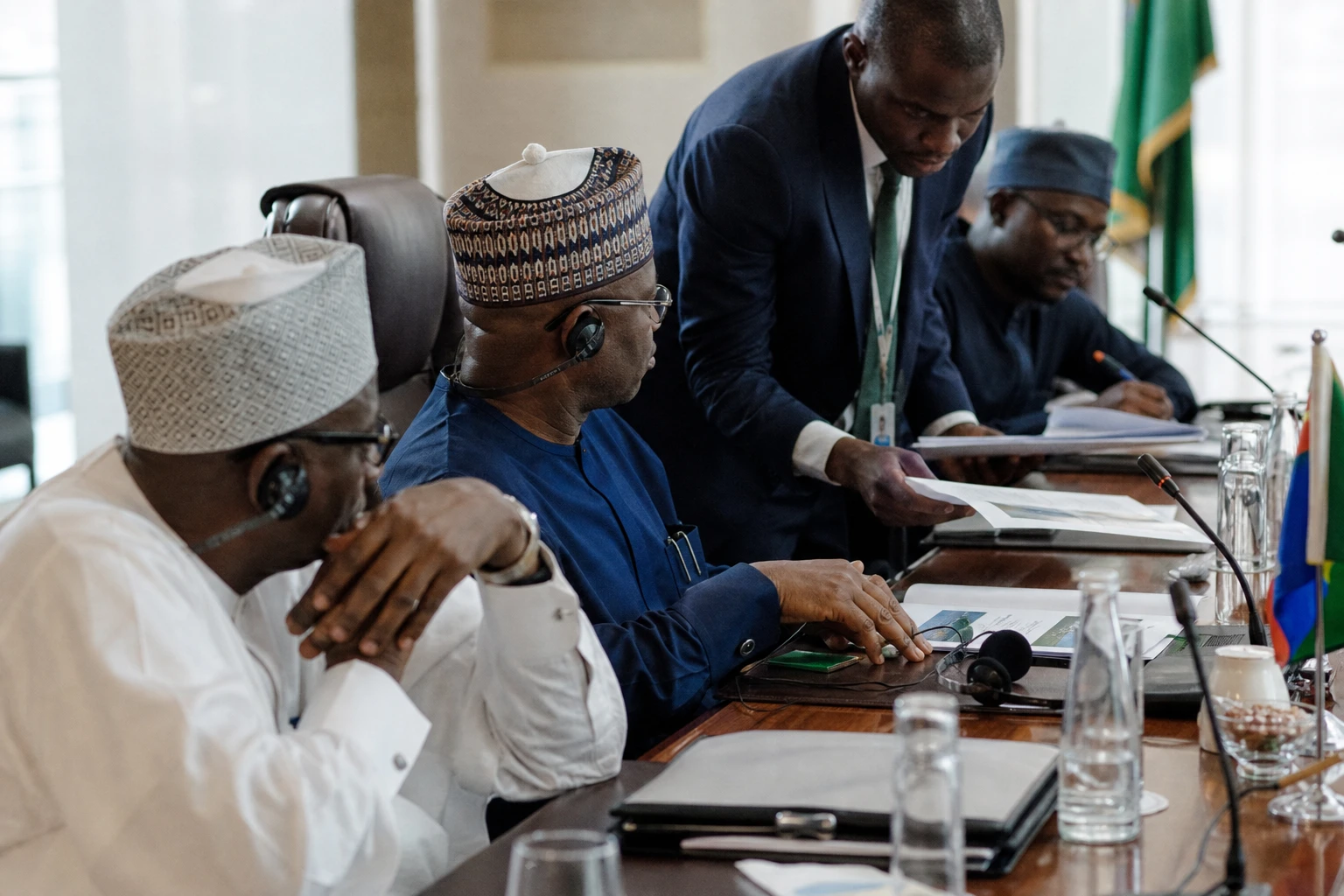
Nigeria faces a familiar disadvantage. The country has a huge population of smallholders, often cited as representing about 80% of producers and a very large share of national food production. At the same time, West Africa is strengthening its regional food security arrangements within ECOWAS, the West African organisation that also coordinates tools such as the regional food security reserve and agricultural information systems. In Abuja, the challenge is therefore twofold: feeding a rapidly growing population and preventing the gap between public policy and village realities from continuing to deepen losses.
An extension system too stretched to reach farmers
Data from the 2024 report on the wet-season farming campaign paint a clear picture: the national ratio of extension agents to farming households is 1 to 6,446, far below the generally accepted target of around 1 to 800 to 1 to 1,000 households. The same document also shows wide disparities between states. Kwara comes close to the benchmark, at about 1 to 1,000, while Akwa Ibom has one agent for every 24,468 families. At the other end of the scale, some states remain a long way from providing personalised support.
This imbalance undermines the quality of the service. An overburdened adviser cannot make more visits, closely monitor farming households or respond to health emergencies at the pace of the seasons. The NAERLS report also says that in 2024 several states recorded few visits, irregular knowledge-transfer meetings and, in some cases, no data on active agents. In other words, the chain linking research to the farm remains fragile just as production costs are rising, food prices are soaring and climate shocks are making technical choices more difficult.
This fragility is not abstract. It affects smallholders first: they sell part of their harvest to buy seed, fertiliser and fuel, or to pay school fees. It also affects rural women, who are often less well served by conventional systems, and young people seeking incomes in a more commercial form of agriculture. In this context, agricultural advice is not just about “producing better”. It helps reduce losses, protect margins and narrow the gap between farms with regular support and those left to work in the dark.
Digital tools as an extension of the field, not a replacement
Several players are promoting a hybrid solution to this bottleneck: human agents better equipped with digital tools. The idea is not to eliminate a local presence, but to extend its reach. Technical content is converted into text messages in local languages, voice messages, modules accessible on phones and platforms able to provide quick answers on a disease, an input dose, a planting calendar or a market price. In its Nigeria strategy, AGRA says it acts as a “system catalyst” and works with national institutions and private partners to digitise existing content and make it usable at the last mile.
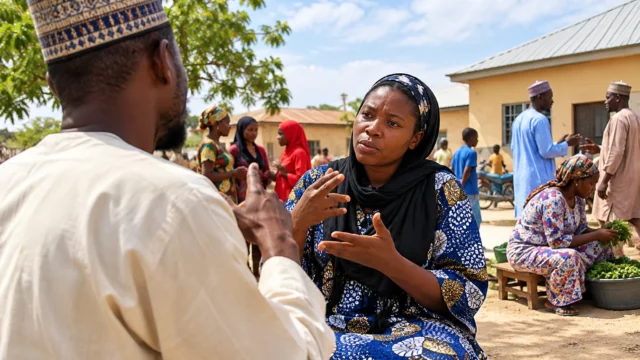
This approach relies on community advisers, sometimes modelled on Village-Based Advisors, who are trained to stay close to farmers while using digital tools. The principle is simple: if a farmer in Kaduna, Niger or Nasarawa reports a maize disease or asks about the fertilisation schedule, a nearby adviser can find a validated answer, translate it into an accessible format and pass it on quickly. Several programmes in Nigeria have already shown that this model can extend the reach of agricultural advice, build trust and create additional income for field advisers.
The method’s strength lies in its flexibility. It can be used in states where the public network is overstretched, as well as where farmers are far from administrative services. It can also better include women and young people, provided that training, language and access to phones do not become new barriers to inclusion. Available examples show a rising share of women among community advisers, as well as the model’s capacity to generate commissions or paid services when the added value is clear, particularly in diagnosis, market access or climate-smart agriculture.
A central question remains: who will fund, coordinate and sustain the system? This is where the African perspective on the issue matters. ECOWAS is now emphasising the digitisation of agricultural services, early-warning systems and consistency between national policies and regional frameworks. In short, Nigeria is not starting from scratch, but it must avoid a patchwork of pilot projects without a common architecture. If Abuja succeeds in institutionalising this hybrid model, it could become a reference for other West African countries facing the same shortage of agents, the same climate shocks and the same pressure on prices.
The implications therefore extend far beyond Nigeria. In a region where food security remains under pressure, public reserves are being called upon and markets are increasingly vulnerable to disruption, digital agricultural advice could become an essential link in resilience. In Abuja, the real battle is not technological in the narrow sense. It is about ensuring that research, extension services and public decision-making finally speak the same language as farmers.