
 Algeria
 Egypt
 Libya
 Morocco
 Sudan
 Tunisia
 Benin
 Burkina Faso
 Cabo Verde
 Côte d'Ivoire
 Ghana
 Guinea
 Guinea-Bissau
 Liberia
 Mali
 Mauritania
 Niger
 Senegal
 Sierra Leone
 The Gambia
 Togo
 Cameroon
 Central African Republic
 Chad
 DR Congo
 Equatorial Guinea
 Gabon
 Republic of the Congo
 São Tomé and Príncipe
 Burundi
 Comoros
 Djibouti
 Eritrea
 Ethiopia
 Kenya
 Madagascar
 Malawi
 Mauritius
 Mozambique
 Rwanda
 Seychelles
 Somalia
 South Sudan
 Tanzania
 Uganda
 Angola
 Botswana
 Eswatini
 Lesotho
 Namibia
 South Africa
 Zambia
 Zimbabwe
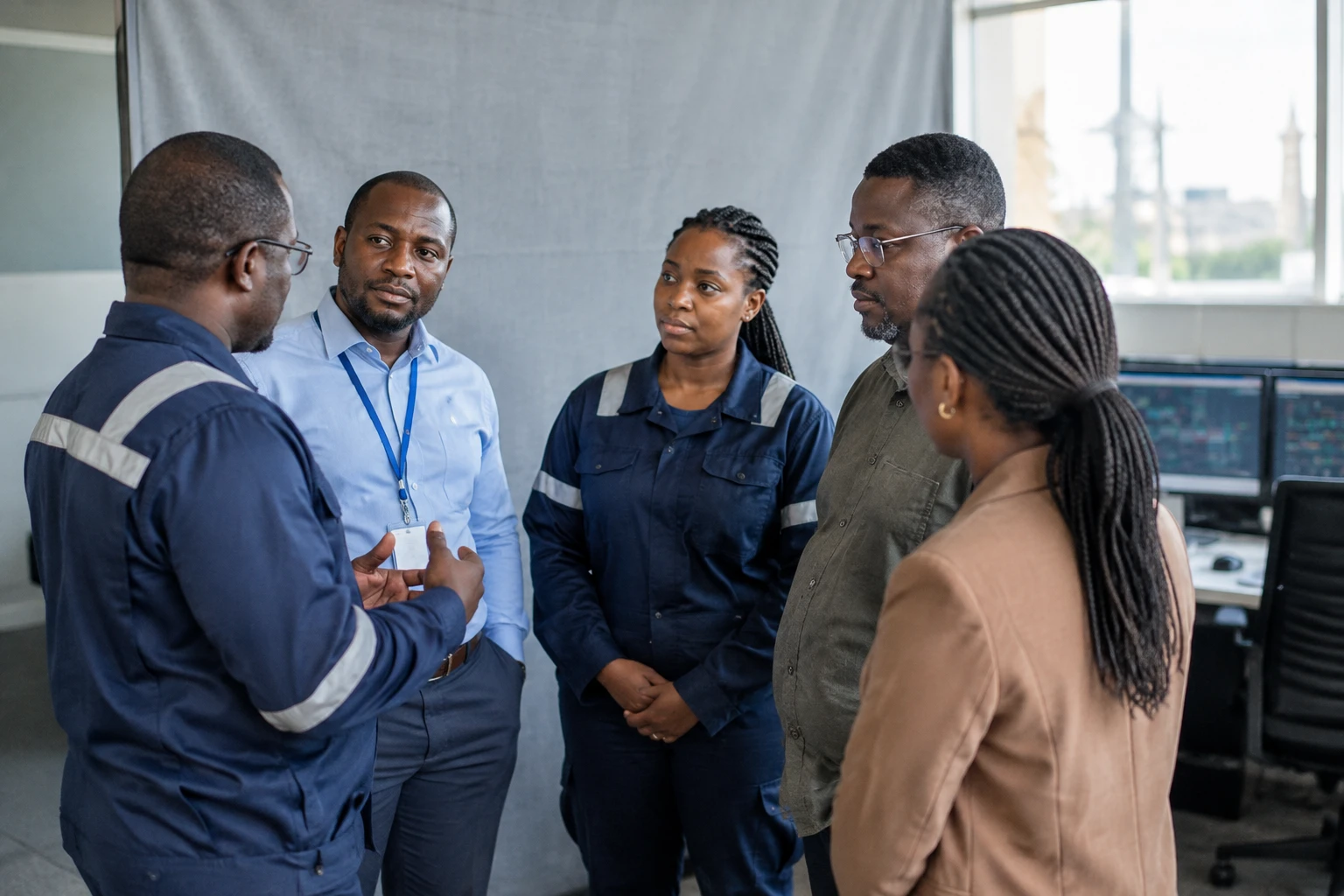
A refinery producing more does not, by itself, guarantee cheaper fuel or regular supplies. In Nigeria, the artificial intelligence proposed for the Lekki plant is primarily intended to help its teams get more out of already vast facilities. The promised benefits, however, remain to be demonstrated in practice.
An industrial promise, not yet a realised gain
On 26 October 2026, Honeywell Technologies announced the launch of Forge Plant Cognition at the Dangote refinery, located in Lekki, Lagos State. Based on preliminary data, the US group estimates that the tool could generate more than $60 million in gross annual operating benefits when the site is running at full capacity. That would amount to more than 29 cents per barrel processed, according to the company. Honeywell’s announcement on the deployment of its industrial AI states that this calculation excludes installation costs and is not a guarantee of results.
The platform is designed to combine real-time production data with technical knowledge of refining processes. It is intended to identify bottlenecks, anticipate certain anomalies and suggest adjustments. Computer models and a digital representation of the plant are also expected to help teams simulate changes before applying them. NVIDIA and Dell are supplying technologies used by the system, according to Honeywell.
The outcome will nevertheless depend on very practical factors: the type of crude oil used, data reliability, unit utilisation rates and the teams’ ability to implement the recommendations. Margins on refined products will also matter. An estimate based on full capacity therefore does not show how much the tool will deliver under actual operating conditions.
The refinery is expanding as the market is reshaped
The launch of the tool accompanies an expansion project. The refinery’s nameplate capacity is 650,000 barrels per day. Dangote is targeting 1.4 million barrels a day, following an expansion announcement backed by Honeywell in November 2025. The target announced at the time was 2028; the timetable and ramp-up remain industrial objectives, not capacities already achieved. The partnership announced to increase processing capacity also provides for technologies, equipment and services intended to enable the processing of a wider range of crude oils.
This trajectory is part of a change already visible in the Nigerian market. According to data from the national regulatory authority, reported by Nigerian business outlet Nairametrics, the refinery supplied about 50 million litres of petrol a day to the domestic market in the first half of 2026. Imports nevertheless continued to play a role: in August, they still stood at 14.6 million litres a day, while July’s imports were higher. Recent Nigerian figures on fuel supply thus show a transformation under way, rather than a definitive end to purchases from abroad.
For the authorities in Abuja, domestic production can limit exposure to disruptions in international markets and the foreign currency needs associated with imports. But the impact on motorists, transport operators and businesses will also depend on prices, the regularity of deliveries and how distribution networks operate. Industry players will also have to contend with crude supplies and regulatory decisions. Better technical performance does not automatically resolve these issues.
Skills and market power
Honeywell also presents the platform as a tool for transferring know-how. Recommendations built into the software could help Nigerian engineers and operators diagnose certain problems more quickly. Dangote says it aims for Nigerians to make up 70% of its workforce as its headcount grows. This is a target announced by the group, not a proportion of employees that has already been verified. The question will be what role local teams have in decisions, maintenance and process improvements, beyond simply having access to the tools.
The scale of the facility also gives Dangote considerable weight in the sector. Higher production can increase the availability of products made in Nigeria, but it also concentrates more activity in the hands of a private player. For distributors, other refineries and consumers, competition, access to products and prices will remain decisive. The national debate is therefore about how the market works as much as about refining capacity.
An issue that extends beyond Nigeria’s borders
Across West Africa, the ability of a major refinery to supply products beyond Nigeria matters in a region where energy trade and import needs cross national borders. ECOWAS, the Economic Community of West African States, is working on regional energy cooperation, among other areas. But additional production capacity does not automatically mean regular deliveries to neighbouring countries: volumes must be available, and contracts, transport infrastructure and suitable commercial terms are also needed.
The Lekki project thus combines a technological promise with very tangible choices: securing crude, keeping units running, training teams and selling the products. The first indicator to watch will be not the theoretical value of the gains but how they are measured after deployment, with costs taken into account. Actual progress in capacity and changes in Nigerian imports will then help determine whether this modernisation durably transforms the country’s supply and creates a more stable offer for its neighbours.



