
 Algeria
 Egypt
 Libya
 Morocco
 Sudan
 Tunisia
 Benin
 Burkina Faso
 Cabo Verde
 Côte d'Ivoire
 Ghana
 Guinea
 Guinea-Bissau
 Liberia
 Mali
 Mauritania
 Niger
 Senegal
 Sierra Leone
 The Gambia
 Togo
 Cameroon
 Central African Republic
 Chad
 DR Congo
 Equatorial Guinea
 Gabon
 Republic of the Congo
 São Tomé and Príncipe
 Burundi
 Comoros
 Djibouti
 Eritrea
 Ethiopia
 Kenya
 Madagascar
 Malawi
 Mauritius
 Mozambique
 Rwanda
 Seychelles
 Somalia
 South Sudan
 Tanzania
 Uganda
 Angola
 Botswana
 Eswatini
 Lesotho
 Namibia
 South Africa
 Zambia
 Zimbabwe
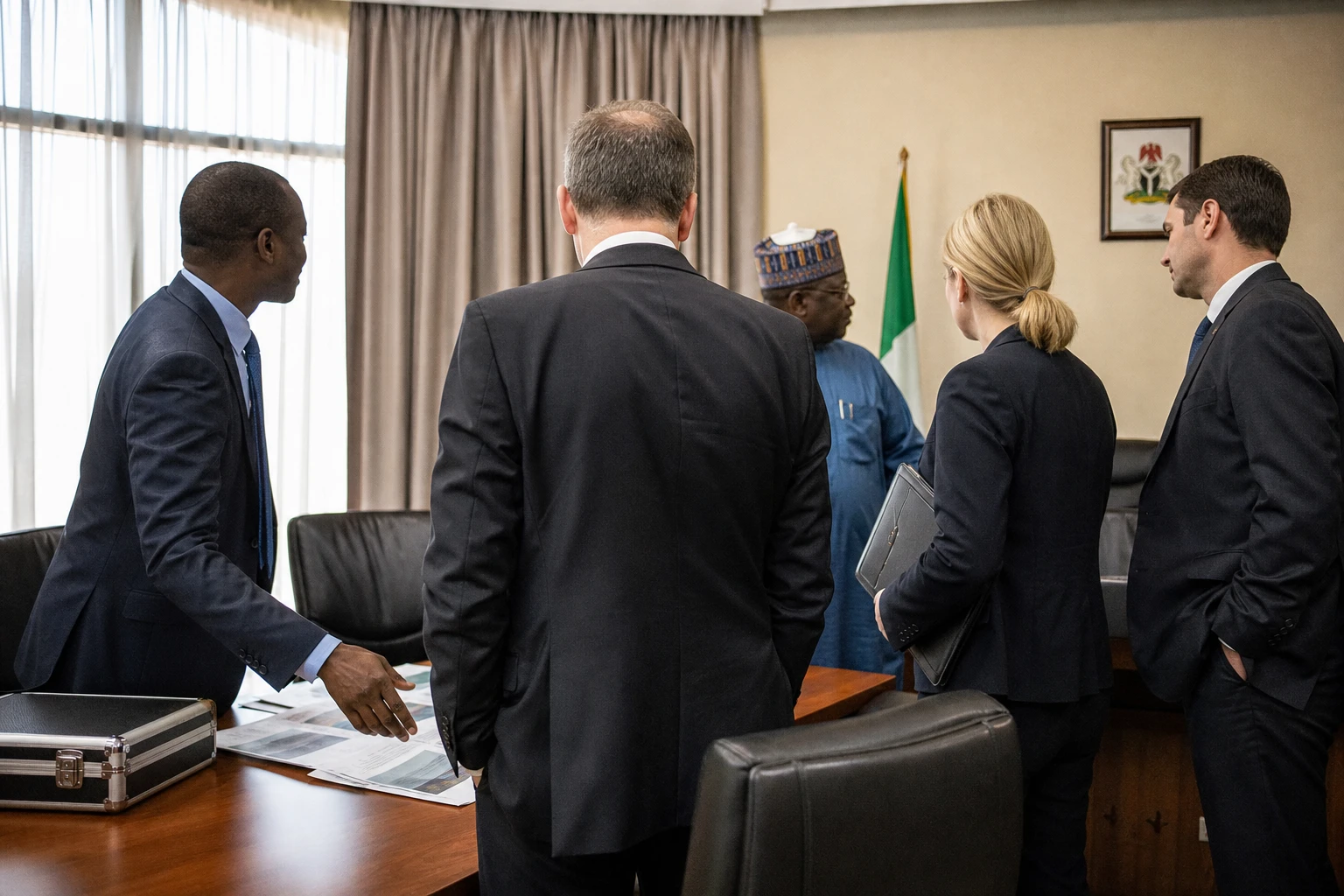
For Abuja, the stakes go beyond buying ammunition. Nigeria now wants greater control over its manufacture and maintenance and, eventually, over some of the technologies used by its armed forces. This approach is taking shape through discussions with the Czech Republic.
Co-operation focused first on production
From 20 to 22 September 2026, Nigeria’s Minister of State for Defence, Bello Matawalle, led a delegation to Prague. He met his Czech counterpart, Lieutenant General Jaromír Zuna, to discuss industrial and military co-operation.
According to a statement from Nigeria’s Federal Ministry of Information, Abuja asked Prague to support the Defence Industries Corporation of Nigeria, or DICON, in setting up an ammunition production line in Nigeria.
The discussions also covered technology transfer. The project includes unmanned aerial vehicles, commonly known as drones, as well as other equipment for the defence and security forces.
The Czech side said it was willing to consider providing this support. So far, no public timetable for commissioning, investment amount or technical details about the ammunition concerned have been announced. This is therefore a co-operation project, not yet an operational factory.
This distinction matters. In the defence industry, a political announcement still has to clear several hurdles: a feasibility study, site selection, financing, export controls, staff training and product certification. Technology transfer may also be restricted by national and European rules governing military equipment.
DICON at the heart of Nigeria’s strategy
Established to develop the country’s defence industrial capabilities, DICON has for several years sought to reduce Nigeria’s reliance on foreign purchases. The state-owned company has facilities in Kaduna, in the north of the country, where it carries out activities related to weapons and maintenance.
On its official website, DICON describes boosting local production as a way to improve national security and limit reliance on equipment made abroad.
The focus on ammunition has a very practical rationale. Military operations quickly use up stocks. Domestic capacity can shorten supply times and make it easier to adapt equipment to the needs of Nigeria’s armed forces. It can also reduce foreign currency outflows, although the initial stages of such a project often require the import of machinery, components and raw materials.
The federal budget gives an indication of the importance attached to the sector. The 2026 budget proposal allocates 5,410 billion naira to defence and security. The figure appears in the budget speech published by Nigeria’s presidency.
This allocation covers several priorities. It is intended to fund the modernisation of the armed forces, intelligence, border surveillance, domestic operations and equipment procurement. The figure does not, however, mean that all the funding will go directly to DICON or ammunition production.
The finance act does nevertheless include allocations related to DICON’s infrastructure and the procurement of products needed to manufacture weapons and ammunition. The budget text published by the Policy and Legal Advocacy Centre mentions, in particular, the modernisation of industrial complexes and the purchase of lubricants and chemicals for production lines.
A partnership to be calibrated amid regional tensions
For Nigeria, the drive for industrial autonomy comes amid a difficult security environment. National forces are engaged on several fronts, notably against armed groups operating in the north-east and north-west. They must also monitor extensive land and maritime borders.
This situation affects different parts of the country in different ways. Units deployed in rural areas need regular, rapid supplies. Urban centres, meanwhile, concentrate industrial infrastructure, skilled staff and logistics networks. The success of domestic production will therefore depend as much on technology as on site security and reliable transport.
The co-operation also fits into the trajectory of the Economic Community of West African States, ECOWAS, the regional organisation responsible for economic integration and co-ordination on peace and security issues. Abuja remains a central player in this framework, despite tensions between ECOWAS and the military-led governments of Mali, Burkina Faso and Niger.
In September 2026, ECOWAS further stepped up its engagement with Nigeria’s military authorities over its standby force. This structure is intended to be able to mobilise military, police and civilian components in the event of a regional crisis. Local equipment production could eventually support national and regional capabilities, but no export agreement with neighbouring states has been announced as part of the Czech project.
The issue is sensitive. Greater production capacity can improve an army’s responsiveness. It also requires robust systems for tracking, storage and transfer controls. In a region where weapons from several conflicts are in circulation, securing stocks and preventing diversion will remain essential.
Prague is also seeking a foothold in African markets
The Czech Republic has an industry specialising in weapons, military vehicles, land equipment and some aviation technologies. For its companies, Nigeria is an important market because of the size of its armed forces, its economic weight and its modernisation needs.
For Abuja, the value of the partnership goes beyond buying finished products. Skills transfer, training Nigerian technicians and establishing a local maintenance chain may have greater long-term value. They could also create skilled jobs in engineering, metallurgy, electronics and logistics.
The risk, however, would be to reduce co-operation to the simple assembly of imported equipment. A genuine expansion of industrial capacity requires sustained access to components, testing laboratories, quality standards and the ability for Nigeria to carry out maintenance without constant reliance on its foreign partner.
The next steps will be decisive
What happens next will depend on a possible formal agreement between the two governments and the definition of a specific industrial programme. There are many questions to watch: the location of the production line, the type of ammunition, the share of domestic production, financing, the timetable and the export control regime.
Nigeria is seeking to turn its defence spending into industrial capacity. The Czech Republic, for its part, wants to deepen its presence in a strategic African market. If the project goes ahead, it could strengthen Nigeria’s operational autonomy and give Abuja a new tool for co-operation with its ECOWAS neighbours. But its credibility will depend less on announcements than on the establishment of safe, controlled production that is genuinely managed on Nigerian soil.



