Algeria
 Egypt
 Libya
 Morocco
 Sudan
 Tunisia
 Benin
 Burkina Faso
 Cabo Verde
 Côte d'Ivoire
 Ghana
 Guinea
 Guinea-Bissau
 Liberia
 Mali
 Mauritania
 Niger
 Senegal
 Sierra Leone
 The Gambia
 Togo
 Cameroon
 Central African Republic
 Chad
 DR Congo
 Equatorial Guinea
 Gabon
 Republic of the Congo
 São Tomé and Príncipe
 Burundi
 Comoros
 Djibouti
 Eritrea
 Ethiopia
 Kenya
 Madagascar
 Malawi
 Mauritius
 Mozambique
 Rwanda
 Seychelles
 Somalia
 South Sudan
 Tanzania
 Uganda
 Angola
 Botswana
 Eswatini
 Lesotho
 Namibia
 South Africa
 Zambia
 Zimbabwe
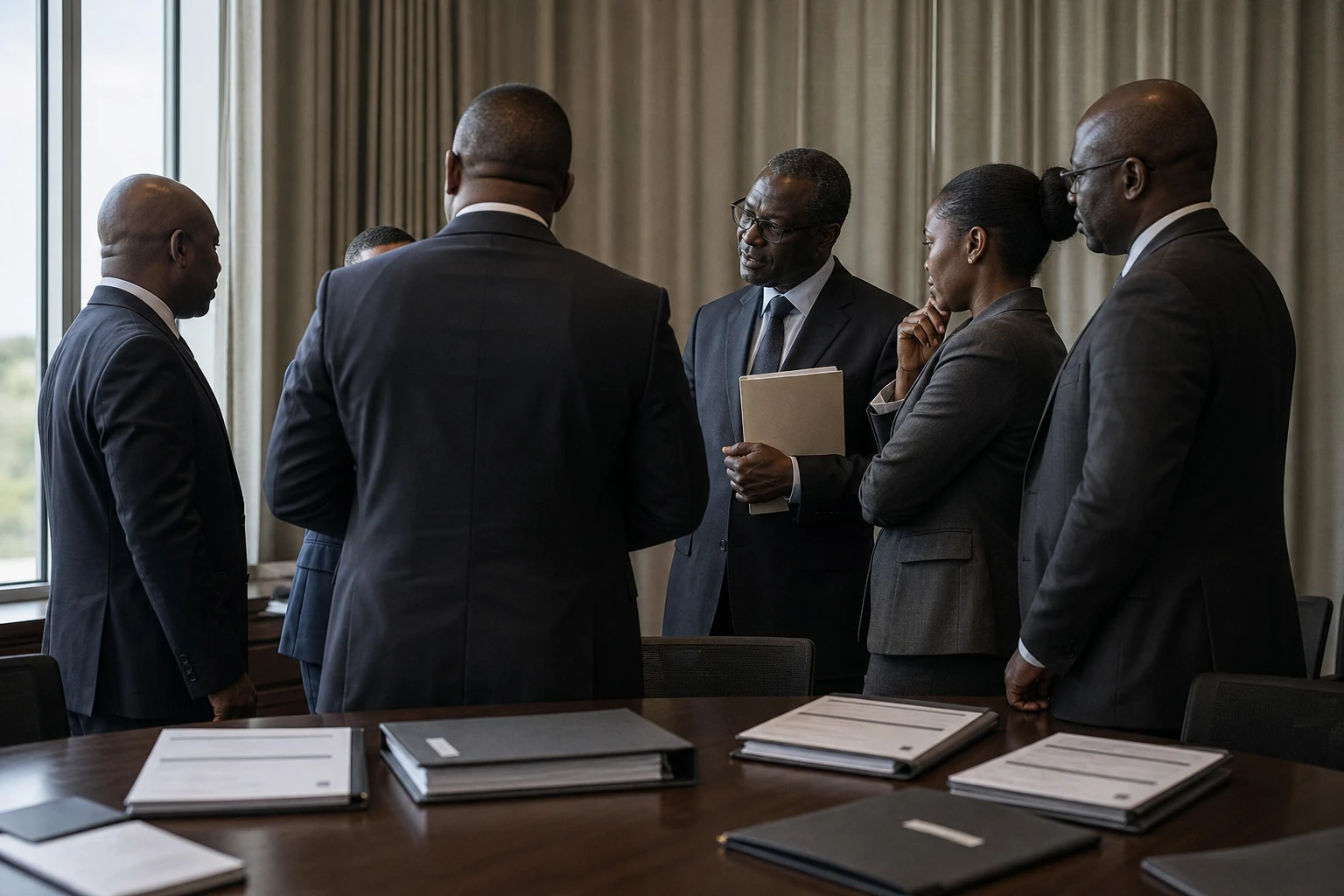
In Nigeria, a recent investigation shifts the debate on corruption to a less visible arena: US property records. It describes how funds linked to Nigerian public officials may have flowed into the US property market, sometimes while those officials were still in office.
Mapping 284 properties
The report, published in Abuja on 22 September 2026 by the Platform to Protect Whistleblowers in Africa (PPLAAF), in partnership with the Anti-Corruption Data Collective (ACDC), identifies 284 properties in the United States. They are said to be linked to 61 current or former Nigerian officials, as well as their relatives, associates or affiliated companies.
The properties have an estimated combined value of nearly $271 million, or about 370 billion naira, according to the report. The acquisitions date back to 1991. However, 152 properties, valued at nearly $177 million, are said to have been bought while the officials concerned were still in office.
Investigators consulted land registries, company documents, court records and other public data. Their work does not, in itself, constitute a court ruling. A property associated with a public official does not automatically prove an offence. It may, however, indicate the need to investigate the source of the funds and the true beneficiaries.
The most sensitive figure concerns the method of payment. According to the authors, 230 properties, or about 81 per cent of the total, were acquired without apparent financing. Their value is estimated at $232 million. In anti-money laundering terms, a property transaction paid for in cash by a politically exposed person is a red flag that calls for enhanced checks.
Public funds reaching the US property market
The investigation does not present the 61 people examined as a legally homogeneous group. It nevertheless states that 39 of them have previously been publicly accused, charged or convicted in corruption cases. Others appear in parts of the Nigerian state considered vulnerable to the risk of embezzlement.
Officials from state governments form the largest group in the study. Security personnel come next, followed by executive officials and legislators. Properties associated with the security sector, their families or associates are estimated to be worth about $93 million, or nearly 34 per cent of the total value identified.
This figure points to a longstanding question in Nigeria: the traceability of defence and security spending. Since 2009, the country’s north-east has continued to face the Boko Haram insurgency and other armed groups. Military operations consume substantial budgets, while people in Borno, Yobe and Adamawa continue to suffer displacement, destruction and unequal access to essential services.
The report cites the case of Sambo Dasuki, a former national security adviser under President Goodluck Jonathan. It recalls the accusations against him in the case concerning funds intended to fight Boko Haram. These proceedings have been subject to challenges and successive judicial developments. They should therefore not be confused with a final conviction on every point mentioned.
Beyond the names, the issue is material. Every dollar diverted from a public programme can reduce the resources available for hospitals, schools, rural electrification or the protection of communities exposed to violence. The impact is not the same everywhere. Urban households can sometimes make up for shortfalls with private income. In rural areas, the loss of public investment can mean an unbuilt road, an unequipped health centre or a prolonged lack of electricity.
The weaknesses of shell companies and cash transactions
The investigation’s authors identified 104 properties bought through companies, worth about $140 million. In 12 cases, entities registered in the United States appeared to be linked to Nigerian companies associated with the officials examined.
These arrangements are not necessarily illegal. A company can be used to manage assets, protect privacy or organise an investment. The problem arises when its structure makes it impossible to identify the beneficial owner — the person who actually controls the property or profits from the transaction.
The report also notes that 147 properties, with an estimated value of $111 million, were said to have been acquired in the names of the officials themselves, their spouses or companies registered in their names. In some cases, the people concerned had already been publicly identified as politically exposed persons.
This situation raises questions for both countries. In Nigeria, it concerns asset declarations, the monitoring of public officials and the ability of anti-corruption agencies to recover illicitly acquired assets. In the United States, it raises questions about the checks applied by banks, estate agents, lawyers and companies that set up entities.
A case that reaches beyond Nigeria’s borders
Nigeria is West Africa’s largest economy and the continent’s most populous country. Its financial flows affect the entire region. Within ECOWAS, the Economic Community of West African States, capital can move across several jurisdictions before reaching a global financial or property centre.
The issue is therefore not confined to Abuja. It concerns regional judicial co-operation, the monitoring of cross-border transfers and the return of assets. It also concerns the countries that receive the funds. A credible anti-corruption policy cannot ask African countries to strengthen their controls while allowing foreign markets to absorb suspicious assets.
What happens next will depend on the ability of Nigerian and US authorities to verify the cases one by one. They will need to establish the source of the funds, identify the real owners, distinguish lawful purchases from unexplained wealth and determine whether offences can be prosecuted. The report thus opens a line of inquiry. It does not close the case.