Algeria
 Egypt
 Libya
 Morocco
 Sudan
 Tunisia
 Benin
 Burkina Faso
 Cabo Verde
 Côte d'Ivoire
 Ghana
 Guinea
 Guinea-Bissau
 Liberia
 Mali
 Mauritania
 Niger
 Nigeria
 Senegal
 Sierra Leone
 The Gambia
 Togo
 Cameroon
 Central African Republic
 Chad
 DR Congo
 Equatorial Guinea
 Gabon
 Republic of the Congo
 São Tomé and Príncipe
 Burundi
 Comoros
 Djibouti
 Eritrea
 Ethiopia
 Kenya
 Madagascar
 Malawi
 Mauritius
 Mozambique
 Rwanda
 Seychelles
 Somalia
 South Sudan
 Tanzania
 Uganda
 Angola
 Botswana
 Eswatini
 Lesotho
 South Africa
 Zambia
 Zimbabwe
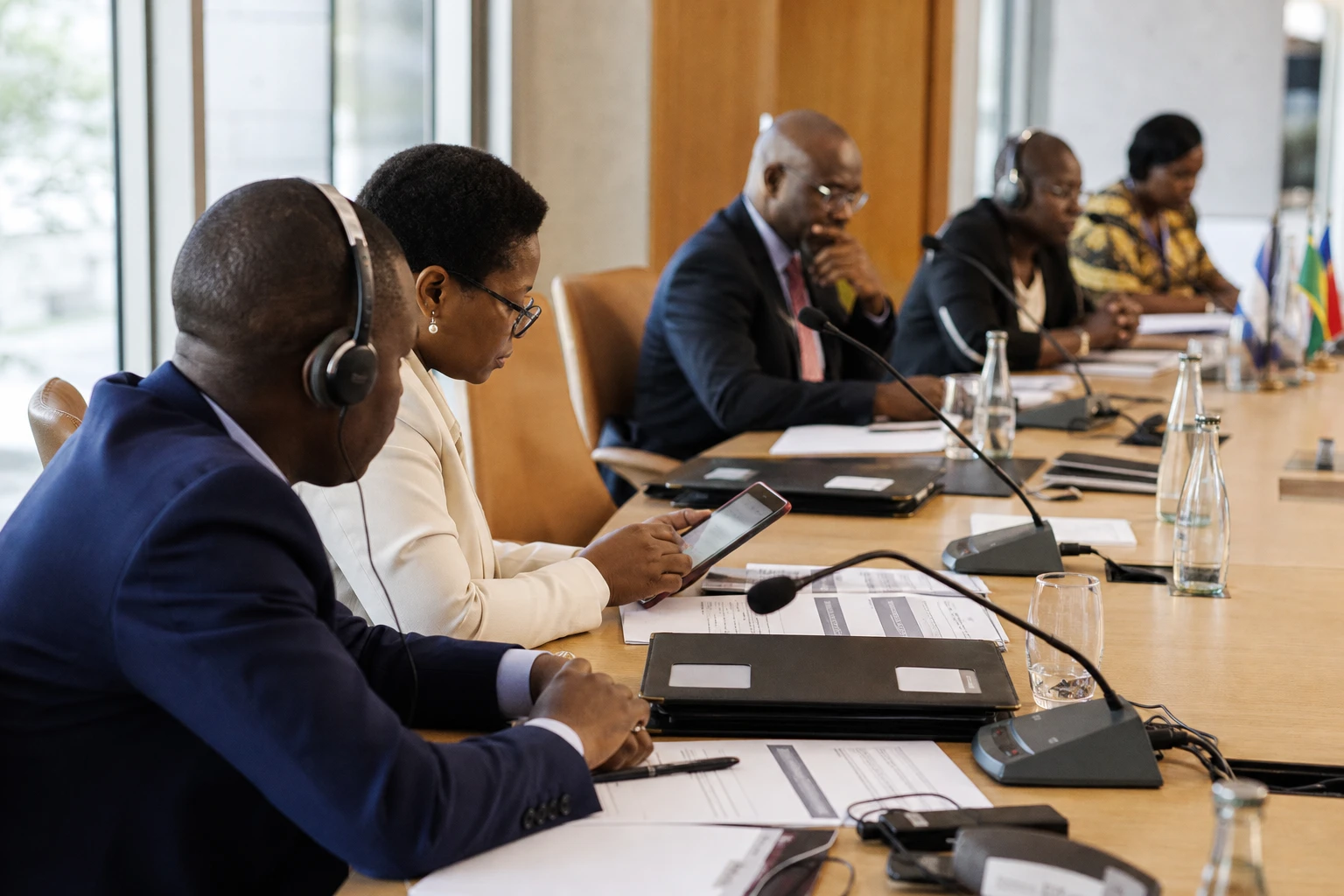
In Windhoek, solar power is no longer confined to a handful of rooftops. It is beginning to change how Namibia produces, consumes and trades electricity. But this rapid growth raises a crucial question: how can thousands of private installations be integrated without weakening the grid or leaving equipment quality to chance?
The issue goes beyond household bills. A panel connected to the grid can reduce demand from suppliers. It can also feed electricity into the network at certain times of day. The regulator therefore needs these flows to be known, measured and managed.
A market moving faster than the registers
The Renewable Energy Industry Association of Namibia, or REIAoN, wants to address this gap. The industry body has launched six working groups focused on the main obstacles still slowing the development of renewable energy in Namibia.
Two groups focus directly on distributed solar. The first is tasked with helping to strengthen the skills and standards required of installers. The second is working on “net metering”, a mechanism that allows customers to deduct from their bills some of the electricity generated by their panels and fed into the grid.
The other four groups cover independent power producers, green industries, electric mobility, dialogue with the authorities and local manufacturing. This structure reflects a broader ambition: not to limit the energy transition to importing panels and inverters.
REIAoN president Paulus Mulunga is advocating for an industry capable of creating more value in the country. The issue concerns technicians, maintenance companies, component manufacturers and the digital services needed to monitor installations.
Available estimates show the scale of the trend. Namibia is thought to have imported around 343 megawatt-peak of solar panels between 2023 and 2026. Megawatt-peak refers to the theoretical maximum output of equipment under standardised conditions.
According to data presented by Sustainable Energy Africa, nearly half of this capacity, or around 172 megawatt-peak, is thought to be installed on distribution networks. These figures are based on an estimate derived from Chinese exports, rather than a complete inventory of installations actually in operation.
This limitation matters. Large solar farms are relatively easy to identify. Equipment installed on homes, shops, farms, workshops and industrial sites is much more dispersed. Some of these systems are therefore not yet included in official databases.
Regulator seeks to regain oversight of the grid
The Electricity Control Board, Namibia’s electricity sector regulator, has acknowledged the speed of this change. In September 2026, its chief executive, Robert Kahimise, said in Windhoek that the growth of these installations could not be stopped. The challenge, rather, was to support it with appropriate rules.
The ECB has, among other measures, set up an online registration platform. It is intended to improve the recording of solar systems installed at customers’ premises and simplify procedures for small units. The regulator is aiming to process applications within 30 days for installations with a capacity of less than one megawatt.
This approach addresses a concrete technical need. As private installations proliferate, operators need to know their capacity, location and connection method. Without this information, it becomes harder to forecast stress on power lines, fluctuations in generation or the need to upgrade transformers.
Quality control also plays a central role. Poorly sized equipment or an installation that fails to meet standards can expose occupants, technicians and the grid to risks. Clearer rules can therefore protect consumers while giving reputable businesses greater certainty.
Namibia already has net metering rules dating from 2016. However, the ECB has also published draft updated rules for 2026. The text has been approved by the regulator’s board, but had not yet been promulgated at the time of the latest available information.
This transitional period creates uncertainty for households and businesses. They can invest in panels to reduce their consumption, but the precise terms for selling or receiving a credit for electricity fed into the grid remain subject to the regulatory framework applicable in each distribution area.
Reducing imports without shifting costs
Solar power is expanding at a time when Namibia relies heavily on electricity purchases from beyond its borders. In July 2026, imports accounted for 56.5% of national electricity supply, according to data from the Namibia Statistics Agency. Domestic generation reached 189,360 megawatt-hours, compared with 246,182 megawatt-hours imported.
South Africa and Zambia supplied most of this imported electricity. For Namibia, the development of decentralised generation could therefore improve security of supply and limit some regional purchases, particularly during periods of peak demand.
However, the benefits will not be the same for all stakeholders. Households able to finance an installation can reduce their dependence on the grid. Businesses with large rooftops can also stabilise some of their costs. By contrast, lower-income households, tenants and people in remote areas risk benefiting more slowly from this change.
The tariff model will therefore need to ensure that fixed grid costs do not fall more heavily on customers who cannot generate their own electricity. Net metering is not only about the price per kilowatt-hour. It also affects distributors’ financial balance and the funding of shared infrastructure.
An issue for SADC and energy sovereignty
Namibia is moving forward in a region shaped by electricity trading. As a member of the Southern African Development Community, or SADC, it relies on connections with neighbouring countries to supplement its generation. The growth of rooftop solar could gradually change these flows, provided the networks can absorb more variable generation.
The issue arises in several Southern African countries. Distributed installations often grow faster than official statistics can capture them. Regulators therefore need to develop digital registers, common standards and clearer connection procedures.
For Namibia, the next step will be twofold. It will need to finalise the net metering framework and make registration genuinely accessible to individuals, small businesses and operators based outside Windhoek. At the same time, the industry will need to show that it can improve quality, train technicians and increase the share of value created locally.
Namibian solar is thus entering a more institutional phase. Rooftop installations are being followed by planning. The success of this transition will depend less on the number of panels imported than on the country’s ability to integrate them sustainably into its grid and economy.