Algeria
 Egypt
 Libya
 Morocco
 Sudan
 Tunisia
 Benin
 Burkina Faso
 Cabo Verde
 Côte d'Ivoire
 Ghana
 Guinea
 Guinea-Bissau
 Liberia
 Mali
 Mauritania
 Niger
 Nigeria
 Senegal
 Sierra Leone
 The Gambia
 Togo
 Cameroon
 Central African Republic
 Chad
 DR Congo
 Equatorial Guinea
 Gabon
 Republic of the Congo
 São Tomé and Príncipe
 Burundi
 Comoros
 Djibouti
 Eritrea
 Ethiopia
 Kenya
 Madagascar
 Malawi
 Mauritius
 Mozambique
 Rwanda
 Seychelles
 Somalia
 South Sudan
 Tanzania
 Uganda
 Angola
 Botswana
 Eswatini
 Lesotho
 South Africa
 Zambia
 Zimbabwe
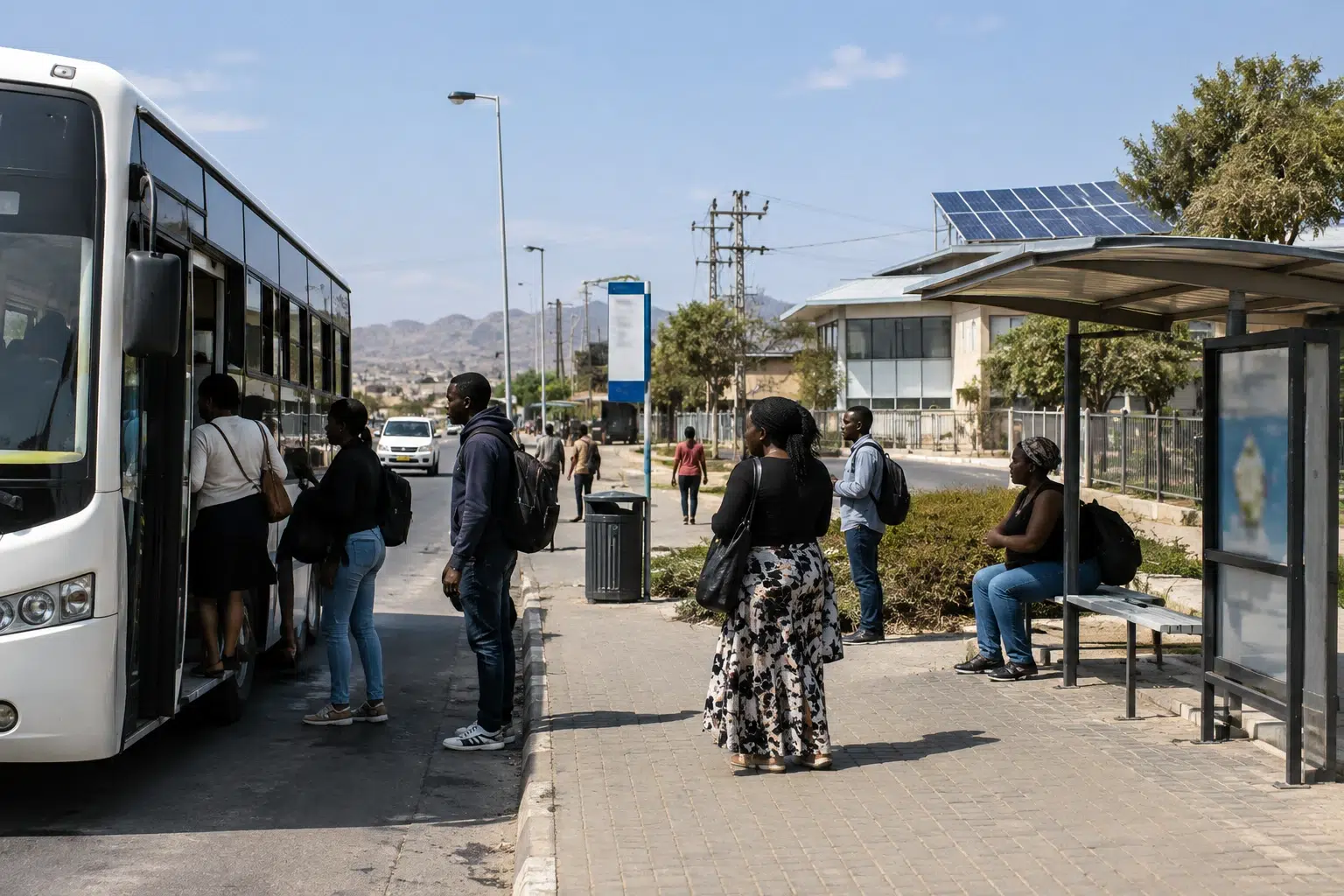
At Rehoboth, south of Windhoek, a 20-megawatt (MW) solar project is set to add a new source of electricity to Namibia’s grid. The stakes go beyond the output of a power plant: the aim is to reduce the share of electricity bought from neighbouring countries while strengthening local capacity.
Regional dependence remains high
Namibia is part of the Southern African Development Community (SADC), whose countries exchange electricity through the Southern African Power Pool (SAPP), a regional electricity generation and trading network. These exchanges help balance supply and demand. But they also expose importing countries to the availability and prices of their neighbours.
Figures published by the Namibia Statistics Agency for August 2026 illustrate this dependence: imports reportedly accounted for 65% of electricity supply, compared with 35% from local generation. A specialist Namibian media outlet reported these figures, attributing them to the national agency. They describe a particular month, not a fixed proportion for the whole year.
The use of independent power producers is part of a shift in Namibia’s electricity market. Since 2019, its so-called “Modified Single Buyer” model has allowed some private producers to sell their electricity directly to large consumers or distributors. The arrangement complements the role of NamPower, the state-owned utility that generates, purchases and transmits a substantial share of the country’s electricity.
Naruchas, the first part of a wider programme
NamPower has selected a consortium led by JCM Power for the 20 MW Naruchas photovoltaic project. The Canadian group says its partners are Broadreach Energy, Galen Group Investment and Southern Africa Group. The site is near the Naruchas substation in the Hardap region, close to Rehoboth.
Namibian environmental documentation confirms the existence of the 20 MW solar power plant project led by JCM Power. It refers to an environmental assessment process, a step distinct from the selection of the consortium for the project. The public information consulted does not specify the investment amount, financing or planned commissioning date. The award therefore does not in itself mean that the plant has already been built or connected to the grid.
Naruchas is part of a tender for six 20 MW photovoltaic plants, with a total capacity of 120 MW. The other announced sites are Zamber, Okatope, Shiyambi, Osona and Aussenkehr. The six projects are intended for existing substations or locations identified in NamPower’s procurement plan. Their delivery will depend, among other things, on the signing of contracts, financing, permits and grid connection.
This private-sector route complements projects developed by NamPower. The utility’s strategic plan mentions, among other things, an 80 MW solar installation at Omburu and a 120 MW programme awarded to independent power producers. A NamPower presentation places these projects within a wider portfolio that also includes wind, hydroelectric and storage projects. However, the announced capacities remain projects until their timelines and commissioning are confirmed.
More generation is not enough
A 20 MW plant can contribute to national supply, but its rated capacity does not correspond to constant output. Solar power depends on sunlight and does not provide electricity at night. To turn this capacity into reliable supply, transmission lines capable of carrying the power, storage or backup resources, and coordination with other power plants are also needed.
This issue affects households as well as businesses. More diverse domestic generation could reduce exposure to external purchases and support economic activity. But the benefits will depend on construction costs, the prices set out in contracts and how network expenditure is shared. The available announcements do not yet make it possible to assess the effects on the tariffs paid by consumers.
The private purchasing model could accelerate investment and broaden the range of players in the sector. However, it does not replace NamPower’s responsibility for grid security or the Namibian regulator’s role in overseeing licences and contracts. The programme’s success will also depend on the grid’s ability to integrate several solar installations without undermining the balance between generation and consumption.
A challenge for southern Africa as a whole
SADC encourages electricity trading and the integration of regional grids. The SAPP enables its members to trade across borders, but local generation remains crucial when regional supply tightens. For Namibia, imports and new power plants are therefore not mutually exclusive: they can complement each other, provided interconnections and domestic capacity keep pace.
The next step will be to see whether the projects in the 120 MW programme move from tendering to contracts and then to construction. The details still to be clarified — financing, timelines and grid connection — will make it possible to judge their actual contribution. In Windhoek and across the regions, it is this tangible progress, rather than the announcement of megawatts alone, that will show whether the country’s dependence on electricity imports is declining.