Algeria
 Egypt
 Libya
 Morocco
 Sudan
 Tunisia
 Benin
 Burkina Faso
 Cabo Verde
 Côte d'Ivoire
 Ghana
 Guinea
 Guinea-Bissau
 Liberia
 Mali
 Mauritania
 Niger
 Nigeria
 Senegal
 Sierra Leone
 The Gambia
 Togo
 Cameroon
 Central African Republic
 Chad
 DR Congo
 Equatorial Guinea
 Gabon
 Republic of the Congo
 São Tomé and Príncipe
 Burundi
 Comoros
 Djibouti
 Eritrea
 Ethiopia
 Kenya
 Madagascar
 Malawi
 Mauritius
 Mozambique
 Rwanda
 Seychelles
 Somalia
 South Sudan
 Tanzania
 Uganda
 Angola
 Botswana
 Eswatini
 Lesotho
 South Africa
 Zambia
 Zimbabwe
A date that means more than remembrance
In Windhoek, 26 August is more than a day of remembrance. For Namibians, it is a way of saying that independence did not fall from the sky. It was won at the cost of a long war, exile, imprisonment and silences that still linger within families. This year, that reminder is all the stronger as the authorities have linked the Heroes’ Day commemorations to the reburial of several fighters whose remains have been returned from South Africa.
The country has given this remembrance a place in its official calendar. The ministry responsible for public information confirms that 26 August 2026 is a public holiday, known as Heroes’ Day, while national independence is celebrated separately on 21 March. The distinction matters. It shows that the memory of the armed struggle holds a distinct place in Namibia’s national history.
The turning point of 1966
Namibian official sources and United Nations archives date the beginning of the armed struggle to 1966, following the formation of the South West Africa People’s Organization, known as Swapo, in 1960. The UN recalls that the movement launched the armed struggle that year against South African control of the territory then known as South West Africa. The first major engagement is generally associated with Omugulugwombashe on 26 August 1966.
The context was the Cold War and late-stage colonialism in southern Africa. Windhoek, now Namibia’s capital, was then under South African administration, within an apartheid system that restricted access to power, land and political representation. Namibia’s account of this period emphasises two points: first, petitions and political initiatives were not enough; second, the armed response emerged from a prolonged denial of self-determination.
In recent official speeches, Namibian authorities still describe 26 August as the moment when the fighters entered a struggle from which there was no turning back. This wording is significant. It links military remembrance to the making of the state, rather than to a simple celebration of veterans.
Reburials, remembrance and unanswered questions
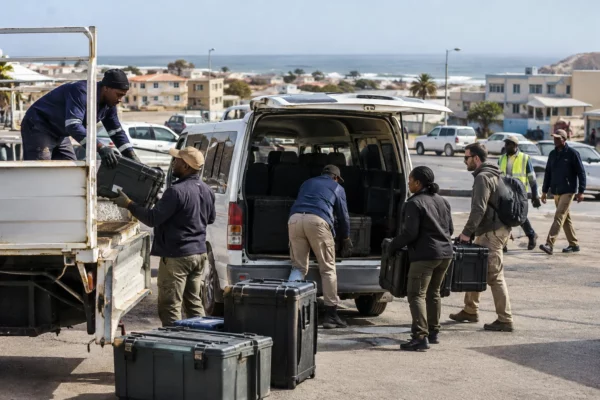
This year, the commemorations take on a tangible dimension with the return of the remains of fighters buried in South Africa. The public agency Nampa reported that the remains of liberation struggle veterans had been repatriated ahead of a planned reburial at Heroes’ Acre, the memorial site outside Windhoek. Other Namibian media confirmed that several figures from the liberation struggle were due to be honoured at ceremonies on 24 and 26 August 2026.
The gesture carries deep meaning for families. It is also political. In Namibia, tributes to the heroes of independence are part of an effort to restore dignity, bring people home and reclaim history through the state. The authorities present these returns as a national duty, not merely funeral protocol.
But the memory of the war remains incomplete. United Nations reports note that Namibia has never established its own truth and reconciliation commission, unlike South Africa after apartheid. The UN also notes that some victims and communities have for years called for broader recognition of abuses, disappearances and injustices committed during the liberation war.
This silence has very concrete effects. It leaves families without answers about the fate of some of the missing, keeps political wounds open between former fighters, former South African conscripts and survivors, and fuels debate over individual responsibility within the liberation movement itself. The debate does not erase the struggle against South African occupation. It does, however, show that wars of liberation also leave conflicts over memory, sometimes lasting longer than the war itself.
A Namibian issue with regional reach
Namibia is a member of SADC, the Southern African Development Community, alongside South Africa, Angola, Botswana and other states in the region. This membership gives the commemorations particular significance. It is a reminder that liberation movements in southern Africa developed together, in a region shaped by border wars, support networks, exile and the return of prisoners.
The memory of Namibian independence also engages with other regional histories, particularly struggles against apartheid and colonial rule. SADC itself has established a day of historical solidarity, Southern Africa Liberation Day, on 23 March, to honour the sacrifices made across the region. Namibia therefore sits at the intersection of two calendars: that of its national sovereignty and that of a shared southern African political history.
For Namibia’s presidency, these tributes should also serve the future. The message is clear: remembrance is not just a ritual; it strengthens cohesion, the passing on of history and the legitimacy of the state. On the ground, that message resonates both in capitals and in the northern regions, where the war began and where its traces remain more visible in family archives, graves, village accounts and political wounds.
Across the continent, Namibia offers a simple reminder: decolonisation cannot be reduced to a date of independence. It also encompasses how a country chooses to name its heroes, bury its dead and shape its public memory. That is where part of Africa’s sovereignty is still at stake today.