Algeria
 Egypt
 Libya
 Morocco
 Sudan
 Tunisia
 Benin
 Burkina Faso
 Cabo Verde
 Côte d'Ivoire
 Ghana
 Guinea
 Guinea-Bissau
 Liberia
 Mali
 Mauritania
 Niger
 Nigeria
 Senegal
 Sierra Leone
 The Gambia
 Togo
 Cameroon
 Central African Republic
 Chad
 DR Congo
 Equatorial Guinea
 Gabon
 Republic of the Congo
 São Tomé and Príncipe
 Burundi
 Comoros
 Djibouti
 Eritrea
 Ethiopia
 Kenya
 Madagascar
 Malawi
 Mauritius
 Mozambique
 Rwanda
 Seychelles
 Somalia
 South Sudan
 Tanzania
 Uganda
 Angola
 Botswana
 Eswatini
 Lesotho
 South Africa
 Zambia
 Zimbabwe
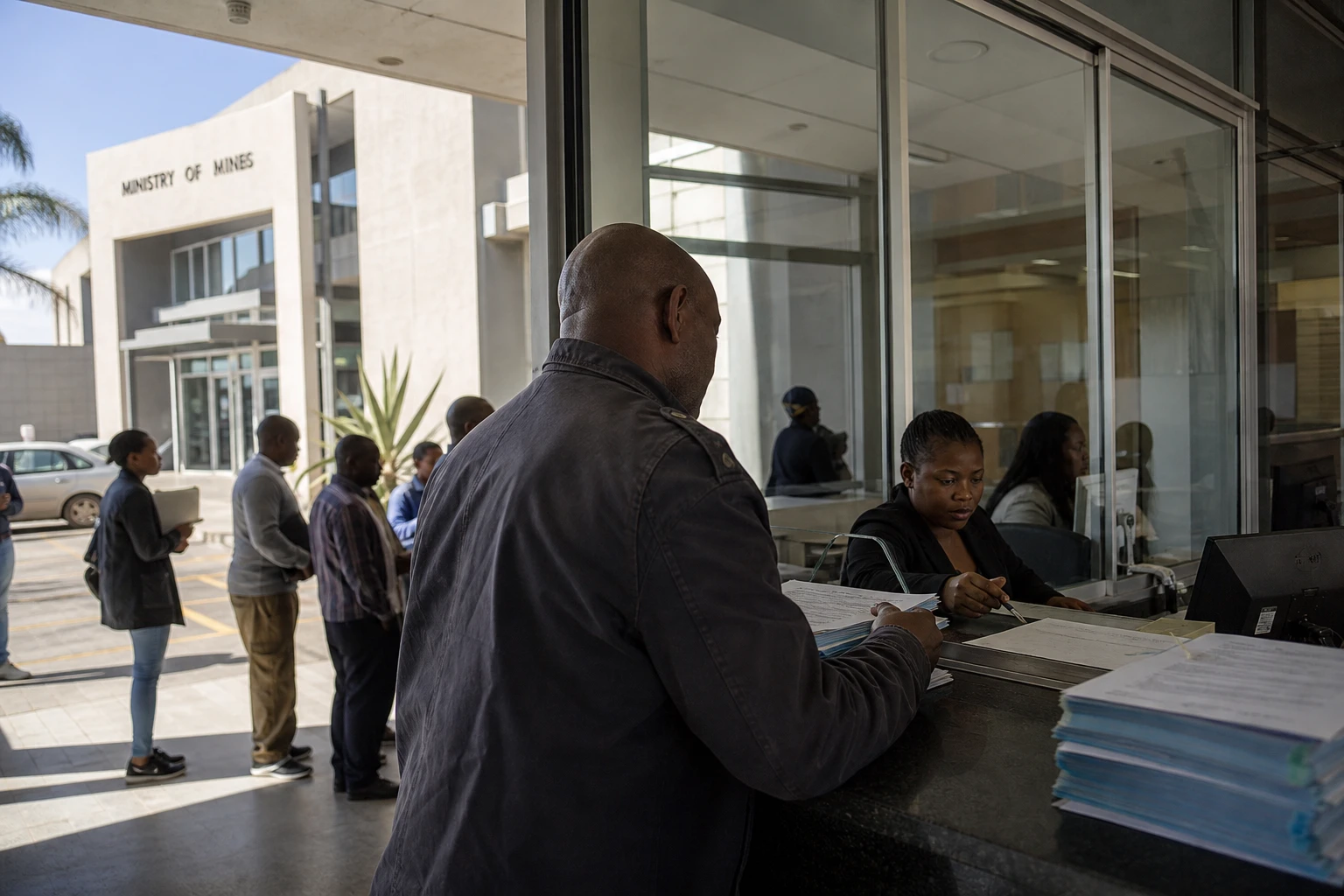
In Namibia, the shift from exploration to construction takes shape
In a mining project, the real turning point does not always happen underground. It often happens in offices, when permits must be secured, funding locked in and schedules kept on track. That is precisely the stage Kokoseb is now reaching in Namibia, where WIA Gold wants to turn a recent discovery into a future industrial mine.
The project is part of a broader Namibian mining landscape. The country already has several gold-mining mainstays, including Navachab, the country’s first commercial gold mine, and Otjikoto, now its main operating gold mine. Another project, Twin Hills, is also moving towards production. For Windhoek, the challenge is not simply to add another mine, but to strengthen a value chain capable of attracting capital, engineering expertise and local subcontractors.
The facts: a new manager for a decisive phase
On 16 July 2026, WIA Gold confirmed in its quarterly report the appointment of John Mussett as project director for Kokoseb. His task is clear: to lead the project’s development as the company enters the pre-construction phase. This stage comes before the final investment decision, often a decisive moment in a mine’s life.
John Mussett’s background sheds light on the group’s choice. He joins from Aris Mining, where he held project management roles, and his career also includes significant African experience in the rehabilitation and underground expansion of Obuasi, in Ghana. His professional profile highlights more than 20 years of experience in mine development, with expertise in the stages leading up to the start of industrial operations, including regulatory approvals and investment decisions.
The timetable remains tight. WIA Gold is still targeting a definitive feasibility study in the third quarter of 2026. The company is also working on the mining licence and on structuring the financing. At this stage, Kokoseb is planned as an open-pit mine with a carbon-in-leach processing plant, with a stated capacity of 5.25 million tonnes a year. The project is being developed with Epangelo Mining Company, a Namibian state-owned company that holds 20% of the joint venture, compared with WIA Gold’s 80%.
The project’s stated industrial potential is significant. The company says production could reach 177,000 ounces of gold a year, with investment estimated at $358.8 million. It also notes that Kokoseb’s resource estimate has increased in recent years. These figures, however, come from a project that is still evolving. They should therefore be read as working assumptions, not as an established reality.
What Kokoseb says about Namibia’s economy and southern Africa
For Namibia, the stakes go beyond the volume of gold extracted. For several years, the country has sought to diversify an economy that remains heavily dependent on uranium and diamond mining and a handful of metal assets. In this context, every new gold project matters: it creates direct jobs, logistics contracts, opportunities for service providers and future tax revenues. But the benefits will not be distributed evenly: they will initially be concentrated around project sites, road corridors and communities able to provide services and skilled labour.
The appointment of an experienced project director reflects this reality. Moving from geology to construction requires managing permits, relations with neighbouring communities, environmental studies and financing deadlines. In Namibia, the regulatory framework involves the services of the ministry responsible for mining and environmental assessment procedures. Kokoseb is also documented in official registers related to environmental authorisation, a sign that it is progressing through the administrative steps separating mineral potential from a fully developed site.
The financial context also matters. Gold has retained its safe-haven role in markets since 2025, supporting projects able to demonstrate geological quality and cost discipline. This creates a favourable window for junior developers. But that window is no substitute for technical delivery. A project may have substantial resources and still remain vulnerable if it takes too long to obtain a permit, infrastructure costs rise or financing tightens.
Across southern Africa, Kokoseb is also part of a broader trend towards upgrading the mining sector. SADC, the region’s economic community, has long pushed for better integration of mining, energy and transport value chains. For Windhoek, the benefits are clear: to turn an extracted resource into a more structured industry, with greater local value added and stronger links between the state, private operators and Namibian businesses.
The next steps will come by the end of the third quarter of 2026, with the completion of the feasibility study, progress on the mining licence and the search for capital. If these milestones are met, Kokoseb could join the small group of gold mines that matter in Namibia. If they slip, the project will remain among the long list of promising deposits yet to make the transition to industrial production. Either way, the episode is a reminder of a constant in Africa’s mining sector: resources alone are not enough; the state, operator and local area must also be able to turn what lies underground into a real economy.