Algeria
 Egypt
 Libya
 Morocco
 Sudan
 Tunisia
 Benin
 Burkina Faso
 Cabo Verde
 Côte d'Ivoire
 Ghana
 Guinea
 Guinea-Bissau
 Liberia
 Mali
 Mauritania
 Niger
 Nigeria
 Senegal
 Sierra Leone
 The Gambia
 Togo
 Cameroon
 Central African Republic
 Chad
 DR Congo
 Equatorial Guinea
 Gabon
 Republic of the Congo
 São Tomé and Príncipe
 Burundi
 Comoros
 Djibouti
 Eritrea
 Ethiopia
 Kenya
 Madagascar
 Malawi
 Mauritius
 Mozambique
 Rwanda
 Seychelles
 Somalia
 South Sudan
 Tanzania
 Uganda
 Angola
 Botswana
 Eswatini
 Lesotho
 South Africa
 Zambia
 Zimbabwe
A new driver for Namibian gold
In Windhoek, gold is no longer just a line in mining accounts. It is becoming an industrial bet. In a country where only two mines currently produce the metal on an industrial scale, every new project matters for jobs, public revenue and Namibia’s place in the African minerals supply chain.
The question goes beyond the Kokoseb site alone. It also concerns the balance of a sector in which diamonds remain central, but gold is regaining ground thanks to high prices and several advanced projects in the west and centre of the country. Namibia, a member of SADC, is thus seeking to turn more of its underground resources into local value, rather than limiting itself to exporting raw materials.
What Kokoseb plans at this stage
The Kokoseb project, led by WIA Gold, is located in the Erongo region, about 320 kilometres by road from Windhoek. The company describes it as an open-pit operation, 80% owned by WIA Gold and 20% by Epangelo Mining Company, Namibia’s state-owned mining company.
In its scoping study released in September 2025, WIA Gold said it was targeting a project capable of processing 5.25 million tonnes of ore a year, with average production of 177,000 ounces a year over the first five years and an average of 146,000 ounces over a mine life of more than 11 years. The estimated mineral resource then stood at 2.93 million ounces of gold.
The new definitive feasibility study, which the company says it completed or released in August 2026, according to the information provided, put the funding requirement for building the mine at $475 million. Production is scheduled to start in the fourth quarter of 2028. WIA Gold also cites a 1.8-year capital payback period, a net present value of $1.2 billion and an internal rate of return of 41%, based on a gold price of $3,600 an ounce. These figures remain the company’s own estimates and should be read as project assumptions, not market certainties.
Financing is the key challenge
WIA Gold is not starting from scratch. As at 30 June 2026, the company said it had A$119 million in cash, equivalent to about US$84.1 million according to the conversion provided in the source material. It has also announced a financing agreement with Sprott Resource Lending Corp. for up to $360 million, supplemented by an underwriting commitment of up to $15 million in a future equity raising. The financing package was expected to close in the fourth quarter of 2026.
This type of package is common for mining projects at the development stage. It combines equity, project debt and sometimes hybrid instruments. But it also demands strict discipline on permits, construction schedules, building costs and gold-price volatility. At this stage, Kokoseb is therefore a technically advanced project, but remains exposed to financing and permitting risks.
A place in Namibia’s mining landscape
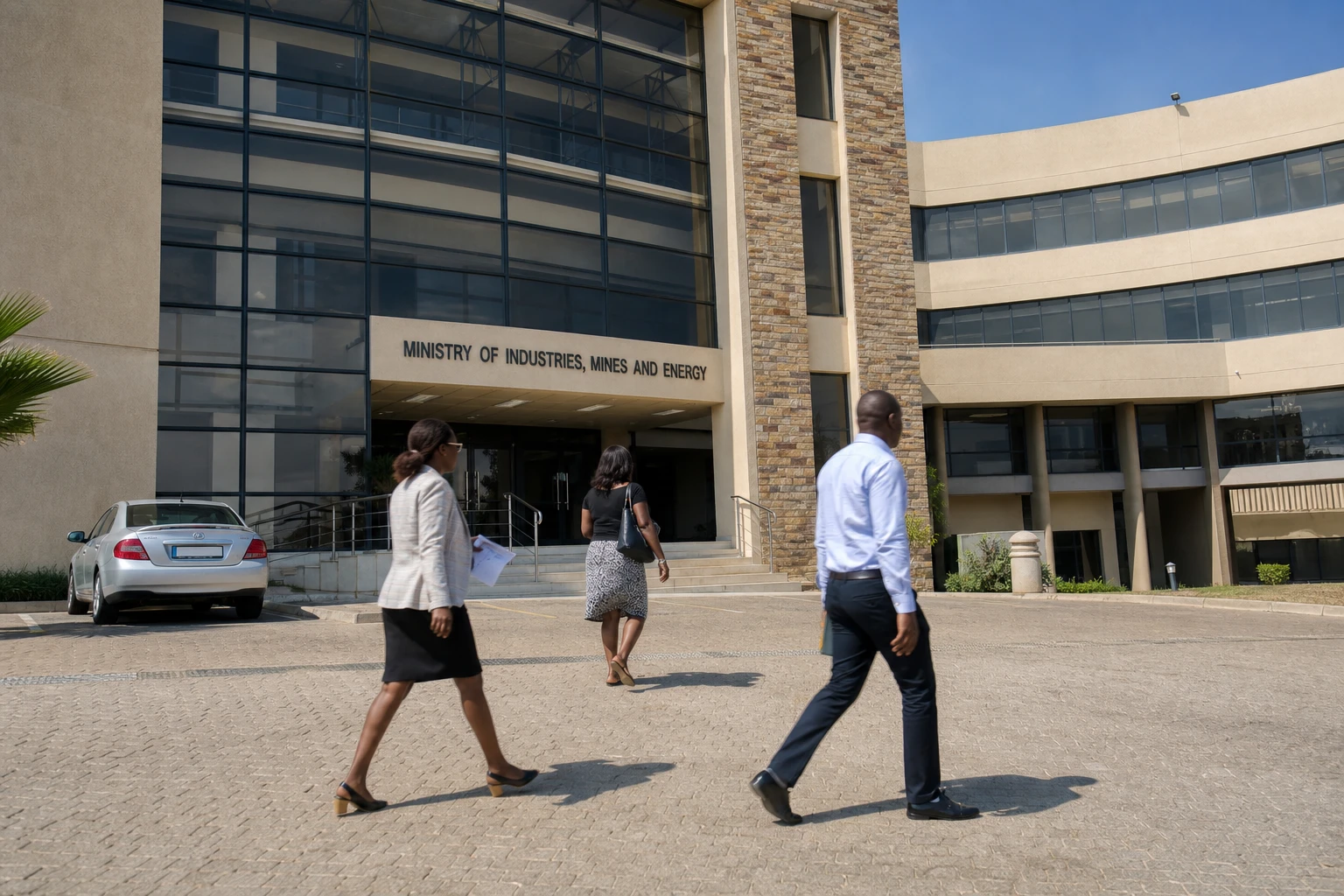
Officially, Namibia’s Ministry of Industries, Mines and Energy lists Navachab Gold Mine, near Karibib, and Otjikoto Gold Mine as producing gold mines. The country’s industrial gold sector is therefore still built on a limited base. Kokoseb’s development would broaden it, while Twin Hills is also moving closer to the construction phase.
Otjikoto, operated by B2Gold, is entering a transition phase. The company says open-pit mining ended in 2025, while underground operations are due to continue until 2027. Navachab, meanwhile, remains a historic mainstay, described by the Chamber of Mines as the country’s first commercial gold mine, which began production in the late 1980s.
For the Namibian state, the issue is not simply to count more mines. It is also to capture more of the value they create. In 2025, the Chamber of Mines stressed that the sector remained a pillar of the national economy and that gold had gained ground thanks to strong operating performance at Otjikoto and Navachab. In this context, a third industrial site would strengthen the country’s mining diversification as diamond revenues come under greater pressure.
What to watch through to 2028
The next milestone is regulatory. WIA Gold says it submitted an application for a mining licence to the Namibian authorities in October 2025 and hopes to receive approval in the second half of 2026. The company has also said that preparation of the environmental documentation is progressing, a decisive step in a country where mining permits are tied to requirements for land, water and local impact management.
The stakes for Namibia are clear. If Kokoseb moves from paper to construction, the country could consolidate a small group of industrial gold mines and increase local benefits in Erongo, a region already strategically important for minerals. If financing or permits run into delays, the project will join the long list of promising deposits that remain intentions. Either way, Kokoseb’s progress will say much about Windhoek’s ability to attract mining capital while retaining control over the pace of development.
At a regional level, the project is of interest across southern Africa. It shows how SADC can host projects financed from abroad, backed by local public-sector partners and expected to create value rather than serve simply as export deposits. It is also a test of the credibility of Namibia’s strategy to move up the mining value chain, at a time when several countries across the continent are seeking to secure more revenue and expertise locally.